The Narrative of the Savior and the Silence of the Spreadsheet

I stared at the timing sheets from Bahrain pre-season testing until the numbers bled into the gray of my screen. The story they told was one of stoppages, of truncated runs, of a Honda power unit battery that couldn't hold a charge long enough to find a setup window. Then I read the article. The story it told was one of a savior, of "unquestioned authority," of a "turning point." The dissonance was deafening. When the data screams mechanical failure, why are we writing a leadership parable? This is the modern F1 disease: the rush to crown a narrative king before the race has even started, often to bury the more uncomfortable truths in the telemetry.
The Cold Calculus of Crisis: What the Numbers Actually Show
Let's be brutally, boringly factual. The article states the pre-season was "severely disrupted by issues with its new Honda power unit, particularly the battery, limiting running and delaying setup work." This isn't a leadership test. This is a catastrophic engineering failure at the most critical possible moment. No amount of clear direction in a debrief can magically recharge a battery cell or re-engineer a faulty energy recovery system.
- The Disruption Metric: Limited running means less data. Less data means the correlation between wind tunnel, simulator, and reality remains a guess. This isn't about unifying theories; it's about having no empirical basis to form a theory in the first place.
- The Newey Variable: The AMR26 is noted as "the first car Newey has influenced since joining." Influenced is the operative word. It is not his car. His aerodynamic genius is not baked into the chassis fundamentals that are, right now, sitting silent in a garage. His "unparalleled track record" of 12 drivers' and 14 constructors' titles is a historical statistic, not a current performance modifier. We are conflating legacy with immediate cause-and-effect.
The praise from team ambassador Pedro de la Rosa that Newey's leadership is "unquestionable" is a fascinating piece of social data. It tells us about team morale and hierarchy. It does not tell us about downforce or deployment. This is where my skepticism hardens: we are using human testimony to explain a technical problem, because the human story is easier to sell than the grim, iterative slog of debugging firmware.
Leadership as a Lagging Indicator: Schumacher's Shadow and the Data Void
"When things go right, we don't need a leader. It is when things go wrong."
De la Rosa is right. But let's dissect this with historical data. Think of Michael Schumacher's 2004 season. The F2004 was a monster, but it was also reliable. When it did have a rare issue, Schumacher's feedback wasn't just "leadership"; it was high-fidelity, sensory data. He could correlate a vibration at turn-in with a specific damper setting because he had the feel, the memory, and the technical vocabulary to bypass a thousand channels of noisy telemetry. His leadership was built on a foundation of consistent, flawless performance data he himself generated.
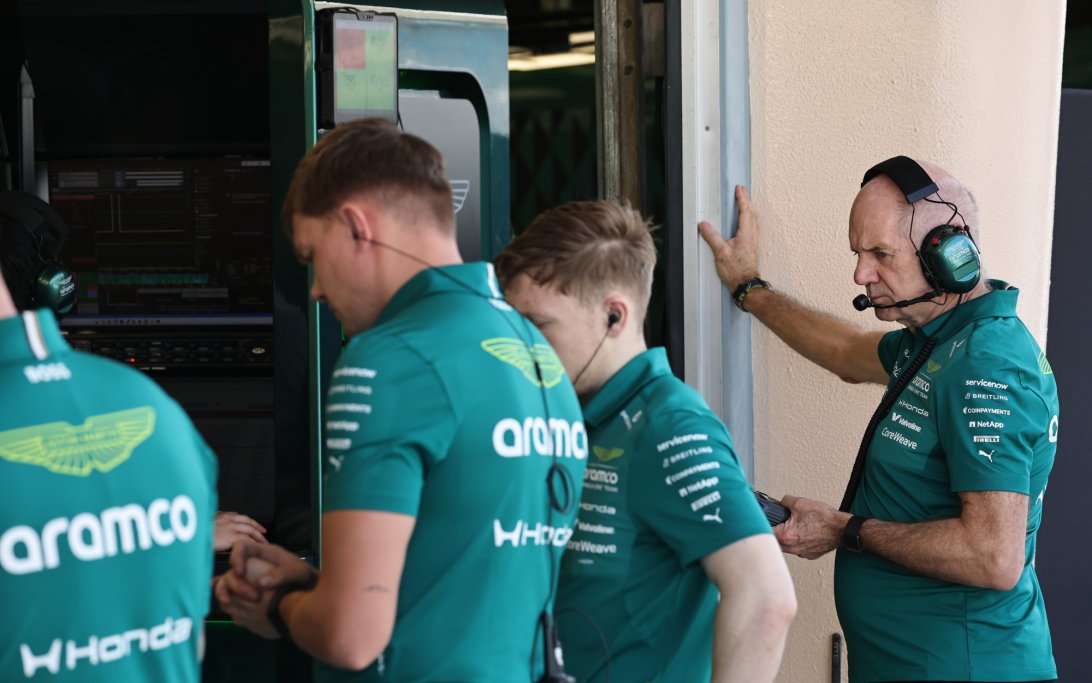
Now, fast forward to 2026. Aston Martin's "radical AMR26" has generated a data deficit. Newey, according to the article, "joined the technical debriefs and provided definitive guidance." On what basis? Without sufficient on-track running, his guidance must be based on simulation, historical knowledge, and intuition. This is the exact opposite of the data-driven culture F1 fetishizes. We are celebrating a reversion to instinct because the data pipeline has broken.
This is my core contention: we are watching F1's identity crisis play out in real time. We preach data analytics, but in a crisis, we yearn for the charismatic human authority figure. We want a Newey to cut through the "theories" because the mountain of incomplete data is paralyzing. But what if those theories were the first, fragile shoots of a solution? What if this "unifying" direction is simply the loudest voice in a room silenced by a lack of hard facts?
My fear is that within five years, this will be standardized. The algorithm will be the "unquestionable leader." When the battery fails, the strategy software will simply output a new run plan, and the engineers will follow it, their own theories suppressed not by a person, but by the sterile authority of the code. The sport becomes predictable, not because the cars are the same, but because the human response to variance has been programmed out.
Conclusion: The Story Before the Story
So, what is the real story of Aston Martin's troubled winter? It is not Adrian Newey's leadership. That is a story we are telling ourselves to feel better about the numbers. The real story is in the gaps in the data. It's in the lost laps, the uncollected tire wear curves, the unknown degradation on the radical sidepod concept. Newey's true value won't be measured in uplifting quotes, but in how quickly his team can fill those data voids and create a car that matches his vision.
The article calls this a "pivotal cultural shift." I see it as a stress test. The culture that will be revealed isn't about unity during failure; any team can be unified when they're lost. The culture that matters is the one that emerges when the data starts flowing again. Will it be one of rigid, top-down adherence to "the master's" plan? Or one where the data, in all its chaotic, human-interpreted glory, is still allowed to tell its own story?
Mark my words: when the AMR26 is finally on track, its lap times will be a form of emotional archaeology. Every tenth lost in sector two will whisper of the battery issues in Bahrain. Every setup change will be a ghost from those lost testing days. And Adrian Newey's leadership will be just one data point in a far more complex, far more human equation of panic, ingenuity, and the relentless pursuit of a number on a screen. The narrative is comforting, but the stopwatch, as always, is merciless.