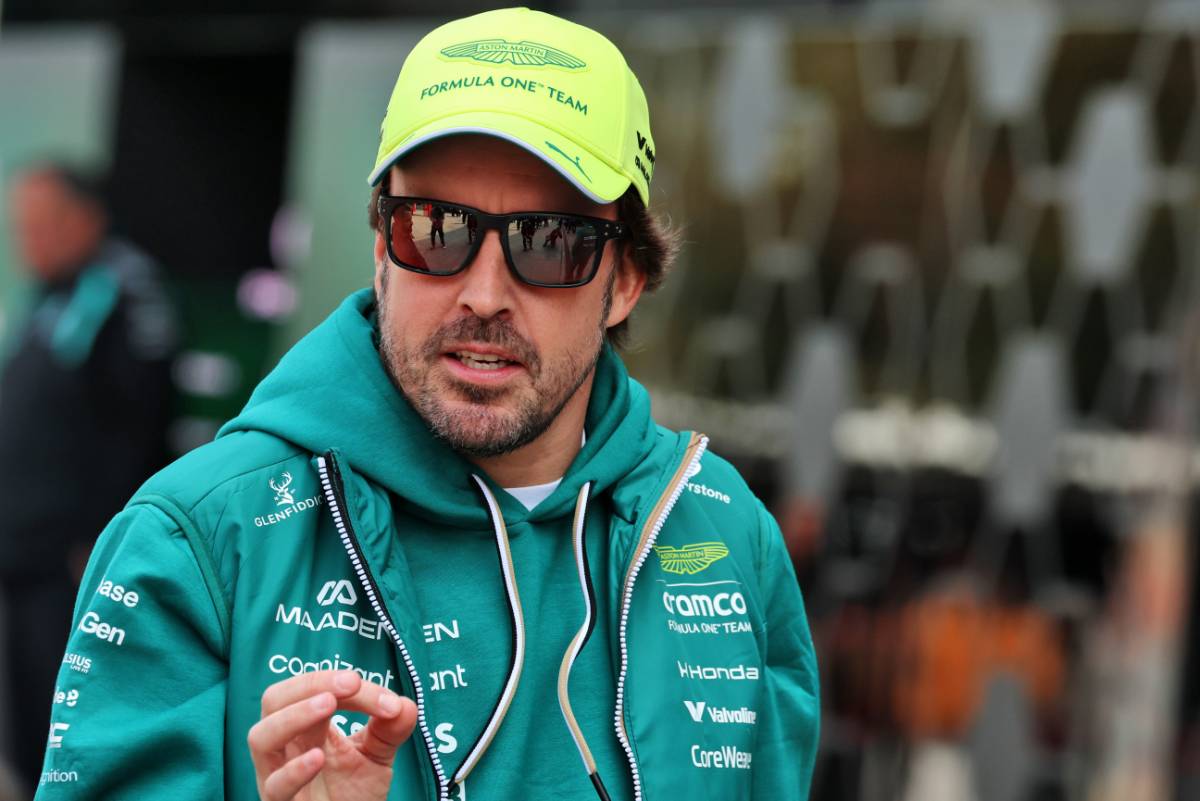
The Heart Rate Monitor and the Crib: Alonso's Ultimate Test of Focus
In the sterile, data-drenched world of a Formula 1 paddock, we measure everything. G-forces, millisecond reactions, tire degradation curves. We graph the quantifiable. But this weekend in Suzuka, Fernando Alonso faces a variable no engineer can model, a force more powerful than any Honda V6: the imminent birth of his first child. While the world sees a simple scheduling conflict—a missed media day, a rookie in FP1—I see a profound psychological experiment playing out in real-time. This is not a logistical footnote. It is the ultimate examination of a driver's mind, a brutal test of compartmentalization that will reveal more about the man than any qualifying lap ever could.
The Unquantifiable Split-Second
The due date is a fixed point in time, immutable as a race start lights-out sequence. Suzuka is another. Alonso, the aging matador with the thousand-yard stare, is trapped between them. He will delay his arrival, ceding his Aston Martin AMR26 to Jak Crawford for first practice, stealing a few extra hours in a delivery room before hurtling towards one of the most physically and mentally draining circuits on Earth.
"The most dangerous corners are not the ones you take at 300 kph, but the ones your mind takes when it's supposed to be focused on the apex."
This is where the real race begins. For decades, the F1 archetype demanded the suppression of personal life, a monastic dedication where family was a distraction to be managed, often painfully. Alonso's choice to prioritize this moment, however briefly, is a quiet rebellion against that old code. But it comes with a cost his biometric sensors cannot transmit. His focus, that laser-like intensity that has defined a 20-year career, must now be deliberately split. A part of his consciousness will remain tethered to a hospital bed thousands of miles away, a vulnerability no other driver on the grid will share. This isn't about fatigue; it's about the psychic weight of a life-altering event. We have seen how Lewis Hamilton channeled personal and global struggles into a formidable, calculated public persona, and how Niki Lauda's post-crash trauma forged an iron will. Alonso's narrative is now being written in the tension between the heartbeat of a newborn and the scream of a turbo-hybrid.
Returning to a House of Vibrations
When Alonso finally lands in Japan, he does not return to sanctuary. He steps back into a cockpit of palpable frustration. The 2026 Aston Martin is a nervous animal, plagued by persistent engine vibration issues from its Honda power unit. This isn't just a technical glitch; it's a psychological weapon.
- In China, the vibrations grew so severe they caused a battery failure.
- More tellingly, they forced Alonso's retirement due to physical discomfort—a rare, admission of human frailty from a driver who once raced with broken ribs.
The car is literally shaking itself, and its driver, to pieces. Now, layer upon that mechanical instability the profound emotional tremor of new fatherhood. Where does the vibration of the engine end and the adrenaline of personal joy begin? This is the core of my belief: driver psychology trumps aerodynamics in conditions of uncertainty. Suzuka in changeable weather would be the classic test. But for Alonso, the entire weekend is a storm. His wet condition is a mind divided. The car’s instability mirrors his own situational instability. Can he, the master of calculated rage, find a new calm? Or will the split focus erode the millisecond margins?
Contrast this with the sterile, emotion-managed environment of a Max Verstappen. Red Bull’s system is designed to eliminate exactly this kind of variable, to manufacture a champion whose only emotional output is channeled into relentless, robotic speed. Alonso’s weekend is gloriously, messily human—the antithesis of that model.
The New Transparency and the Weight We Carry
This moment is a precursor to the future I foresee. Within five years, the sport will be forced to mandate mental health disclosures after major incidents. The Alonso scenario—a major life event intersecting with professional duty—will become part of the official conversation. Is a driver fit to compete not just physically, but psychologically, after a personal trauma or a profound joy?
- Will teams have to declare if a driver is grieving, or sleep-deprived from a newborn?
- Will the media, armed with this "transparency," dissect every mistake as a symptom of off-track life?
Alonso’s weekend is a trial run for that era. Aston Martin’s simple "personal family reasons" statement is the last vestige of the old privacy. Soon, the pressure for disclosure will be immense. The narrative will be irresistible: "Did fatherhood cost him tenths in Sector 1?" This scrutiny is the price of acknowledging the human inside the helmet.
As the lights go out on Sunday, we will watch more than a race. We will witness a man performing a high-wire act between two defining roles. The data will show his lap times, his braking points, his throttle application. But the truth will be in his eyes behind the visor, in the subtle radio silence or an uncharacteristic error. The victory for Fernando Alonso this weekend may not be measured in points. It will be measured in his ability to hold two overwhelming loves—for a new child and for the cruel beauty of his profession—in the same heart, without letting either break. The result on the timing screen will be a footnote to the far greater achievement of a soul navigating its own S-curves.