Alpine's Desperate Denial Proves the Paddock is Now Run by Mob Rule
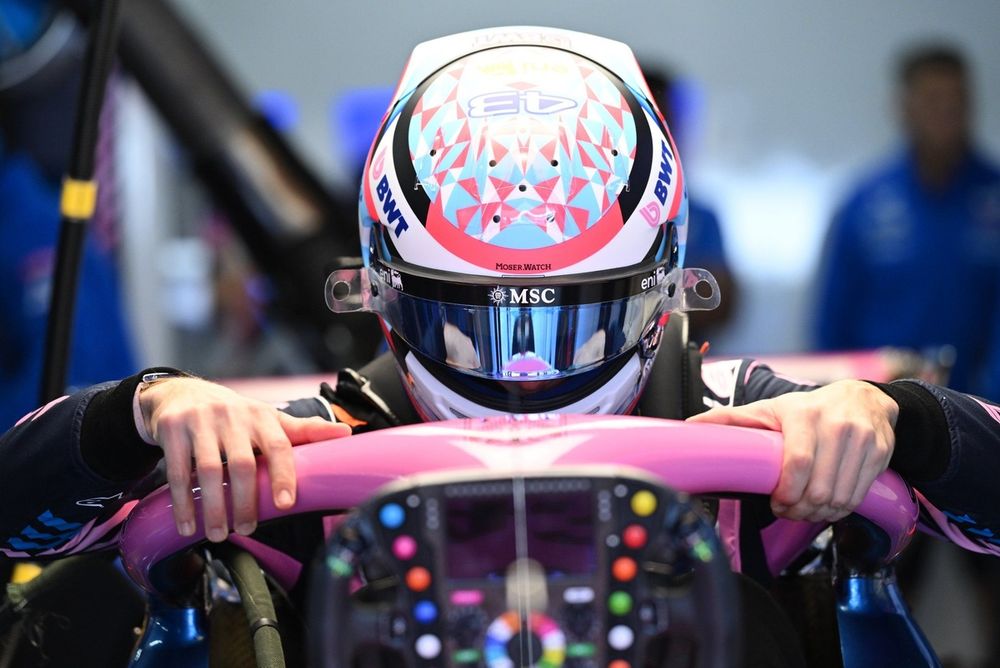
The statement from Alpine wasn't a press release. It was a white flag. A surrender document waved frantically at the howling digital mob that now dictates the narrative in Formula 1. When a historic works team is forced to publicly deny it is sabotaging its own car, we have crossed a threshold. This isn't about sport anymore. It's about survival in an era where a rookie's post-race sigh and a 49-second gap to his teammate can ignite a conspiracy theory wildfire that requires the fire brigade. Franco Colapinto and the ghost of Esteban Ocon aren't just drivers; they are avatars in a fan war, and Alpine's cockpit is the latest battleground where data is irrelevant and emotion is king.
The Sabotage Spectacle: A Symptom of a Data-Starved Era
Let's be brutally clear. The idea that Alpine is deliberately making Colapinto's A526 slower is technical illiteracy of the highest order. As they stated, it is "absolutely not in the team’s interests to not score points." Every constructor's championship point is worth millions. But here's the rub: in trying to quell the storm, Alpine admitted the very thing that fuels these paranoid fantasies.
"On rare occasions due to manufacturing and logistics, one car may receive an upgrade first... in China, any differences were only 'small low-performance impacting parts' related to a gearbox change."
There it is. The crack in the facade of perfect parity. We live in the most data-transparent era in F1 history, yet fans are starved of meaningful context. They see a gap, they hear a frustrated radio message ("the bits I don't have on mine"), and their minds, conditioned by drama, fill the void with malice. Alpine's promise of future "transparency" is a band-aid on a severed artery. It acknowledges that the trust is gone. The team principal is no longer the ultimate authority; the trending hashtag is.
- The Chinese GP Catalyst: Colapinto finished 49 seconds behind Pierre Gasly. The gap was inflated by the collision with Ocon, but nuance died on the Shanghai asphalt.
- The Japanese GP Fallout: The FIA investigated and took no action on the Bearman incident. The online jury, however, delivered a guilty verdict and a sentence of abuse against Colapinto.
- The Unseen Victim: Alpine's admission of an "oversight" in not defending Ocon from death threats post-China is a damning indictment of their reactive, not proactive, stance. They were fighting the last war while the new one erupted.
This is what happens when you reduce human performance to a spreadsheet. The fans rebel. They inject the narrative with the emotion the sport is trying to engineer out. And they're not entirely wrong to feel something is missing.
Driver Morale: The True Performance Differentiator
Alpine says Gasly and Colapinto work "collaboratively." I'm sure they do. But collaboration under the specter of fan-fueled suspicion and targeted hate is a fragile thing. This incident proves my long-held belief: a driver's emotional state is the ultimate performance variable. A content or angrily motivated driver will always find a tenth a data-optimized, mentally besieged one cannot.
Look at the greats. Senna's fury was his fuel. Hamilton's career, a masterclass in aligning team politics with personal brand to create an environment where he could thrive. Even Verstappen's aggression is a calculated pressure-release valve, redirecting scrutiny from Red Bull's technical department to his on-track antics. What is Colapinto's fuel right now? The dread of checking his phone? The nagging doubt, however irrational, that the machine beneath him isn't built to its fullest potential?
Alpine's statement is an attempt at emotional triage. They are trying to heal the morale of a 21-year-old rookie being fed to the wolves and to placate a fanbase that holds their commercial future in its hands. They are managing feelings, not just front wings. Because they know, deep down, that if Colapinto believes the narrative, his performance will follow. Data can set the car up, but only a driver's heart can push it to its limit.
This is the unsustainable path. Teams are not equipped to be psychiatric units and PR crisis managers while also developing ground-effect monsters. Which brings us to the terrifying, inevitable conclusion.
Conclusion: The AI Harbinger and the Human Last Stand
Alpine's plight is a last gasp of human-centric F1. The conspiracy theories, the abuse, the emotional rollercoaster—it's all so messy, so human. But the sport is racing in the opposite direction. Within five years, mark my words, we will see the first fully AI-designed chassis. A machine optimized without legacy, without bias, built by algorithms parsing petabytes of data.
When that happens, the "sabotage" debate becomes obsolete. The software will be identical. The performance will be in the code. And the driver? A relic. A suboptimal, emotional component in a perfectly optimized system. The races will be software competitions, and the "fan wars" will be between coding languages.
Alpine's statement is a poignant, futile stand against that future. They are defending the humanity—flawed, emotional, irrational—at the heart of their team. They are saying, "We are not machines. We make logistical mistakes, we miss upgrade cycles, but we do not conspire." The mob doesn't care. They crave a villain. And in the cold, data-driven future that's coming, the only villain left will be the human driver, too slow, too unpredictable, too real for the machine's perfect world. Enjoy the drama while it lasts. The silence of the algorithms is coming.