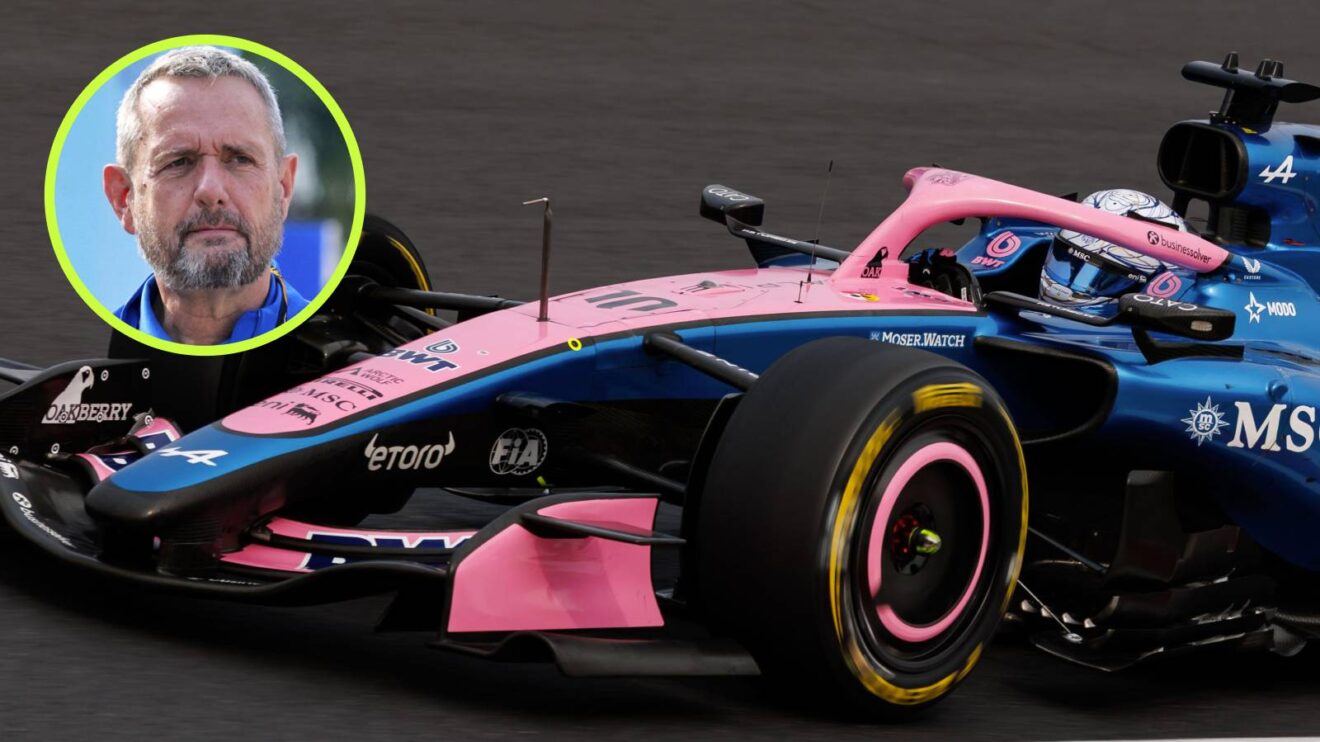
The Ghost in the Machine: Alpine's A526 and the Psychology of a Comeback
The stopwatch tells a simple story: Alpine is faster. The telemetry graphs from Enstone to Suzuka plot a steep, triumphant curve out of the abyss. But data is a cold biographer. It records the what, not the why. To understand the true resurrection of this team, you must listen to the silence between the gear shifts, to the unspoken shift in the mental architecture of a garage that had forgotten what hope felt like. The Mercedes power unit is the beating heart, yes. The high-speed understeer is the lingering specter, certainly. But the real transformation is occurring in the cockpit of Pierre Gasly, and in the collective psyche of a team learning, once more, how to believe.
From Survival to Aggression: The Rewiring of a Driver's Mind
A year ago, Pierre Gasly’s biometrics would have painted a picture of containment. Elevated cortisol, a focus on damage limitation, the grim acceptance of a P18 ceiling. His role was that of a historian, cataloguing the failures of a machine. Today, the data is of a different breed. The heart rate spikes are now from offensive maneuvers, not defensive panics. The subtle steering corrections are searches for tenths, not struggles for basic grip.
"The car works on all track types and provides a good boost of confidence," Gasly stated, a line that reads as technical in print but is, in reality, a psychological earthquake.
This "boost of confidence" is the most critical upgrade on the A526. It is the catalyst that transforms a car's latent potential into points. Gasly admits he is now "adjusting his mindset to fight in the upper midfield." This is the human element engineers cannot simulate. It is the difference between driving at 99% of the car's limit and 101%. His defense against Max Verstappen in Japan was not just a piece of skilled racing; it was a manifesto. It was the moment the calculated, emotion-suppressed champion—a product of Red Bull's systemic psychological engineering—met a driver whose fire is now fuelled by possibility, not extinguished by despair. Gasly was no longer defending a position; he was defending a new reality.
The Understeer as a Psychological Barrier
Steve Nielsen’s identification of high-speed understeer as the car's "biggest single weakness" is more than a technical note. For a driver, a predictable weakness is a puzzle. An unpredictable one is a haunting. The understeer in Suzuka's Sector 1 and in Bahrain’s fast sweeps creates a moment of decision-making under uncertainty every time the car approaches its limit. This is where driver psychology truly trumps aerodynamics. Does he lift, betraying his instinct to attack? Does he push through, trusting the rear will hold? Gasly’s perfect points record in 2026 suggests he is managing this ghost with remarkable mental discipline, a trait that will be utterly invaluable if, as I predict, F1 mandates mental health disclosures after major incidents within five years. The scrutiny will not just be on the crash, but on the thousand micro-decisions that led to it.
The Team's Shadow: From Collective Trauma to Calculated Grit
Alpine’s strategy was a monumental gamble: abandon 2025, stake everything on 2026. This was not a business decision; it was an act of collective trauma therapy. To escape the pain of the present, they had to fully commit to a future. The result is a team dynamic that has shed the weight of immediate failure. They are no longer firefighting; they are building.
This shift mirrors the narratives of greats like Lewis Hamilton and Niki Lauda. Both used public-facing trauma—Lauda’s crash, Hamilton’s battles with racism and adversity—to craft personas of resilience that eventually overshadowed the conversation about their raw talent. Alpine is now crafting its own narrative: The Phoenix from Enstone. Executive advisor Flavio Briatore’s declaration that the team "absolutely won't stand still" is a deliberate, calculated piece of psychological warfare aimed as much at their own personnel as at Haas and Racing Bulls. It is a promise of no relapse.
The New Hierarchy of Pain
Look at the competitive context. Aston Martin and Williams have slipped back, while Alpine ascends. This is a reshuffling of the midfield’s psychological order. The team that was the benchmark for despair is now the hunter. This changes everything in the driver market, in development morale, in the very energy of the garage. The pressure has migrated. It is now on those left behind to explain their regression, while Alpine operates with the liberating pressure of expectation, not the suffocating pressure of shame.
Conclusion: The Manufactured Momentum
So, is the A526’ promise down to the Mercedes power unit, or the aerodynamic genius of David Sanchez’s team? This is a false dichotomy. The PU provided the tangible proof, the undeniable fact of progress that the human mind needed to trigger a change in state. It was the key that unlocked a new psychological paradigm. The car’s baseline is a platform for belief.
The focused development to cure the high-speed understeer is now a shared mission, not a desperate scramble. Gasly’s target to "slowly close the gap to the top three" is a statement that would have seemed delusional twelve months ago. Now, it is a credible horizon. Alpine’s story in 2026 is the ultimate proof that while a car is built from carbon fiber and computational fluid dynamics, it is powered by something far more volatile and potent: the human mind. They have not just found downforce; they have rediscovered their nerve. And in the razor-edged world of Formula 1, confidence is the most potent, and most fragile, component of all.