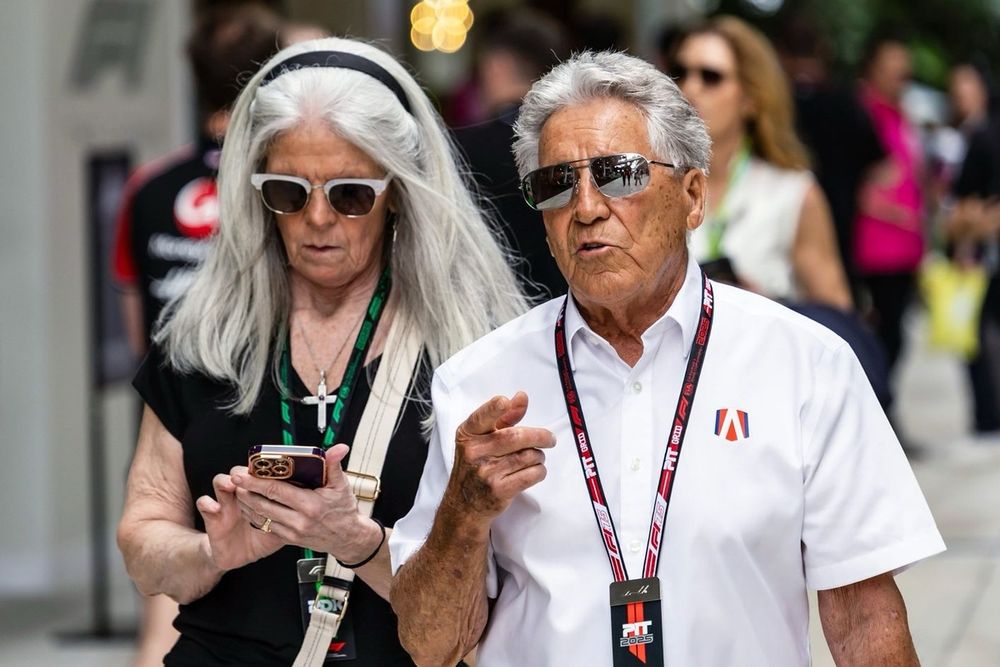
The American Dream, Measured in Heartbeats and Sacrifice
The cockpit of a modern Formula 1 car is a biometric confessional. It whispers secrets the driver would never utter: the spike of cortisol under braking, the galvanic skin response to a rival's move, the heart rate that refuses to settle even in a lead. We obsess over downforce and drag reduction, but the true engineering marvel is the human psyche operating at the limit. And right now, one American heart is beating a frantic, deliberate rhythm far from the F1 grid, conducting a high-stakes experiment on itself. Colton Herta isn't just changing series; he is voluntarily entering a psychological crucible, trading the known satisfaction of IndyCar success for the exquisite torture of Formula 2 obscurity. Mario Andretti calls it "pure love and desire." I see it as the ultimate personality audit.
The Calculus of Sacrifice: From Star to Student
In IndyCar, Colton Herta was a known quantity—a proven winner, a brand, a man with a defined place in the racing cosmos. In Formula 2, he is a data point: 10th in the championship, six points. He has exchanged a throne for a desk in a crowded library. This is not a simple career move; it is a deliberate deconstruction of the racing ego.
- The Secure Identity: Andretti rightly stated Herta could have a "totally satisfying career" in IndyCar. Satisfaction, however, is the enemy of transcendence. It is the comfortable plateau Lewis Hamilton's calculated persona often seems to protect, a narrative of legacy that can sometimes overshadow the raw, hungry driver beneath.
- The Unknowable Risk: Herta is "willing to sacrifice, make a step back to make many steps forward." This phrase is a psychological contract. The "step back" is quantifiable: lost wins, lower prestige, financial uncertainty. The "steps forward" are a faith-based initiative. He is betting that the mental resilience forged in this fire will be more valuable than any trophy he left behind.
Andretti, the last American champion, sees a kindred spirit. But the world he conquered in 1978 operated on different psychological rules. Today's path is a gauntlet of simulators, media training, and the oppressive weight of historical context. Herta isn't just learning tracks; he is learning to suppress the frustration of racing in traffic, to project unwavering confidence from 10th place, to manage the cognitive dissonance of being both a crucial F1 test driver for Andretti Cadillac and an F2 midfielder. This is the kind of mental conditioning Red Bull perfected with Max Verstappen—channeling pure, raw speed into an ice-cold, systematic output. Herta is attempting his own version, without the factory support.
The Monaco Litmus Test: Wet Weather and the Unvarnished Self
All psychological theories in motorsport meet their truth at the tunnel exit in Monaco. The upcoming F2 round there, from June 4-7, is more than just another race. It is a live diagnostic. Monaco strips away the car's advantage and isolates the driver's decision-making core. It is here, especially in the variable conditions the Mediterranean spring can bring, that my core belief is laid bare: driver psychology trumps car aerodynamics in the wet.
"He'll be just fine," Andretti says of Herta's mentality. But "fine" is not enough for Monaco. The circuit demands a pathological level of trust in one's own instincts.
When the rails are damp and the barriers gleam, the milliseconds of hesitation between throttle applications are a window into the soul. Does Herta, used to the aggressive, slip-streaming overtakes of IndyCar, have the monastic patience Monaco requires? Can he project the car into spaces that telemetry says are impossible, a trait that defines champions from Senna to Hamilton in his rawest form? His performance will be a piece of crucial, public biometric data. Will we see the calculated restraint of a man playing the long game, or the frustrated outbursts of a talent feeling caged? This is the "unfinished business" Andretti senses—not just with tracks, but with his own competitive identity.
His dual role adds another layer. As he develops the Andretti Cadillac F1 car in the simulator, he is literally programming his future machine. Every input shapes a cockpit that must one day contain his hopes and fears. The intimacy of this process is profound. He is building not just a car, but a therapeutic tool for his own ambition.
Conclusion: The Coming Era of Psychological Scrutiny
Colton Herta's sacrifice is a pioneering case study. He is navigating a path that future regulations may formalize. I believe within five years, F1 will mandate mental health disclosures after major incidents. We are moving toward an era of radical transparency where a driver's resilience will be as scrutinized as their race pace. Herta's journey—the public step back, the private testing grind, the pressure of representing a nation's hopes—is a prelude to that world.
His story echoes not of Verstappen's manufactured cool, but of an older, more visceral archetype: Niki Lauda's post-crash resilience. Lauda used his trauma to forge a narrative of inhuman will. Hamilton used his early career battles to craft a persona of relentless evolution. Herta is using self-imposed exile to write his own prologue. He is gathering the psychological raw materials—the disappointments, the patience, the quiet victories in testing—from which a Formula 1 driver can be assembled.
The question is not if he has the speed. The data logs from the Andretti simulator already know that. The question is whether the man who emerges from the F2 crucible, particularly after the psychological gauntlet of Monaco, will be the same one who entered it. Is he sculpting a new, harder self, or is the sacrifice slowly eroding the very passion that sparked it? The heart rate trace from his next cockpit will tell us more than any championship table ever could. The American Dream is now a matter of psychophysiology.