The Crucible of Desire: Inside Colton Herta's High-Stakes Gamble with His Own Mind
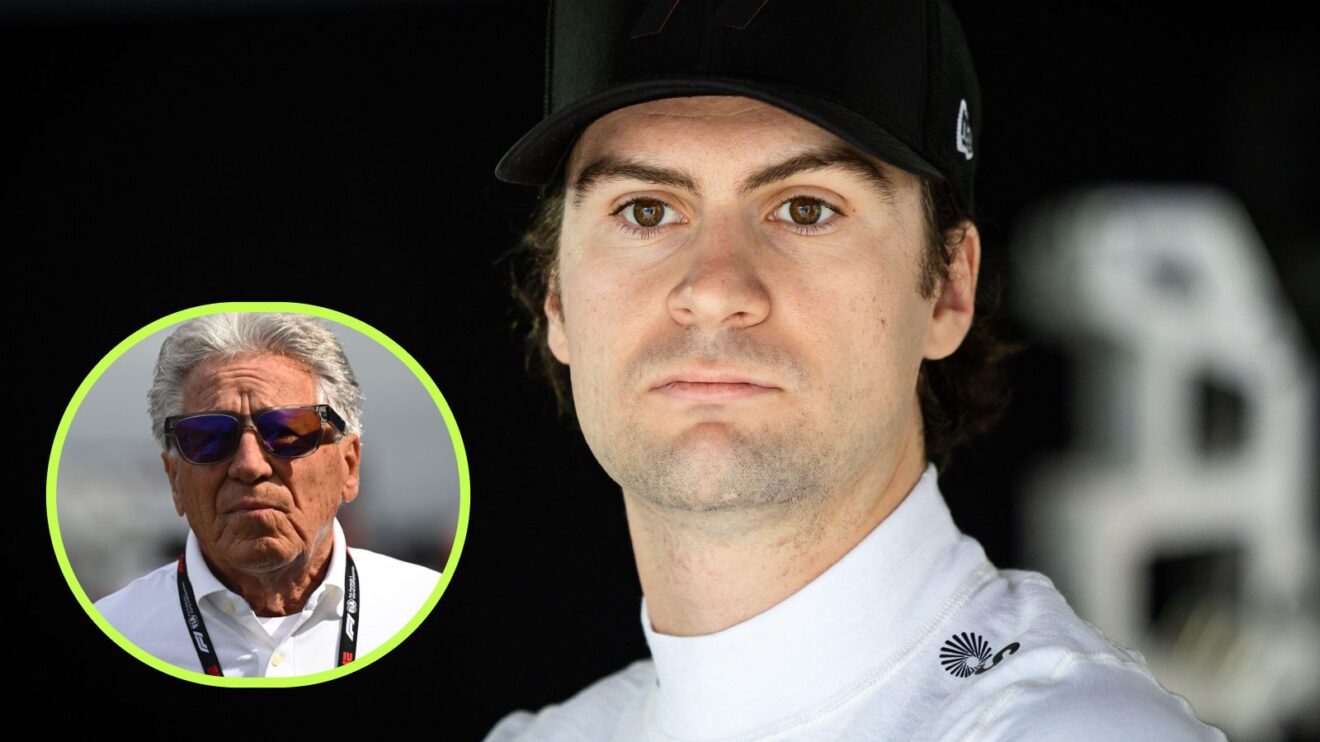
The most revealing data point from Melbourne wasn't a lap time. It was a self-imposed grade: "C minus." While the world saw Colton Herta salvage points from a crashed practice session, finishing seventh in his Formula 2 debut, the driver saw only the gaping chasm between his IndyCar mastery and this new, brutal European proving ground. This is where the real race begins—not on the asphalt, but in the silent, pressurized cockpit of his own psyche. Mario Andretti’s public backing is more than support; it is the anointing of America’s latest psychological project, a man willingly stepping into the fire to see what metal he’s truly made of.
The Sacrifice and the Specter of Legacy
Herta’s move is not a career step. It is a deliberate unraveling. He didn't just leave an IndyCar seat; he abandoned a known universe of confidence, a domain where his talent flowed unimpeded. He traded the certainty of being a star for the agony of being a novice. This is the "pure, pure desire" Andretti speaks of, a force so potent it overrides basic career preservation instinct.
"He had unfinished business and was willing to sacrifice and take a step back to make several forward," Andretti noted on the Drive to Wynn podcast.
Andretti’s voice here is crucial. It’s the voice of the last American champion, a man who carries the weight of a nation's unfinished F1 business in his very tone. His endorsement wraps Herta not just in support, but in expectation. He is linking his own legacy to Herta’s raw, untested potential. This creates a unique psychological burden: Herta isn’t just racing for a seat. He’s racing to mend a 48-year-old rupture in the American F1 narrative. Every misstep will be framed as a failure of national ambition, every success as a long-awaited correction. This is the kind of pressure that forges a Lewis Hamilton—or breaks a talent entirely.
Melbourne's Crash: A Fracture in the Facade
Let’s dissect that "unsatisfactory" weekend. The crash in practice. The recovery. The points finish. The merciless self-critique.
- The Crash: More than a mistake, this was a system overload. The muscle memory from years of IndyCar, the new visual cues of an F2 car, the immense, unspoken pressure of the "Cadillac Future"—they collided. His brain, processing a thousand new data points, chose wrong. In that moment, he wasn't a champion; he was a student.
- The Recovery: This is the telling part. To go from that fracture in confidence to a points finish speaks to a resilient core. But note his language afterward. No relief. Only critique. This is the opposite of the manufactured, emotionally-suppressed champion model Red Bull has perfected with Max Verstappen. Herta’s emotion is raw, external, fueling his analysis. It’s dangerous fuel—volatile and unpredictable—but it is authentically him.
- The Support System: Cadillac F1 CEO Dan Towriss’s target of a top-ten championship finish is a psychological masterstroke. It’s specific, achievable, and deflects from the win-or-bust hysteria. It gives Herta a framework for progress, not just a binary pass/fail. Andretti confirming "the full team support" is the safety net, but one must wonder: is this support designed to nurture, or to manage? Will they, like top teams increasingly do, seek to coach his emotional responses, to smooth the public edges of that "pure desire" into something more corporate and less combustible?
Monaco: The Ultimate Personality Reveal
The next chapter is Monaco. A circuit where, as I’ve long argued, driver psychology trumps car aerodynamics in wet conditions. The uncertainty, the closing walls, the millimeter precision—it strips away pretense. You cannot engineer around a driver’s innate risk calculus in the tunnel or at Portier.
Herta arrives here not as a favorite, but as an open question. His IndyCar success on street circuits is irrelevant. This is different. This is the labyrinth. We will learn more about Colton Herta in one wet Monaco qualifying lap than in an entire season of feature races. Will his desire manifest as fearless precision, or as frantic over-correction? The telemetry will show the steering inputs, but the story will be written in his heartbeat, in the micro-corrections that betray either supreme trust or deep-seated doubt.
His journey mirrors a modern psychological tightrope. He is the test case for a new kind of transparency, where a driver’s public self-flagellation is part of the narrative. Within five years, I believe such mental disclosures will be mandated after major incidents. Herta is already there, volunteering his inner report card. It’s refreshingly human, but it makes him vulnerable. It gives his competitors a window into his insecurities.
Conclusion: The Forging of an American Self
Colton Herta’s F2 campaign is no longer just a racing season. It is a public therapy session, a real-time forging of a racing identity under the white-hot glare of legacy and expectation. He has chosen the hard path, the one that risks humiliation for the chance at transcendence. Andretti sees the desire. Cadillac sees the potential. But the crucible of the F2 midfield will reveal the man.
Will he, like Niki Lauda, use early trauma to forge an unbreakable, calculated resilience? Or will he, like the early Lewis Hamilton, learn to weaponize that raw emotion into a narrative of irresistible force? He is not a manufactured champion-in-waiting. He is a psychological prototype. Watch Monaco. Not for the result, but for the reaction. The next grade he gives himself will tell us everything.