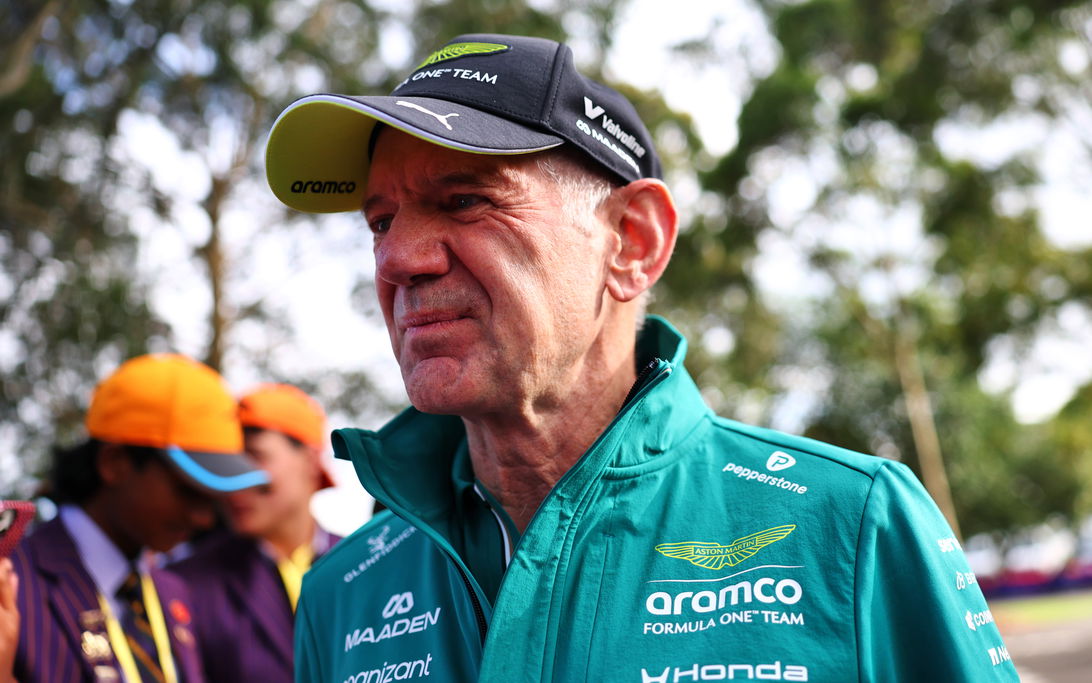
The Tremor in the Machine: How Aston Martin's Vibrations Expose F1's Silent War of Nerves
The most telling data from Aston Martin's garage isn'tt the power deficit on the Honda unit's telemetry. It's the biometric spike of a 42-year-old legend, Fernando Alonso, his heart rate climbing not with the adrenaline of attack, but with the cold, creeping dread of physical violation. The car is not just slow; it is harmful. And in that singular, unacceptable fact, we find a truth more compelling than any management rumor: Formula 1 remains a sport where the machine can still break the man, and where a driver's whispered fear of "permanent nerve damage" cuts through corporate denials like a scalpel.
Aston Martin may have stamped out the embers of speculation around Adrian Newey's leadership on March 19th, but they are now fanning the flames of a far more primal crisis. This isn't about aerodynamics or strategy. This is about the fundamental covenant between driver and team: you will not break me.
The Anatomy of a Betrayal: When the Cockpit Becomes a Torture Chamber
The statement from the team was a masterclass in sterile corporate deflection, "refusing to engage with media speculation" about Newey. But let's be clear: in the high-stakes theater of F1, what they dismiss as "speculation" is often the shadow of a truth not yet ready for the light. The real story isn't whether Newey stays or goes; it's why his technical brilliance, the very reason for his mythos, has manifest in a machine that assaults its pilots.
The AMR26's issue is diabolical in its simplicity and profound in its implication. A battery system vibration, severe enough to damage carbon fibre, is transmitting directly into the bones and nerves of Alonso and Lance Stroll.
- In Melbourne, Alonso's calculus was not of lap times, but of bodily preservation. Twenty-five laps. That was his limit. A number born not from tire wear, but from the point where numbness threatened to become permanence.
- In Shanghai, the vibration may have been damped, but the underlying flaw remained, manifesting in a battery failure for Stroll and a retirement for Alonso born from sheer discomfort.
"The hands are a driver's final, direct neural link to the car. To sever that link, to fill it with static and pain, is to reduce a genius to a passenger in his own nightmare."
This is where engineering failure becomes psychological warfare. Every moment in that cockpit is now a negotiation between competitive instinct and self-preservation. What part of Alonso's formidable, race-crafting brain is now permanently allocated to monitoring his own fingertips? This is the unquantifiable deficit no wind tunnel can measure.
The Leadership Mirage: Newey's Ghost and the Specter of the "Manufactured" Mind
And so we return to the denied rumors: Newey stepping back, Jonathan Wheatley of Red Bull floated as a successor. It's a delicious piece of psychological projection. The narrative wants a savior from the very team that perfected the art of driver management. At Red Bull, they didn't just build a fast car for Max Verstappen; they built a psychological ecosystem to contain his fire, to channel the outbursts into a cold, relentless efficiency. He is, in many ways, the ultimate "manufactured" champion—his raw talent systematically insulated from destabilizing emotion.
What does this have to do with Aston's vibrations? Everything.
Aston Martin's crisis exposes the hierarchy of needs in a top team. You can have the greatest technical mind (Newey), but if the base layer—the car's fundamental safety and drivability—is toxic, all higher functions collapse. Leadership isn't about who sits in the principal's office; it's about who solves the problem that is making two drivers fear for their craft.
Newey’s legacy was built on feel, on intuitive connection to what a car needs. Can the man who once designed cars of sublime balance now stomach overseeing one that is fundamentally unbalanced at a vibrational, neurological level? His denial of departure is a fact. His internal conflict, however, is the real drama.
Conclusion: The Inevitable Reckoning
We stand at a precipice. Alonso’s public admission of fear is a crack in the old, stoic façade of F1. I have long believed that within five years, the sport will mandate mental and physical health disclosures after major incidents. This Aston Martin saga is the precursor. When a driver speaks of nerve damage, he is not just giving an excuse; he is filing a subconscious workman’s compensation claim in the court of public opinion.
The team’s next steps are not about upgrades. They are about atonement. They must not just fix a battery. They must restore trust. They must look Alonso and Stroll in the eye and prove the machine will no longer betray them.
Until they do, they are not racing. They are conducting a dangerous experiment in human endurance, and the data they are collecting is written in the trembling hands of their drivers. The tremor in the machine has become a tremor in the myth. And in that vibration, we hear the future of F1 calling for a new standard of care, where the psychology of the driver is treated with the same reverence as the aerodynamics of the car. The alternative is unthinkable, and Alonso has already said it out loud.