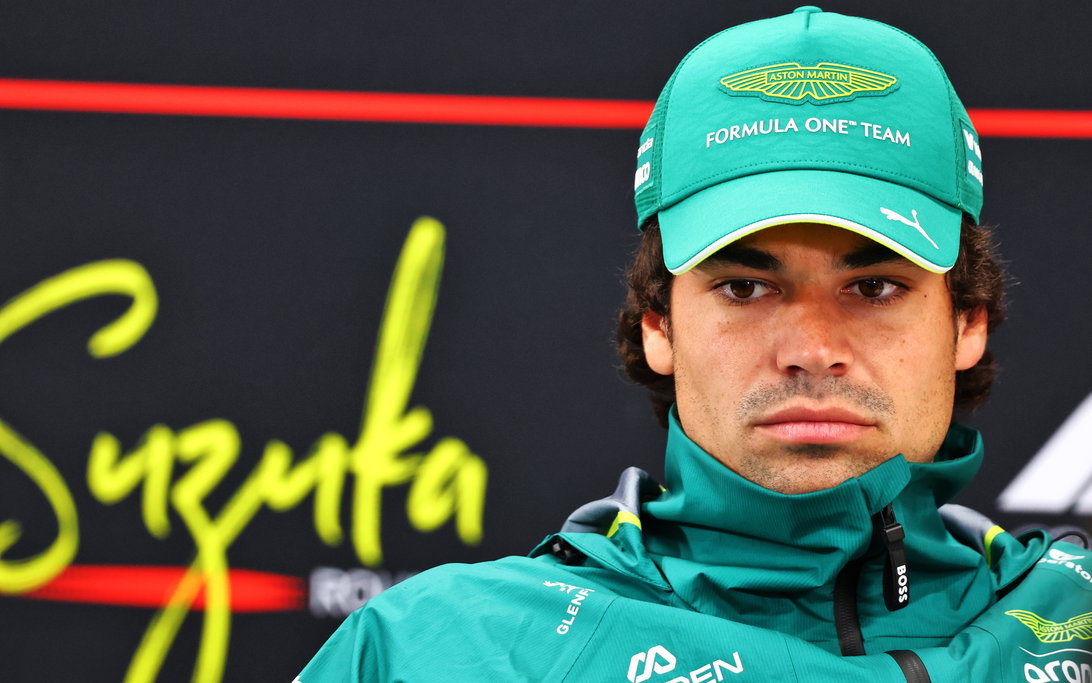
The Ghost in the Machine: How Lance Stroll's DNFs Are a Psychological Ticking Bomb
The silence inside a Formula 1 cockpit, at speed, is not a true silence. It is a roar of data, a scream of g-forces, and the frantic, rhythmic prayer of a beating heart. For Lance Stroll, that prayer has been cut short three times now. Not by a rival's lunge, not by a driver error, but by a series of mechanical whispers turning to screams: electrical fault, battery failure, water pressure. Each time, the roar is replaced by the deafening quiet of a dead engine and a team radio uttering the most devastating phrase in racing: "Box, Lance. Box and retire." This isn't just a reliability crisis for Aston Martin. It is a systematic dismantling of a driver's psyche, a real-time experiment in how much unresolved trauma a competitor can absorb before the facade of the "racing driver" cracks.
The Anatomy of a Fractured Fortress
Three consecutive races. Three mechanical DNFs. On paper, it's a statistic. In the mind of a driver, it is a narrative of betrayal. The car, an extension of self, becomes an adversary. The team, a family, becomes a source of doubt. Stroll's 2026 season is a case study in external forces scripting a personal tragedy.
- Australia: An electrical fault leaves him 15 laps down before a merciful retirement. The humiliation of circulating as a ghost, a mobile chicane, is a specific psychological torture.
- China: A Honda battery failure—the season's biggest known bogeyman—ends his race after just nine laps. The problem is identified, yet persists. Trust in the package begins to erode.
- Japan: Lap 30 of 53 at the brutal Suzuka circuit. A water pressure issue. Another command to box. Another walk back to a garage that must feel less like a sanctuary and more like a crime scene.
Aston Martin confirms it is "investigating." But what are they investigating? The metallurgy of a pipe? The code in a sensor? They should be monitoring the cortisol levels, the reaction times in the simulator, the subtle hesitation on a throttle application. The Honda battery system is the technical headline, but the human system is the one quietly overloading.
"For a driver under consistent pressure to justify his seat, a string of mechanical DNFs is a devastating blow to both confidence and championship points. It is death by a thousand cuts, each one administered by the very machine built to elevate him."
This is where we separate the manufactured champions from those forged in uncontrollable fire. Imagine Max Verstappen in this scenario. His early career fury would have been immense, but Red Bull's covert psychological scaffolding—the work I believe they do to channel that emotion into cold, systemic rage—would activate. It becomes fuel. For Stroll, without that same rumored, ruthless mental engineering apparatus, what does it become? Resignation? Anger turned inward? The question hangs in the Suzuka air, heavier than the humidity.
The Unseen Battle: Alonso's Shadow and the Specter of Lauda
All of this unfolds under the unblinking gaze of Fernando Alonso. The ultimate survivor. The man who has stared down career oblivion and mechanical treachery more than most. His presence in the other garage is both a resource and a relentless, silent pressure. Every time Alonso drags a fragile car into the points, it highlights the potential of the "competitive package" the article mentions, and in turn, deepens the shadow over Stroll's side of the garage. Is it the car, or is it me? That seed, once planted by repeated failures, is almost impossible to uproot.
This brings me to Niki Lauda. We speak of his resilience post-crash as superhuman. But we forget it was a visible, defined trauma. The enemy was fire, a wall, physics. He conquered it, and it became the bedrock of his legend. Stroll's trauma is invisible, insidious. It's a gremlin. It's a number on a screen reading "WATER PRESS LOW." How do you fight a ghost? How do you craft a narrative of resilience when your battle is with a faulty sensor cluster, not a life-threatening inferno? Lewis Hamilton mastered the art of weaving personal and technical struggles into a tapestry of destiny. Stroll lacks that narrative control. The story is being written for him by an unreliable ECU.
The 2026 Aston Martin AMR26 is not just a car. It is a therapist's couch. Every session ends abruptly, with no closure. The team's "forensic analysis" must extend beyond the carbon fiber and into the driver's headspace. We focus on the race against time to fix the battery, but the more critical race is against the erosion of instinct. When a driver starts to expect the bang, the loss of power, the betrayal, they drive not to win, but to survive. And survival mode is a slow death in Formula 1.
Conclusion: A Mandate for Transparency
This escalating situation is a stark preview of why, within five years, the FIA will be forced to mandate mental health disclosures after major incidents. Not for publicity, but for safety. The strain on Stroll is a palpable, performance-affecting reality. If this continues, the sport will need to know: is he compromised? Is his reaction time slowed by the anticipation of failure? It's a dangerous, necessary road that will lead to both transparency and scandal.
For now, Lance Stroll is trapped in a psychological purgatory of his team's making. The fixes for the AMR26 are metallurgical and electrical. The fix for its driver will be far more complex. The coming races are not about points; they are about proof. Proof the car can finish, and proof that Stroll's spirit, unlike his water pressure, hasn't bled out completely. The ghost in the machine must be exorcised, before it permanently haunts the man in the cockpit.