The Vibration Paradox: When Data Hides the Human Story

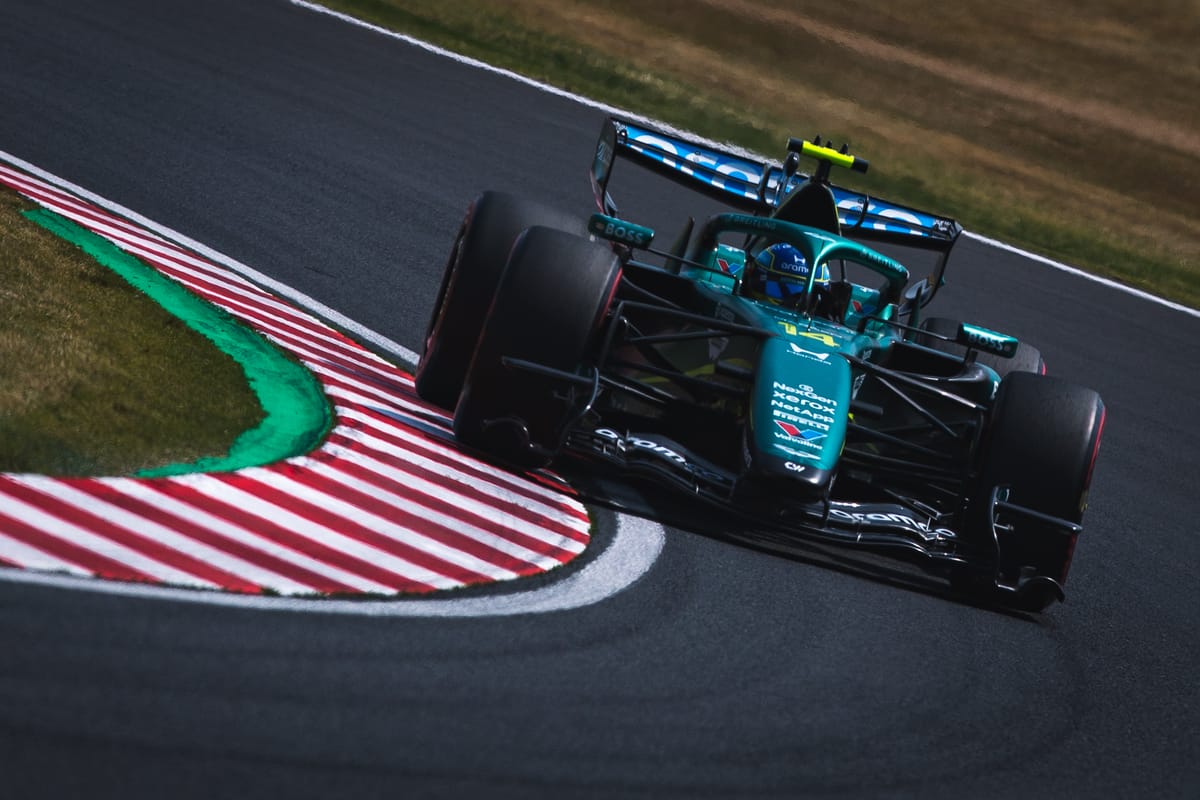
I stared at the timing sheets from Suzuka, and the numbers told a story of quiet agony. Not in the final lap time, a lonely +1 lap for Fernando Alonso, but in the micro-data most will ignore. The sector times for Aston Martin were a seismograph of distress, not of the car, but of the man inside it. Here was a two-time world champion, fresh from the profound, disorienting high of his child's birth, thrust into a machine that literally shakes the sense out of you. The team had a fix, tested it, saw the data improve, and then took it away. The numbers went from smooth to jagged. Alonso's confusion wasn't just a footnote. It was the entire thesis. This is what happens when you treat a driver as a data-logging component, not as the final, irreplaceable sensor in the system.
The Ghost Fix & The Fractured Narrative
The facts, as cold and hard as a carbon fiber plank, are these: Aston Martin tested a component, likely a damper, on Friday in Japan. The result? The car felt "completely normal" and was 80% better. By any objective metric, this was a success. The vibration frequency data, which had been painting a picture of potential long-term nerve damage, would have flatlined into a beautiful, steady hum. Then, the team made a decision based on reliability risk models. They reverted. The experimental part was removed for Saturday and Sunday.
This is where the data stops and the human chaos begins. Alonso, arriving late after a life event, was reportedly unaware of this temporary installation. He experienced a Friday of relative calm, followed by a Saturday where the violent tremors returned. His feedback loop was severed.
"The lack of clarity post-sessions highlights internal communication gaps," the report states. That's a sterile way of saying the driver was left in a narrative vacuum, trying to reconcile what he felt with what he wasn't told.
Imagine Schumacher in 2004. Every change, every tweak, was communicated through a language of relentless preparation and trust. The car was an extension of his will, and the engineering team existed to refine that connection, not obscure it. Here, Alonso was driving two different cars, but the story he was given only accounted for one. The data said "fix applied, then removed." The human experience said "reality is unstable." Which one do you think a driver trusts more?
Data as Emotional Archaeology: Reading Between the Tremors
This incident is a perfect, painful case study for my core belief: data should serve as emotional archaeology. We have the lap times, the vibration metrics, the finish. But we must dig deeper. Correlate these events:
- Personal Catalyst: Alonso's late arrival due to the birth of his child. A peak human experience, fraught with sleep disruption and emotional recalibration.
- Technical Whiplash: The brief, blissful removal of a physical stressor (vibrations) followed by its sudden, unexplained return.
- Performance Output: A finish, yes. The team's first race distance of 2026. But also a finish a lap down, in a car he could not trust from one session to the next.
The raw pace data might show a driver coping. My analysis sees a driver performing a high-wire act under conditions of extreme personal and professional dissonance. This isn't about making excuses. It's about understanding the full cost of performance. We fetishize the "driver feel" but then systematically dismantle the driver's ability to understand what they're feeling. We give them a taste of a solution, then yank it away, all while the telemetry keeps rolling. It's a form of psychological torture masked as engineering prudence.
This hyper-focus on isolated data points—reliability risk vs. immediate performance gain—is a stepping stone to the robotized racing I fear. The algorithm said "risk too high." So the part was shelved. The driver's subjective, overwhelming experience of a "normal" car was overruled. The endpoint of this logic is a pit wall that makes every decision based on a probability cloud, and a driver whose intuition is an annoying, analog glitch to be managed.
Conclusion: The Miami Test is Not Just Technical
The team plans to properly introduce the fix in Miami. Trackside chief Mike Krack expresses confidence. The data from Japan's finish will be crunched. But the real test in Miami won't be for the damper component.
The test will be for Aston Martin's ability to rebuild a coherent narrative with their driver.
Can they transition from a model of "we tried something, it worked, we took it off, sorry you weren't told" to one of seamless integration? Alonso finished Suzuka, providing "crucial data." He paid for that data with his own discomfort and confusion. The team's debt to him isn't just a new part. It's transparency.
In 2004, Schumacher's consistency was built on a foundation of absolute synchronicity between man, machine, and team. The numbers were a result of that trust, not a substitute for it. Aston Martin has the numbers from Friday practice that prove they can solve the vibration. The untold story, the one I dig for in the data, is whether they can solve the fracture they introduced into their most critical partnership. If they don't, no amount of damping material will stop the reverberations of mistrust from shaking their season apart. The stopwatch measures time, but it can also measure the distance between a team and its driver's faith. In Japan, that gap was a full, lonely lap.