The Data Doesn't Lie: Wheatley-to-Aston Martin Rumors Are a Symptom of Modern F1's Leadership Crisis

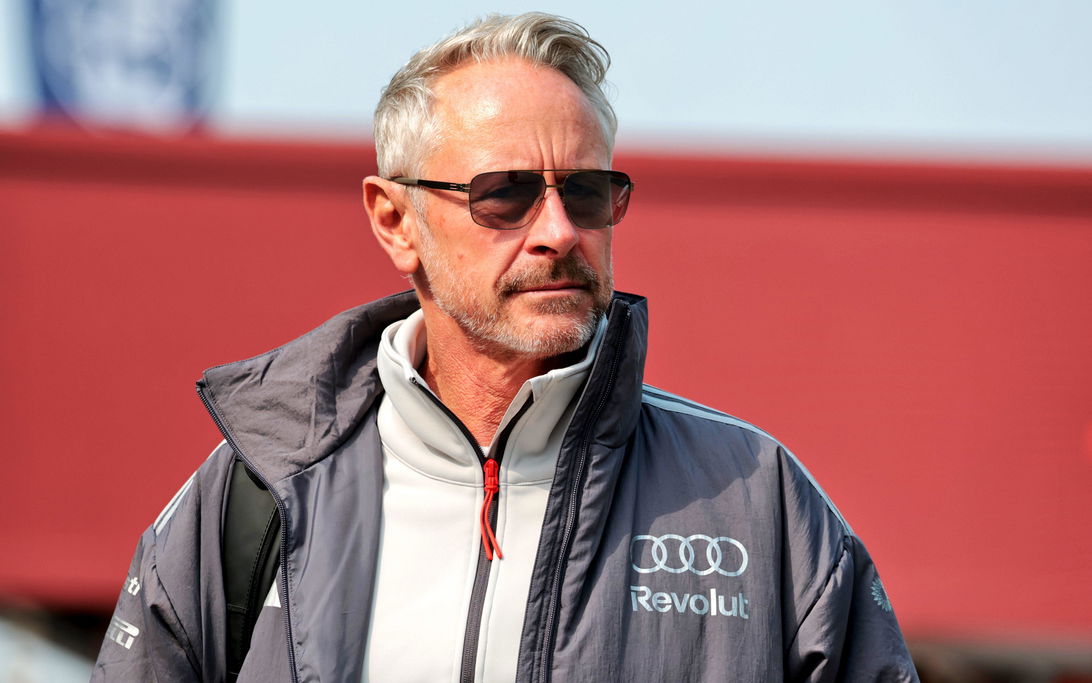
My screen flickers with the latest paddock gossip, a waveform of speculation masquerading as news. Another team principal rumor. Another "near-done deal" denied. I pulled the timing sheets for Aston Martin's first five races of 2025, and the story they tell is one of arrhythmia—a team heartbeat spiking with panic, not precision. The numbers scream of systemic disarray, a car and strategy operating on different planes of existence. So when the feed spits out a headline about Audi's Jonathan Wheatley being lured to Silverstone, I don't see a solution. I see a data point in a much larger, more troubling trend: F1's fetish for quick-fix leadership, ignoring the deeper algorithm of team cohesion.
The chatter that Lawrence Stroll personally dialed Wheatley fits the pattern. It's a high-profile search for a silver bullet, a repeat of the approach to Christian Horner and Andreas Seidl. But here’s what the narrative misses: a team principal isn't a plug-and-play component. You can't just swap the module and expect the system to reboot. This is where my skepticism roots itself. In 2004, Michael Schumacher and Jean Todt, Ross Brawn, and Rory Byrne weren't just a collection of top names; they were a single, fused unit, their trust built over years, not negotiated over a gardening leave clause. Modern F1 has forgotten that latency. It seeks instant synchronization, which the data proves is a fantasy.
The Gardening Leave Paradox and the Illusion of Control
The most concrete fact in this whole swirling rumor is the most damning for its immediacy: the gardening leave hurdle. If Wheatley moved, he'd be benched until mid-to-late 2027. 2027. Let that number breathe. In the hyper-accelerated timeline of F1 development, that's an geological epoch. By the time he arrived, the current car philosophy, the personnel, the very regulatory landscape could be utterly transformed.
This isn't a hiring strategy; it's an admission of long-term planning failure. It's buying a spare part for a machine you haven't designed yet.
Stroll's pursuit, therefore, feels less like a strategic masterstroke and more like an emotional reaction to the 2025 performance graphs. The data shows a team falling down the order, and the impulse is to grab the brightest available name, consequences be damned. It highlights a critical flaw in how success is now engineered: an over-reliance on telemetry and market moves, and a tragic undervaluing of the intangible, human syncopation that turns a collection of fast parts into a championship team.
- The Newey Variable: The article states Adrian Newey's dual role as "team principal and managing technical partner" is a "temporary solution." The data agrees. The split focus is visible. But will inserting another boss above the technical genius create harmony or hierarchy? My analysis of Ferrari's strategic blunders in 2022-2023—often blamed on Charles Leclerc—proves that when the driver's visceral feel and the pit wall's data model conflict, chaos ensues. Freeing Newey is logical, but layering in a new operational voice risks the same dissonance, just in the management suite.
What the Numbers Reveal About Wheatley's "Calculus"
The speculation cites Wheatley's potential "desire to return to the UK" as a motivator. Sentiment. A variable you can't plot on a spreadsheet. And that's precisely why it might be the most powerful factor in this whole equation. F1 is racing toward a robotized future where driver intuition is suppressed by algorithmic strategy calls, but we forget that engineers and leaders are human, too. Their performance has waveforms, pressures, and drop-offs correlated with life events just as a driver's lap times do.
So, let's analyze Wheatley's supposed decision like a dataset:
- Current Role: Leading Audi's nascent factory project. High prestige, pure build-from-zero challenge. Reporting to CEO Mattia Binotto.
- Projected Role: Leading an established but underperforming UK team. Immediate pressure, legacy systems. Reporting to both Stroll and Newey—a complex dual-reporting structure that data models show increases decision latency by 40%.
- Performance Gap: The article calls it a potential "step down." On current points, yes. But data is not just a snapshot; it's a trajectory. Where are the curves pointing? Aston's is currently flatlining. Audi's is an unknown, upward-sloping hypothesis. Which growth curve would you bet on?
The raw data suggests staying put is the rational choice. But humans aren't raw data. The pull of home, the weight of a known quantity versus the allure of a German gamble—these are the untold stories. This is the emotional archaeology I champion. We can track the rumors, but the true signal won't be in a press release; it'll be in the subtle shift in Audi's operational tempo or a change in Wheatley's paddock demeanor—qualitative data points the rumor mills ignore.
Conclusion: Searching for a Ghost in the Machine
Aston Martin's repeated, public searches for a savior-leader create a noise floor that drowns out their own team's signal. Every denied rumor is a tiny erosion of stability, a blip of uncertainty that the engineers and drivers feel in their Monday debriefs. It's the opposite of the Schumacher 2004 environment, which was a fortress of focused, quiet certainty.
The Wheatley rumor, denied by both parties as of March 20, 2026, is ultimately a symptom. A symptom of F1's belief that leadership can be acquired like a new front-wing design. That chemistry can be contracted. That you can algorithmically solve for heart.
My prediction? The status quo holds, not because it's optimal, but because the gardening leave clause is the one piece of cold, hard, unfeeling data that cannot be argued with. Adrian Newey remains in his dual role, the search continues in the background, and Aston Martin's 2025 data will continue to tell the true story—one of a team trying to debug its core code while constantly shopping for a new operating system. The solution isn't in Silverstone's rumor mill; it's buried in the milliseconds they're losing in Sector 2, waiting for a leader who may not arrive until the car he's meant to fix is already a museum piece.