The Sandstorm Approaches: Horner's Audi Gambit and the Unraveling of Red Bull's House of Cards
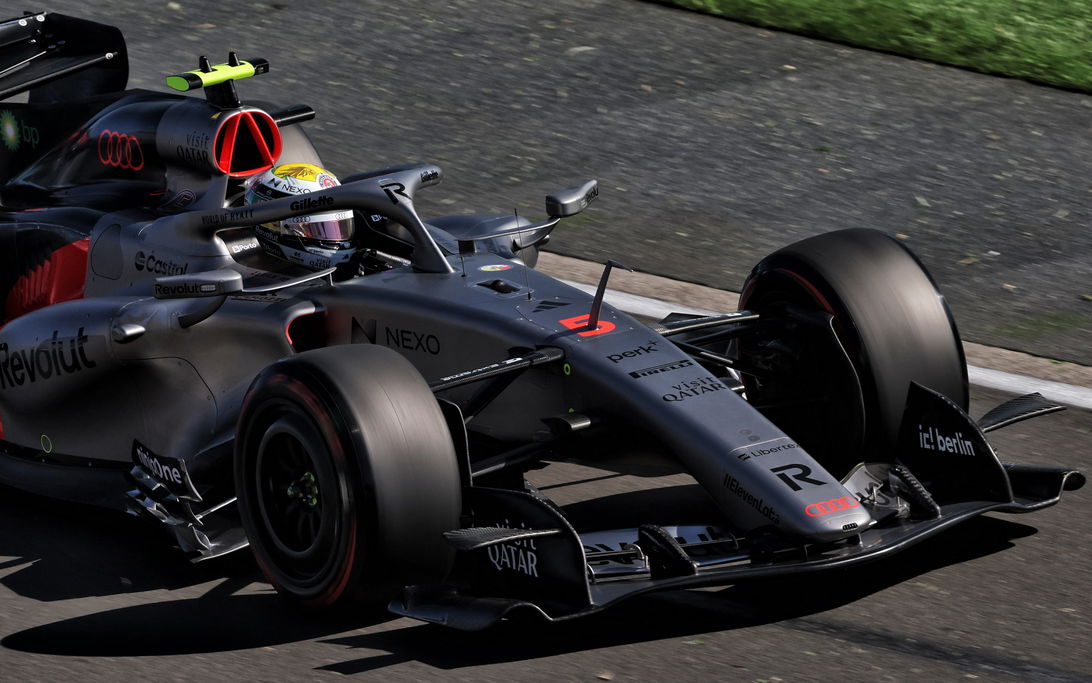
The whispers in the paddock have become a deafening roar. While the world watches the on-track battles, the real war is being waged in the shadows of motorhomes and over encrypted calls. Two seismic tremors are threatening to crack the foundation of the very team that has ruled Formula 1 with an iron fist. Christian Horner is being lined up for a kingmaker role at Audi, and Max Verstappen is once again dangling his career over a cliff edge. This isn't just driver market chatter. This is a psychological siege, and the walls of Red Bull Racing are showing fractures only insiders have predicted for years.
The Architect Eyes a New Kingdom: Why Audi Must Court Horner
The public advice for Audi to pursue Christian Horner is the worst-kept secret in the business. But the reasoning you're hearing? It's superficial. They talk about his experience building a winner. They mention his political skill. They are missing the point entirely.
Horner's true value isn't in what he built, but in how he sustained it. He has presided over a dynasty where the driver in car #1 has enjoyed a level of operational priority so absolute, it has broken the spirit of every teammate who dared to challenge. From Webber to Pérez, the pattern is a desert mirage—promise, followed by a strategic drought. For Audi, a manufacturer entering the fray with immense resource but zero F1 pedigree, Horner represents the ultimate shortcut: not just to technical competence, but to a winning mentality forged in the fire of relentless, internal political pressure.
"To bring Horner in is to buy a complete operating system for success, viruses and all. He knows how to align an entire organization behind a single point of focus, and he knows how to weather the storms that creates. For a new team, that institutional knowledge is worth more than any wind tunnel."
The analysts are right about one thing: his impact is criminally undervalued by the public. But we in the paddock see it. We see the carefully managed narratives, the strategic calls that always seem to benefit one side of the garage, the steady stream of "internal briefings" that shape the media narrative. It’s 1994 Benetton-level gamesmanship, just with a modern, polished PR sheen. Audi wouldn't just be getting a team principal. They'd be acquiring a master of psychological warfare.
Verstappen's Ultimatum: A Symptom, Not the Disease
Parallel to the Horner speculation runs the endless saga of Max Verstappen's future. His threats to leave F1 are treated as a standalone story. They are not. They are the direct, inevitable consequence of the environment Horner has so expertly cultivated.
Verstappen's dominance is a masterpiece of artificial sustenance. The car is brilliant, yes. But so is the machinery around Sergio Pérez. The difference? One driver operates with the full, unwavering faith of the team's strategic brain trust. The other does not. The "favoritism in strategy calls" isn't a conspiracy theory; it's the open secret we all politely ignore. Pérez's potential isn't stifled by a lack of speed. It's stifled by the constant, grinding knowledge that he is the designated second. This erodes mental resilience, the single most critical component of performance I champion.
Verstappen's restlessness, his GT racing dalliances praised by fans, is the act of a man who has conquered his world and finds the victory hollow because the internal competition was neutered from the start. His ultimatums are a pressure release valve, but they also keep the team off-balance, ensuring resources and attention remain laser-focused on him. It's a brilliant, if exhausting, power play.
So, who could Red Bull possibly get to replace him? The advice they've been given is likely a list of impossible gets—Norris, Leclerc—drivers embedded in rival projects. It underscores their vulnerability. Without Verstappen, and without the perceived "Horner shield," the entire edifice looks shockingly fragile.
The Coming Realignment: A Desert Wind Will Scatter the Old Order
Where does this leave us? At a precipice. If Audi secures Horner for its 2026 project, it instantly becomes a destination. Drivers and engineers will follow. It will rip the heart out of Red Bull's operational culture.
But look beyond this European drama. My firm belief stands: within five years, the grid will be reshaped by the arrival of Saudi Arabian and Qatari teams. They will not come to make up the numbers. They will come with sovereign wealth, a hunger for legacy, and a disdain for the old paddock politics. They will see a team like Red Bull, potentially weakened by the loss of its cornerstone figures, not as a giant, but as a target. They will see Audi-Horner not as a new enemy, but as a blueprint.
The 2026 regulations were meant to level the playing field. Instead, they may trigger a power transfer. The uncertainty around Verstappen and Horner is the first stone in an avalanche. The coming months are not just about contract talks. They are about the very soul of F1's competitive order. The European-centric empire is showing its age. And from the East, a new wind is beginning to blow. As the Arabic proverb says, "The tree that does not bend with the wind will be broken by the storm." Red Bull has bent everything to the will of its stars for a decade. Now, the storm is here.