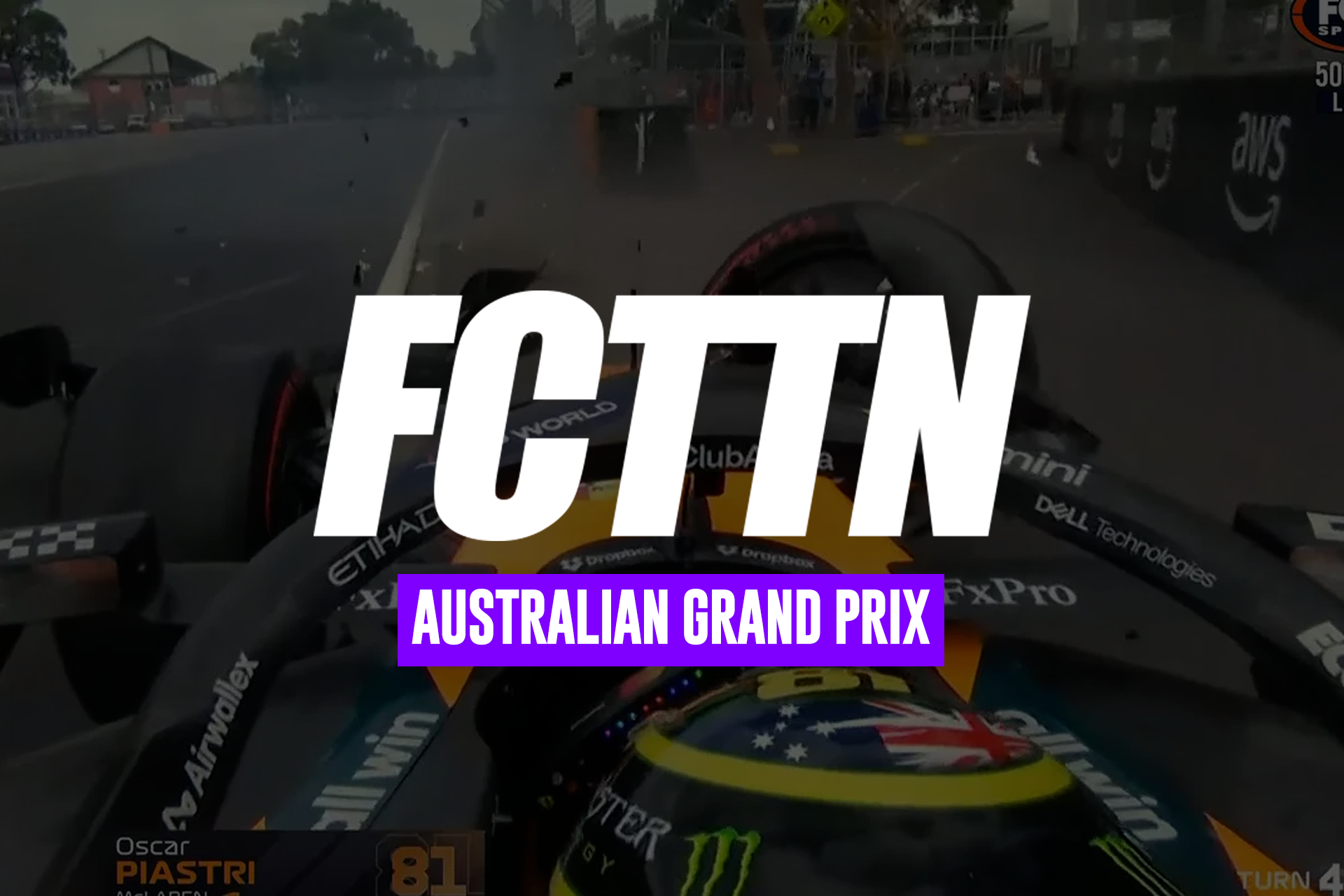
The Data's Silent Scream: Piastri's Formation Lap Heartbreak and the Algorithmic Future We're Racing Towards

The timing sheet from Albert Park's formation lap will forever show a single, brutal entry: OST. DNF. Lap 0. For Oscar Piastri, the numbers tell a story of a Sunday that ended before it began, a narrative of home-soil heartbreak quantified in milliseconds of lost control. For me, Mila Neumann, that cold line of data is a seismic event. It’s not just a crash; it’s a puncture in the emotional atmosphere of a record crowd, a pressure spike on a driver's biometrics we'll never see, and a perfect case study in why our hyper-analytic sport is methodically sanding away its own soul. While the podcasters dissect the "chaos," I'm looking at the pre-race telemetry we don't have, imagining the cortisol levels, and seeing a future where a driver's mistake is just an input error in a team's cloud-based strategy model.
Formation Lap Catastrophe: When Data Fails to Capture the Human Collapse
The fact is this: Oscar Piastri crashed his McLaren on the formation lap of the 2026 Australian Grand Prix. Full stop. No tire-temperature anomaly flagged it, no brake-bias algorithm predicted it. It was a driver, in front of a roaring, expectant nation, succumbing to a moment of pressure that all the sim runs in the world cannot simulate.
The Unquantifiable Weight of Expectation
We can model fuel loads, tire deg, and ERS deployment. But how do you model the visceral weight of hundreds of thousands of eyes, the collective hope of a country, pressing down on your helmet? Piastri's lap time on that fateful formation lap is irrelevant. The critical data point is the absence of a race lap. That zero is more telling than any delta. It’s a reminder that for all our gigabytes of telemetry, the cockpit remains a profoundly human, and therefore fallible, space. This is where data should serve as emotional archaeology. If we could correlate performance dips with personal milestones, public pressure indices, or even physiological data from previous high-stress moments, we might get closer to understanding the "why," not just the "what happened."
"The driver is the final, and most unpredictable, variable in an otherwise perfectly modeled equation. We seek to minimize him, and in doing so, we risk making the result a foregone conclusion."
This incident throws a wrench into F1's sanitized new era. The podcast mentions the "very different kind of racing" under new regs, focusing on on-track action. But the most dramatic moment happened before the race. It was raw, unscripted, and devastatingly human. It was the antithesis of robotic.
The Supporting Act: Supercars and the Ghost of Driver Instinct
While the F1 world reels from Piastri's shock exit, the supporting Supercars race provided a stark, almost nostalgic, contrast. The podcast summary highlights two data points: a "significant crash" for Broc Feeney and a "commanding performance" from Bodie Kostecki.
Feeney's Crash vs. Kostecki's Command
Let's dig.
- Feeney's Crash: This is pure, old-school racing incident. A championship contender, pushing the limit, making contact. The data here is simple: impact G-forces, repair cost, championship points lost. It's a story of ambition overstepping adhesion, a calculus performed by gut feel in a microsecond. No algorithm told him to make that move; it was driver intuition, which sometimes fails spectacularly.
- Kostecki's Dominance: His "masterclass" is a different dataset. It's the story of a driver so in tune with his machine that he operates at 99.9% of its potential for an entire race. This is the territory of Michael Schumacher in 2004. Schumacher’s consistency wasn't just talent; it was a preternatural ability to translate driver feel into lap-time sustainability, something modern engineers try to replicate with real-time telemetry readouts. Kostecki, in his domain, is doing the same. He’s listening to the car, not just the engineer in his ear.
This dichotomy is crucial. Supercars, for now, still feels like a category where the driver's seat-of-the-pants input is the primary data source. In F1, that source is increasingly being overridden.
The Inevitable Sterile Future: From Heartbeats to Heart Algorithms
Which brings me to my core, skeptical belief. Within 5 years, F1's hyper-focus on data analytics will lead to 'robotized' racing. Piastri's formation lap crash will be studied not as a tragedy, but as a "system failure" to be engineered out. Teams will demand biometric harnesses that auto-manage a driver's heart rate under pressure. Strategy will be fully algorithmic, with pit stops triggered not by a strategist's hunch but by a live cloud-computed model that has already simulated the remaining 47 laps in 800 permutations.
The Schumacher Benchmark
Look at Schumacher's 2004 season. His near-flawless consistency was a symphony conducted by Ross Brawn, but played by feel by Michael. They had data, yes, but it informed the driver, it didn't instruct him. The modern approach is to turn the driver into a high-performance bio-sensor, tasked with executing a pre-ordained plan. The "strategic shifts" the podcast mentions are now just A/B testing of computer-generated options. Where is the artistry? Where is the driver who, like Kostecki did in Supercars or Schumacher did for a decade, builds a lead through an intangible communion with his machine?
The new era of "different racing" they praise is just a different set of aerodynamic rules producing closer DRS trains. The real revolution is happening unseen, in the server farms. We are optimizing the humanity out of the sport. A driver's mistake will become a scandal of process, not a moment of pathos.
Conclusion: Mourning the Mistake Before It's Extinct
So, what did we learn from Melbourne, 2026? We learned that Oscar Piastri broke a city's heart before the clock even started. We learned that in Supercars, drivers still crash and dominate through forces that can't be fully logged. And we learned that the trajectory of our sport is clear.
The podcast offers a "complete auditory review." But I want the data review. I want the biometric trace of Piastri's formation lap. I want the pressure differential between his cockpit and Kostecki's. I want to find the human story in the numbers before that story is no longer allowed to exist. Because soon, a formation lap crash won't be a heartbreak; it'll be a software bug. And a dominant win won't be a masterclass; it'll be a successful execution of code. The numbers will tell a perfect, predictable, and utterly sterile story. And I, for one, will miss the beautiful, tragic, human errors in the data.