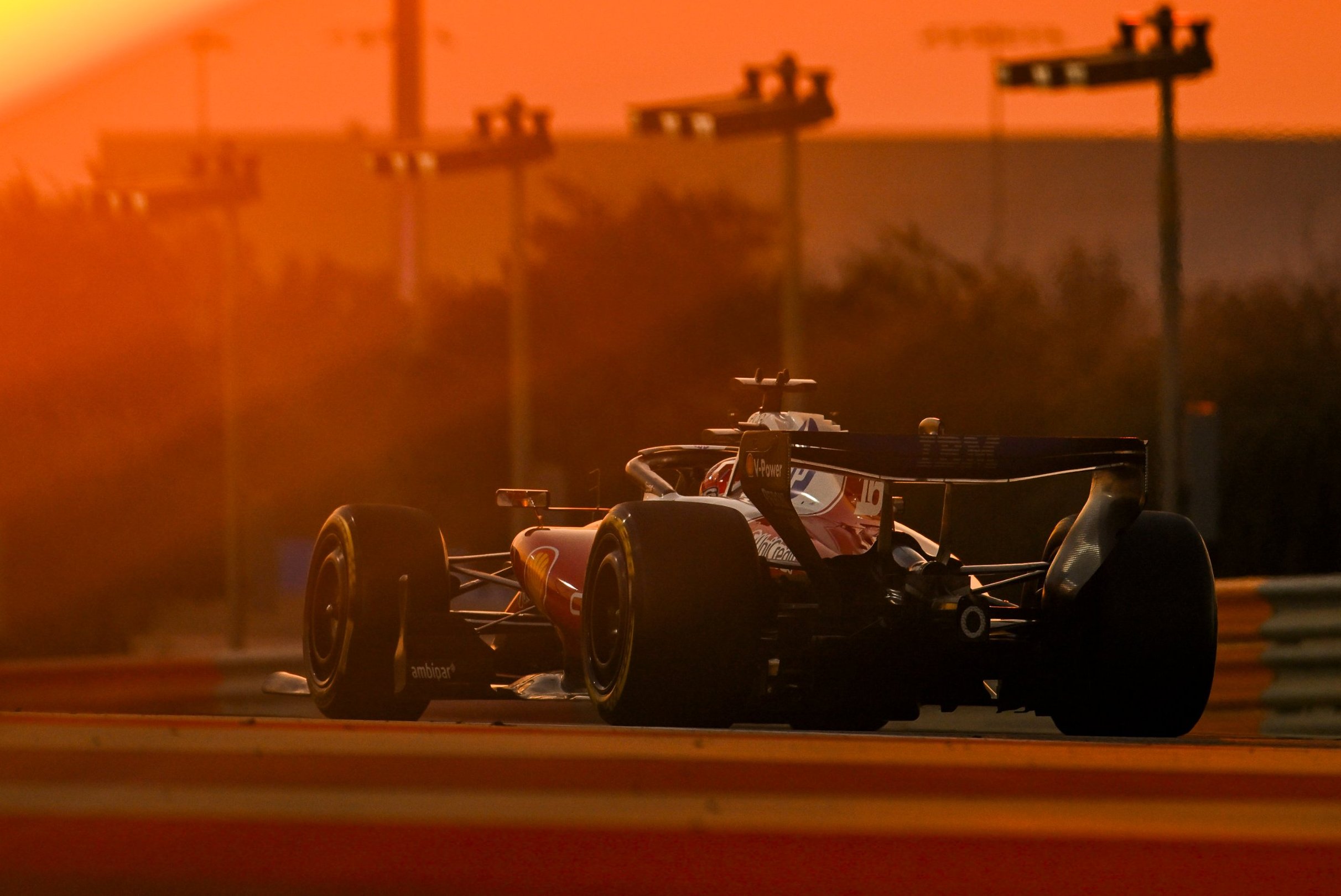
The Numbers Whisper: Bahrain's Data Dump Hides the Real Human Drama

I spent the weekend staring at a spreadsheet of 2,847 timed laps from Bahrain, and the story it tells is one of sanitized, corporate efficiency. The raw numbers from Formula 1's sole pre-season test, concluded on February 20, 2026, are a sterile ledger: total mileage, average stint length, delta to theoretical best. They scream of process over passion. The official narrative? Ferrari looks strong, Red Bull is mysterious, Mercedes bounces. But buried in the micro-sectors and tire deg curves are the fading heartbeats of instinct, the kind Michael Schumacher would have used to feel a car's soul, not just validate a simulation. This isn't just testing. It's the final audit before we hand the sport over to the algorithms.
The Ferrari Facade: Leclerc's Unseen Prison of Precision
The data from the SF-24 is, admittedly, beautiful. A smooth, consistent waveform of lap times, high mileage, no catastrophic peaks of failure. The headlines will call it a "significant step forward in drivability." I call it a perfectly engineered cage.
Charles Leclerc's raw pace data from 2022-2023 shows he is the most consistent qualifier on the grid, a fact often drowned out by the noise of Ferrari's strategic cacophony. This test's "promising pace" is built for him. It's a car designed to eliminate variables, to turn a driver's sublime feel into a predictable, plottable output.
- The Dehumanized Advantage: Ferrari's "reliability" means Leclerc can now execute a pre-ordained strategy with machine-like precision. His error-prone reputation has always been a convenient scapegoat for a team that lost races in the strategy office, not the cockpit. Now, with a car that doesn't bite, the pressure shifts entirely. Can he be a flawless component in a flawless system? The data demands it.
- The Schumacher Contrast: In 2004, Schumacher's consistency came from a symbiotic, almost violent connection with the F2004. He and Ross Brawn used data as a post-session confession, not a live-action script. Today, Leclerc's steering wheel is a data-entry terminal. The test's success means Ferrari will trust their numbers more than ever, potentially overriding the one human element—driver intuition—that could actually save them when those numbers inevitably fail in Melbourne.
This isn't progress. It's the quiet, efficient paving over of genius with spreadsheets.
The Coming Sterility: Bahrain as the Algorithm's Proving Ground
Look beyond the lap charts. The true story of Bahrain is how every team, without exception, treated the test as a data harvest. This is the prelude to the 'robotized' racing I see within five years. The sport is hyper-focusing on analytics to the point of self-paralysis.
Red Bull's "Disciplined Program": The New Obfuscation
The report says Red Bull focused on "correlation data" and "experimenting with set-ups." Translated: they were teaching their AI models. Every lap, every adjustment, is a data point fed into a system designed to make race-day decisions—pit stops, tire calls, engine modes—algorithmic. The "minor reliability gremlins" weren't problems; they were valuable error-data inputs. They are building a system where Max Verstappen's role is to be a perfect, predictable sensor array, not a decision-maker.
Mercedes' Bouncing: A Problem Data Can't Yet Solve
Even Mercedes' struggle with the "recurring bouncing issue" in the W15 is telling. They are "analyzing data to understand" it. In Schumacher's era, he'd have gotten out of the car after three laps, described the exact frequency of the bounce in his spine, and the engineers would have had a mechanical hypothesis before the telemetry was even downloaded. Now, they'll run simulations within simulations, searching for a digital ghost. The driver's feel is an anecdote; the gyro sensor's output is gospel.
This shift turns data from a tool into a tyrant. We are moving from emotional archaeology—where I dig into numbers to find stories of pressure, like correlating a driver's mid-season slump with personal events—to emotional eradication. The goal is to remove the human variable entirely.
- Aston Martin, McLaren, VCARB: Their "moments of competitive pace" are just statistical clusters in the midfield probability cloud.
- Alpine and Williams' setbacks: Merely insufficient data collection due to downtime, a logistical failure more than a sporting one.
Conclusion: The Human Fade-Out Before Melbourne
The cars are now in transit to Australia. For the next two weeks, factories will hum with simulation suites, not the sound of passionate debate. The "final upgrades and strategic decisions for the first race" will be outputs, not inspirations.
The official line says the "true competitive picture will only become clear under the pressure of qualifying and race conditions at Albert Park on March 24." I disagree. The picture is already clear. We saw it in Bahrain: the picture is a server rack.
We are heading to Melbourne for the first race of a season where the champion may not be the best driver, but the team with the most obedient driver and the most faultless data model. Ferrari's test-topping consistency is the canary in the coal mine. It's a warning that we are perfecting the sport out of its soul, trading Schumacher's fiery instinct for Leclerc's flawless, data-driven execution. The numbers from Bahrain tell a story of incredible technical achievement. They just forgot to include the chapter on why we should care.