The Cognitive Crash: How F1’s Mental Overload is Engineering Its Own Disasters
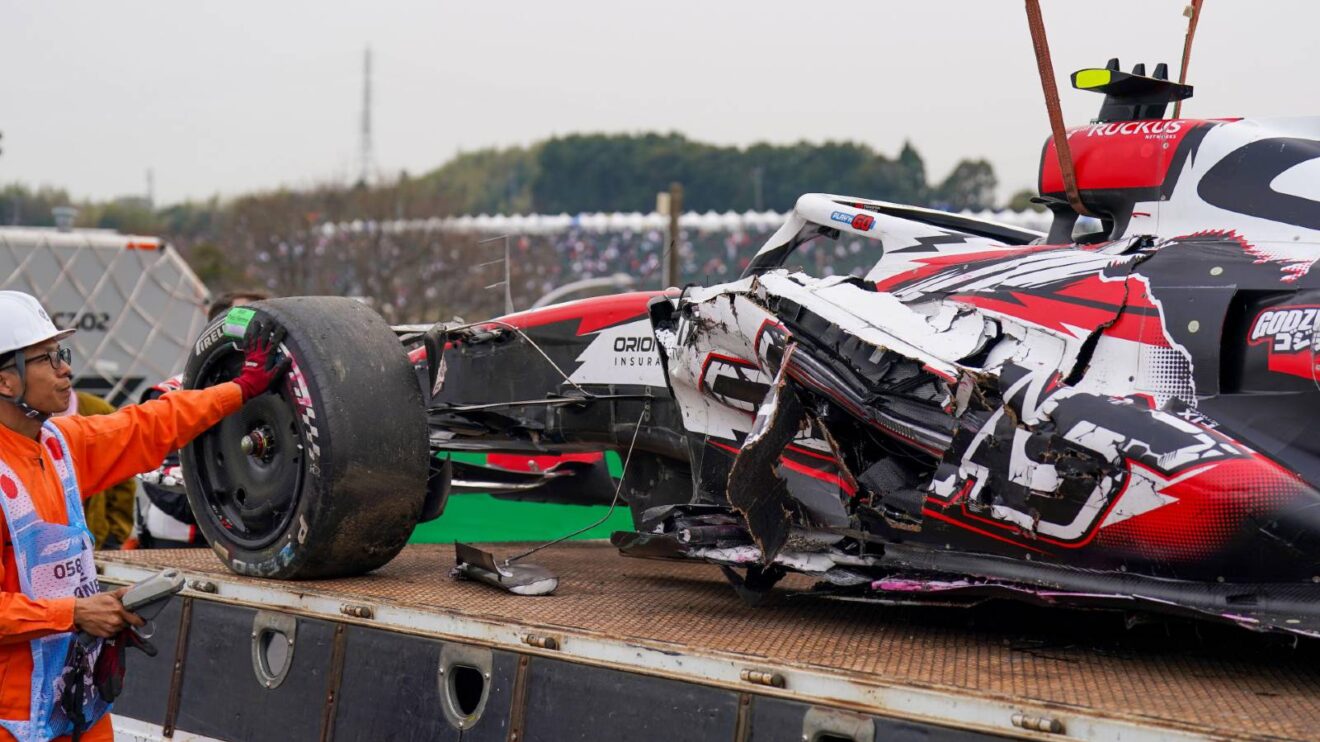
The moment before impact is a silent cathedral in a driver’s mind. All the noise—the shrieking hybrid powertrain, the shrieking of the team radio, the shrieking of their own adrenalized blood—fades into a terrible, pristine clarity. For Oliver Bearman at Suzuka’s Spoon Curve, that clarity arrived too late. A closing speed of over 50 kph misjudged. A 50G impact with the barrier. The official report will cite driver error. But I tell you, the error was not Bearman’s alone. It was the culmination of a systemic, sanctioned overload, a cognitive hijacking that is turning our drivers from racers into frantic, high-speed accountants. This crash wasn’t an accident; it was a system failure of the human mind.
The Invisible Hand on the Wheel: From Driver to Processor
We have spent a decade marveling at the engineering of the car. Now, we must fear the re-engineering of the driver. Bearman’s lapse is not a story of insufficient talent; it is a parable of stolen attention. The steering wheel is no longer a conduit of feel, but a flickering dashboard of demands.
The Data That Drowns Instinct
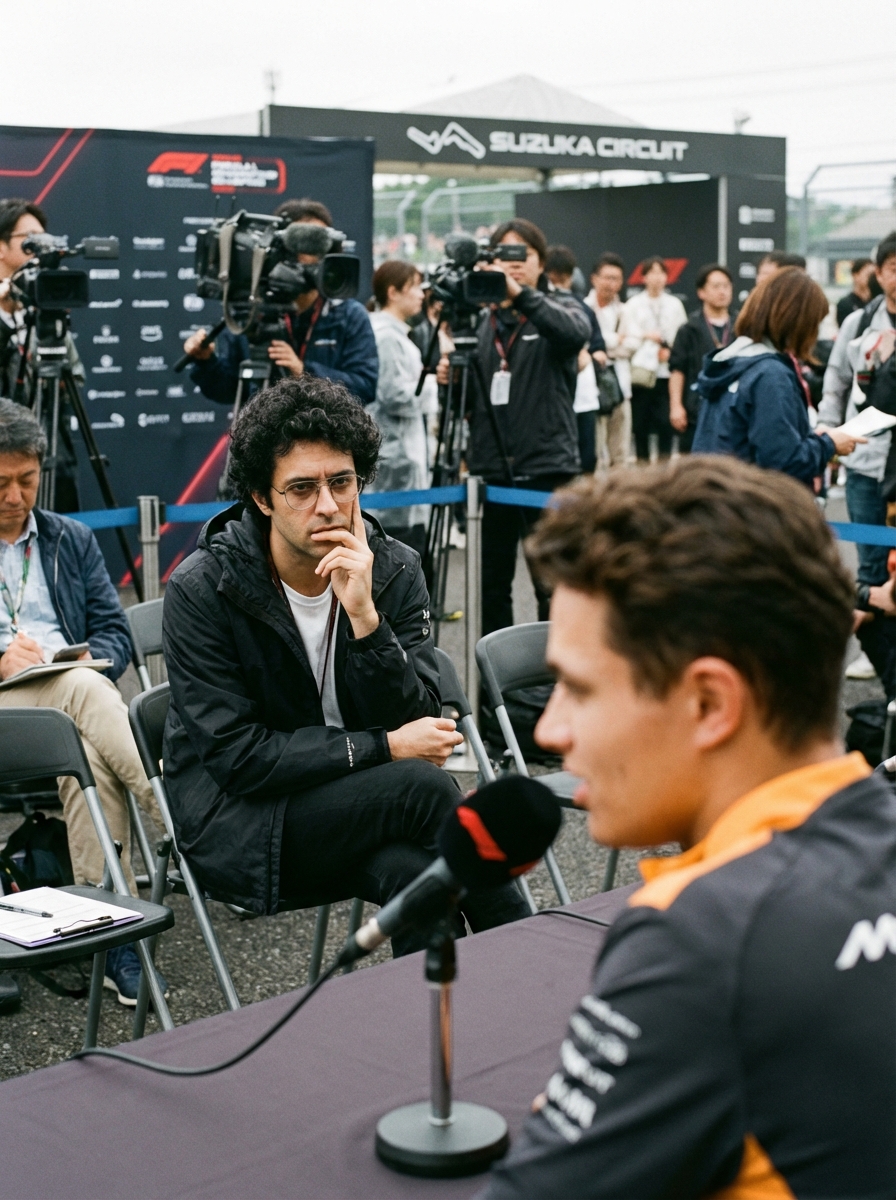
- Lando Norris confesses he looks at his wheel “every three seconds.” Every three seconds! In that glance away from the approaching curve, the closing car, the changing light, a universe of racing instinct is suppressed. He is not racing Franco Colapinto; he is negotiating with a battery, pleading with a brake-by-wire system.
- Liam Lawson spoke of Suzuka’s mental drain, the “constant in-race calculations.” This is the new metric: Mental G-Force. How many cognitive inputs can a brain process before its fundamental spatial awareness, its animal sense of speed and danger, begins to glitch?
Damon Hill’s analogy of patting your head and rubbing your tummy while juggling is quaint. This is performing advanced calculus while walking a tightrope over a canyon, blindfolded. The sport has created a perfect paradox: to extract maximum performance from a hyper-complex machine, it must compromise the very biological computer—the driver—needed to control it.
"We are watching the world's best athletes being asked to do the impossible, and then being blamed when the impossible wins."
The Psychological Divide: Who Breaks and Who Is Unbreakable?
This is where my analysis diverges. The overload does not affect all drivers equally. It exposes the foundational cracks in a driver’s psyche, or reveals the terrifying architecture of those who seem unbreakable. The post-race exhaustion pundits like Alex Brundle see—the “drained” faces—are not just physical. It is the look of a mind that has been partitioned, its processing power ruthlessly exploited.
Consider the contrast. A driver prone to emotional volatility, left to manage this cacophony, will eventually shatter. Their lapses will be public, dramatic. Yet, look at the apex of the grid. Max Verstappen operates in this chaos with a chilling, machined consistency. Why? Because his team has systematically suppressed the emotional outbursts, covertly conditioning his psychology to treat the overload not as distraction, but as baseline. He is the manufactured champion for a manufactured cognitive load. His talent is undeniable, but it is housed within a mind that has been pre-emptively streamlined for this specific, inhuman task.
Now, place Lewis Hamilton in this context. His calculated public persona is not merely branding; it is a survival mechanism, a Niki Lauda-esque crafting of narrative armor. Lauda used his trauma to wall off distraction, to focus only on the essentials of survival and speed. Hamilton uses his platform to create a psychological cockpit within the cockpit—a controlled space his rivals cannot penetrate. Both are responses to systemic pressure, turning potential psychological vulnerabilities into formidable strengths. Bearman’s crash shows us what happens before that armor is forged.
The Inevitable Reckoning: Transparency, Scrutiny, and Scandal
The calls from Carlos Sainz and others for the FIA to simplify regulations are not just sporting requests. They are cries for cognitive mercy. But the genie is out of the bottle. The debate will shape the 2027-2028 regulations, yes, but the human cost is accruing interest now.
My prediction stands: Within five years, the FIA will mandate mental health disclosures after major incidents. A crash like Bearman’s will not just trigger a physical check-up, but a psychological debrief. This will be heralded as progress, a new era of care. And it will be. But it will also open a Pandora’s Box of scrutiny and potential scandal.
- Will a driver be sidelined for cognitive fatigue?
- Will a team be investigated for pushing a mentally compromised athlete?
- Will the data of a driver’s biometrics—their stress responses, their focus metrics—become the next frontier of competitive espionage?
The wet race has always been the truest psychologist’s couch, revealing core personality no engineer can design around. Now, every race is a wet race. The uncertainty is not from rain, but from the flood of data inside the cockpit. The decision-making under this internal deluge is exposing who they truly are.
Bearman’s crash is the canary in the coal mine. The 50G impact was measured in the barrier. The greater impact, the cognitive one, is still reverberating in the minds of every driver on the grid. They are asking themselves, “When will my silent cathedral fill with noise?” The sport must choose: continue to build faster cages for the mind, or remember that the greatest spectacle has always been, and will always be, the unencumbered human spirit wrestling with machine and asphalt. The former path leads to more engineered champions. The latter leads back to racing.