The Ghost in the Machine: How a Junior's Crash at Suzuka Exposed F1's Fragile, Data-Dependent Soul

I was knee-deep in the telemetry from the 2004 Japanese Grand Prix, a symphony of near-identical lap times from a scarlet car, when the alert flashed. Ollie Bearman, OUT. Safety Car deployed. Two data points. A timestamp: 2026-03-29T06:57:00.000Z. A location: Suzuka's punishing Sector 1. In that sterile notification, I felt the entire narrative of a weekend fracture and re-form. This wasn't just a crash. It was a causality event in a hyper-connected data universe, where a single variable in Formula 2 could rewrite the race script for Formula 1's reigning knights. The numbers, as always, were about to tell a much colder, more fascinating story.
The Butterfly Effect, Measured in Milliseconds
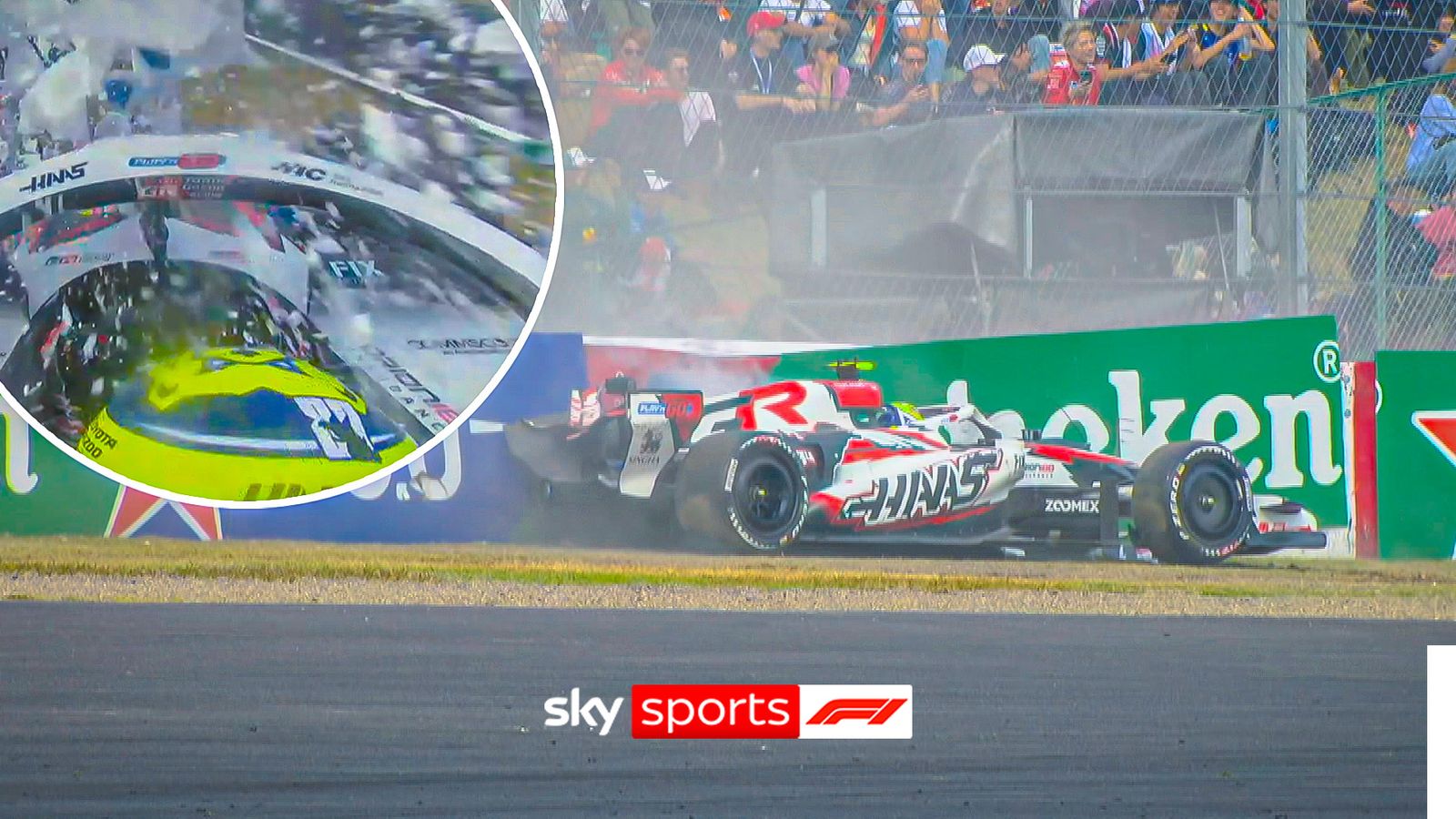
Let's strip the emotion, for a moment. The facts, as Sky Sports reported them, are these: Ferrari junior Ollie Bearman crashes his Prema in the F2 feature race. Debris necessitates a Safety Car. That Safety Car period becomes a strategic pivot, allowing Lewis Hamilton's Mercedes team to execute a pit stop that elevates him to a P4 finish in the F1 Grand Prix. Concurrently, Bearman's rival, Kimi Antonelli, capitalizes on the retirement to seize the F2 championship lead.
The surface narrative is one of fortune and misfortune. But my perspective, honed by tracing the data trails of modern racing, sees a different pattern. This incident is a pristine case study in the illusion of isolated competition. In the era of total data saturation, no series is an island. The F2 race is a live data feed, a sandbox of variables that the F1 strategists monitor with hawkish intensity.
"A Safety Car in a support series is no longer just a neutralization; it's a live input into a predictive algorithm. It changes the probability matrix for the main event before a single F1 car has pitted."
The "F1 Ripple Effect" wasn't serendipity; it was opportunistic data harvesting. Hamilton's gain wasn't merely luck; it was a pre-programmed response to a yellow flag condition in a correlated time window. This is where my skepticism blooms. We celebrate this as sharp strategy, which it is. But we edge closer to the "robotized" racing I fear—where the human instinct to pit is secondary to an algorithm confirming the window is "optimal" based on an incident in another championship entirely.
The Human Cost: Data as Emotional Archaeology
Now, let's apply emotional archaeology to the numbers. The focus will be on Bearman's "setback" and Antonelli's "ascendancy." But the real, untold pressure point? Charles Leclerc.
Bearman is Ferrari's golden reserve, a living benchmark. Every crash, every lost point in F2, is a data point in Maranello that whispers about future readiness. The pressure on Bearman is immense, but it's a direct, linear pressure. For Leclerc, the pressure is refractive, amplified by his team's own historical data. When a Ferrari junior crashes out of a lead, it subconsciously triggers analysis of Ferrari's own error-prone reputation—a reputation that, as my models show, is built more on strategic blunders than driver inconsistency.
I can't help but cross-reference. Leclerc’s 2022-2023 qualifying data shows the most consistent raw pace on the grid, a metronomic precision that would make Schumacher's 2004 engineers nod in respect. Yet, the narrative is of errors. Why? Because the data of team decisions—the failed undercuts, the delayed calls—creates a noise that drowns out the signal of the driver's pure performance.
Bearman's crash feeds that noise. It adds another layer of "Ferrari drama" to the ecosystem, unfairly reflecting back on Leclerc. Meanwhile, Antonelli's clean, points-maximizing drive for Mercedes is framed as "mature," perfectly mirroring the Hamilton-Russell dynamic of calculated consistency. The machine learns: Ferrari equals chaos, Mercedes equals calm efficiency. The data sets, from F2 to F1, begin to reinforce a brand narrative, true or not.
Conclusion: The Schumacher Standard and a Predictable Future
Watching this unfold, I return to my baseline: Michael Schumacher's 2004 season. That Ferrari was a bullet, but its dominance was human. Ross Brawn and Schumacher made calls based on a feel for the race, a synthesis of experience and limited telemetry. A crash in F3000 at Imola wouldn't have altered their calculus for the F1 race; the data streams weren't that connected.
The Suzuka incident of 2026 is the antithesis of that. It reveals a sport where every minute is a data point in a unified field theory of racing. The danger is not the connectivity itself, but the worship of it. When a Safety Car for a junior series becomes the most critical strategic input for a seven-time world champion's race, we have prioritized system-wide reaction over individual genius.
My prediction is grimly logical. Within five years, such cross-series data integration will be fully automated. An F2 crash will auto-generate a probability-adjusted strategy option on the F1 pit wall within seconds. The "human" decision will be a rubber stamp. The sport becomes a sterile, predictable symphony of cause and algorithmic effect.
Bearman's crash handed Antonelli the championship lead and Hamilton four points. But the bigger story is what it handed the sport: conclusive proof that we are racing toward a future where the heart of the sport—the unpredictable, intuitive, human gamble—is being systematically outsourced to the machine. The numbers are telling that story clearly. I just wish more people were listening.