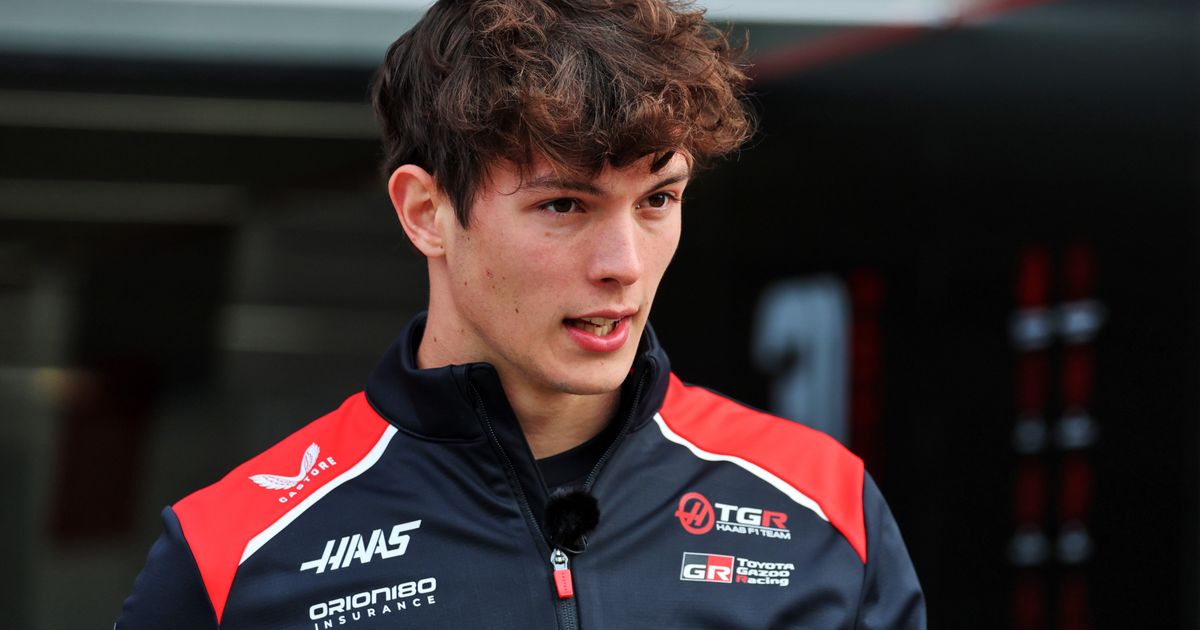
The Delta Trap: How F1's 2026 Data-Driven Dream Nearly Wrote Bearman's Obituary

I stared at the telemetry trace from Japan, and for a moment, I wasn't looking at speed curves and energy deployment maps. I was looking at a predator-prey graph. One line, representing Oliver Bearman's Haas, arcing upward like a hawk in a dive. The other, Franco Colapinto's Williams, holding a shallow, conserving line. The point of intersection wasn'tt a pass. It was a 50 kph (31 mph) impact, a terrifying testament to a sport programming its own chaos. The numbers screamed a story the press release about a "freak accident" tried to mute. This wasn't an anomaly. It was the first violent data point in a dangerous new equation.
The drivers called it a "massive delta." I call it the inevitable output of a system that prioritizes algorithmic energy management over human reaction time. Bearman walked away on March 29th, 2026. But the sport's soul might not be so lucky.
The Algorithmic Blind Spot: When Data Ignores the Human Variable
The 2026 power unit regulations were born from a spreadsheet, a masterpiece of sustainable engineering and competitive balance. The goal? Aggressive energy recovery and deployment windows to create strategic overtakes. The reality? It has created a binary racing condition more volatile than any fuel-flow scandal.
The Crash as a Data Point
The incident is a clean, horrifying case study. Bearman, deploying a full battery charge on the straight. Colapinto, deep in a mandatory harvesting mode, effectively a moving chicane. The 50 kph closing speed wasn't driver error; it was system-designated roles playing out in real space. The drivers warned the FIA in a Friday briefing. The data models likely said the probability of a collision at that delta was within acceptable parameters. Until it wasn't.
"We are racing with spreadsheets now, not instincts. Schumacher in 2004 felt the degradation in his hands and adjusted his line. Today, a driver feels a battery percentage and prays the guy ahead isn't on the opposite cycle."
This is the core of my skepticism. We have engineered a scenario where the most critical variable—the speed of the car directly ahead—can become fundamentally unpredictable to the pursuing driver. No amount of "driving etiquette" can solve a physics problem written into the rulebook.
The Leclerc Paradox and the Death of Feel
This brings me to Charles Leclerc's comment, which the original article glosses over. He noted the danger of "direction changes during heavy energy-saving modes." This is a driver whose raw one-lap pace data from 2022-2023 shows near-metronomic consistency, a qualifier who can wring the neck of a car with sublime feel. Yet his reputation is "error-prone," often a direct result of Ferrari's strategic data telling him to do the improbable.
His insight here is profound. A direction change—a simple defensive move—while in a high-harvest mode means the car is sluggish, unresponsive, a data point lagging behind its own chassis. The pursuing driver, in full deployment, is a missile with locked coordinates. The data sets are perfectly legal. The human in the middle is left to reconcile the impossible. We are suppressing the very driver intuition that makes racing an art, replacing it with a high-stakes game of energy chicken.
From Reactive to Predictive: The Sterile Future We're Coding
The FIA's response will be telling. They will talk of "adaptations" and "mitigations." But from my desk, surrounded by seasons of timing data, I see only two paths, and both chill me.
Path One: The Robotization of Race Control
The first is more data overlays. Mandatory real-time energy-mode sharing between cars? Automated track-limit warnings that also govern "maximum delta zones" on straights? We are inches from the car's algorithm not just suggesting a strategy, but enforcing a speed limit to protect from the strategy of the car ahead. This is the robotized racing I fear: a sanitized, predictable procession where overtakes are scheduled by the software when the delta is deemed "safe." The visceral, instinctual lunge? A violation of protocol.
Path Two: A Return to Mechanical Grip (A Fantasy)
The second path, the unlikely one, is a philosophical rollback. It would mean acknowledging that by making the power unit's performance so binary and situational, we have created an untenable risk. It would mean rebalancing the formula toward mechanical grip and aerodynamic courage—things a driver controls—and away from hidden energy states. It would mean valuing the consistency of a Schumacher 2004 season, where speed came from symbiotic car control, not from who happened to have a fuller battery at the kilometer board.
Oscar Piastri is correct that more incidents may be "unfortunate." But that's the language of a scientist observing a failed experiment. These are men in carbon fiber cockpits, not lab rats.
Conclusion: Data as a Mirror, Not a Master
Bearman's crash is not a freak. It is a first warning shot. The numbers from Japan tell a story of a sport at a crossroads. We can use data as emotional archaeology, to understand the immense pressure on these drivers who must now compute closing speeds that change as radically as stock prices. Or we can let data become the master, slowly erasing the human variable until the race is a mere visualization of a simulation that already ran on Thursday.
The 50 kph delta is more than a speed difference. It is the growing gap between the sport we are engineering and the sport we fell in love with. We must close it, before the next data point is one we cannot bear to analyze. The timing sheets don't lie. And right now, they are telling a tragedy in the making.