The Unraveling: How a Disqualification at the Nürburgring Exposes the Cracks in Max Verstappen's Fortress
The veneer is cracking. Not with a dramatic shatter, but with the quiet, persistent creep of fissures spreading from an unexpected point of pressure. For Max Verstappen, the fortress of invincibility, meticulously constructed over three dominant Formula 1 seasons, was always going to be tested from within. We just didn't expect the breach to come from a GT3 car on the Nordschleife, or the repair offer to arrive via a winking emoji from a rival manufacturer. This isn't just a story about a tyre miscount. It's a psychological thriller playing out in real-time, where a social media quip from BMW M Motorsport feels less like a joke and more like a probe into a weakening psyche.
The Sanctuary of Dominance and Its Violation
For Verstappen, the Nürburgring Nordschleife was meant to be a sanctuary. A place where the suffocating pressures of Red Bull's 2026 "horror show" – a term not coined by some sensationalist blogger, but by Mercedes' Toto Wolff himself – could be bled off through pure, unadulterated speed. And in that, he was devastatingly successful.
- Pole position by 1.9 seconds. A margin in GT3 racing that is borderline absurd.
- Race victory by nearly a minute. A display of control so total it must have felt like a homecoming for the man who has forgotten what winning feels like in F1 this year.
This was the old Max. The one whose emotional spectrum was famously narrowed by Red Bull's covert psychological engineering into a laser-focused rage-to-joy pipeline. The Nürburgring was to be his pressure valve. Then, the disqualification. A technical infringement: seven sets of tyres used instead of six. A clerical error. A human error. Not of the driver, but of his team. His other team.
"For sure we can also find you a real BMW M4 GT3 EVO, if you are interested."
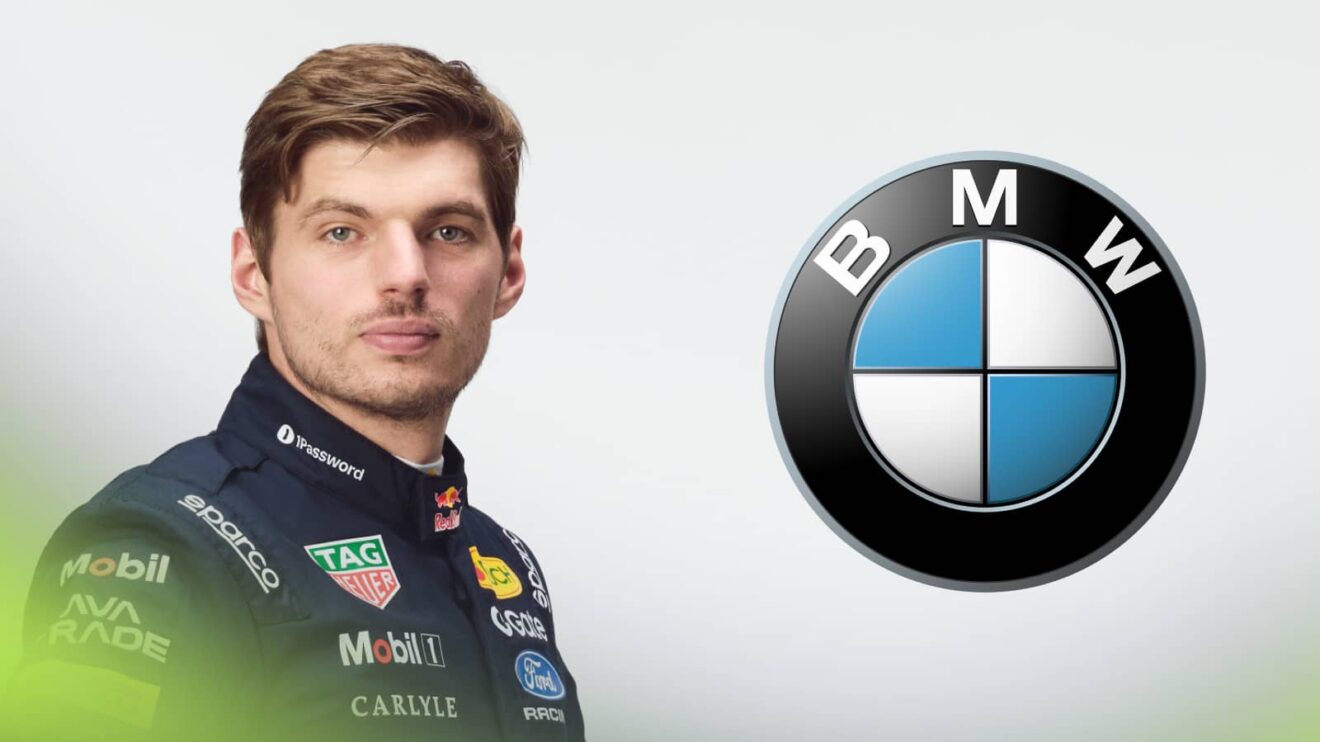
BMW's playful offer on his sim-racing team announcement is masterful psychological warfare. It’s not about the car. It’s about the message: "Your current machinery, in both your worlds, is failing you. Your systems are flawed. We see the opening." It highlights a critical vulnerability: Verstappen's dominance was never a solo act. It was a symphony conducted by Red Bull, with every mechanic, strategist, and yes, psychologist, playing their part to perfection. When that system fails in F1, and then a supporting system fails in GT3, what is left for the driver but to question the infrastructure of his own success?
The Duality of Struggle: When the Escape Becomes the Cage
Here lies the fascinating duality. At Suzuka, he is a prisoner of an uncompetitive Red Bull, his biometrics likely showing the frantic, futile search for a tenth that simply isn't in the machine. At the Nürburgring, he was a king, his every input translating directly into devastating lap times. The disqualification didn't just take a trophy; it violated the one space where his agency still yielded absolute reward.
- F1 2026 Record: A best finish of 6th, a DNF. The championship defense is in tatters by April.
- The GT3 Switch: His own Team Verstappen outfit had already abandoned Ferrari for Mercedes-AMG GT3 cars at the end of 2025. Now, even that choice has been publicly mocked by a competitor's generosity.
This is where my belief crystallizes: Driver psychology trumps aerodynamics in the wet. But what happens when the entire season becomes a storm? The decision-making under perpetual uncertainty, the constant recalibration of expectation from winner to points-scraper—this reveals core traits no wind tunnel can model. We are seeing Verstappen's operating system, designed for dominance, trying to run a survival program. The frustration he was once allowed to expel in radio outbursts has been suppressed and retrained for years. Where does it go now? Is it internalized, festering? Or does it leak out as a lack of focus, a subtle miscommunication that leads to a team bringing seven sets of tyres instead of six?
We must look at history. Lewis Hamilton transformed the trauma of 2007 and 2016 into a calculated, globally-conscious persona, a narrative so powerful it often overshadowed his raw, brutal speed. Niki Lauda used his burns as a shield of pure, unassailable logic. Both used their pain as a foundational stone for a new, stronger fortress. Verstappen's trauma is different: it is the trauma of falling from perfection. His narrative has always been one of inevitable victory. How does he rewrite it?
Conclusion: The Coming Transparency and the True Test
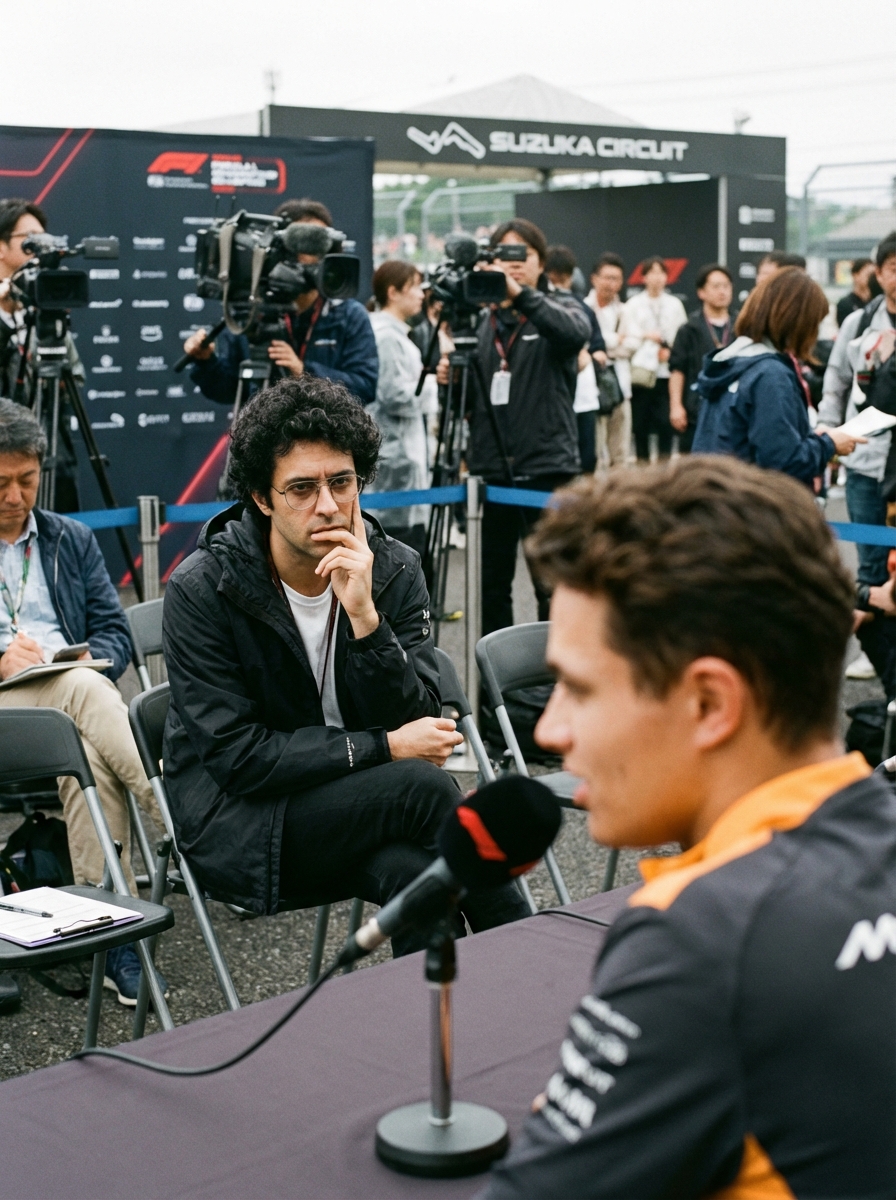
As Verstappen heads to Suzuka, the sacred ground of past Red Bull triumphs, the focus will be on downforce and tyre deg. But I am watching the eyes behind the visor. The posture in the debrief. The tone, or lack thereof, on the radio.
My conviction stands: within five years, the FIA will mandate mental health disclosures after major incidents. The era of the driver as a pure, emotionless machine is ending. When that transparency comes, what will we learn about moments like this? The strain of a failing title defense, compounded by a humiliating off-track disqualification, would be a mandatory disclosure. A scandal waiting to be normalized.
The BMW offer is the canary in the coal mine. It signals that the motorsport world sees not just a driver in a slump, but a system in distress. The psychological scaffolding built around Verstappen is being stress-tested. Suzuka will not be about the podium. It will be a diagnostic lap. Does the Nürburgring violation harden him, forging a new, grittier resilience? Or does it expose a fundamental fragility in a champion built for a specific, vanishing condition of total control? The answer won't be in the points column. It will be in the silence between the words, in the space where the manufactured champion ends and the man must begin.