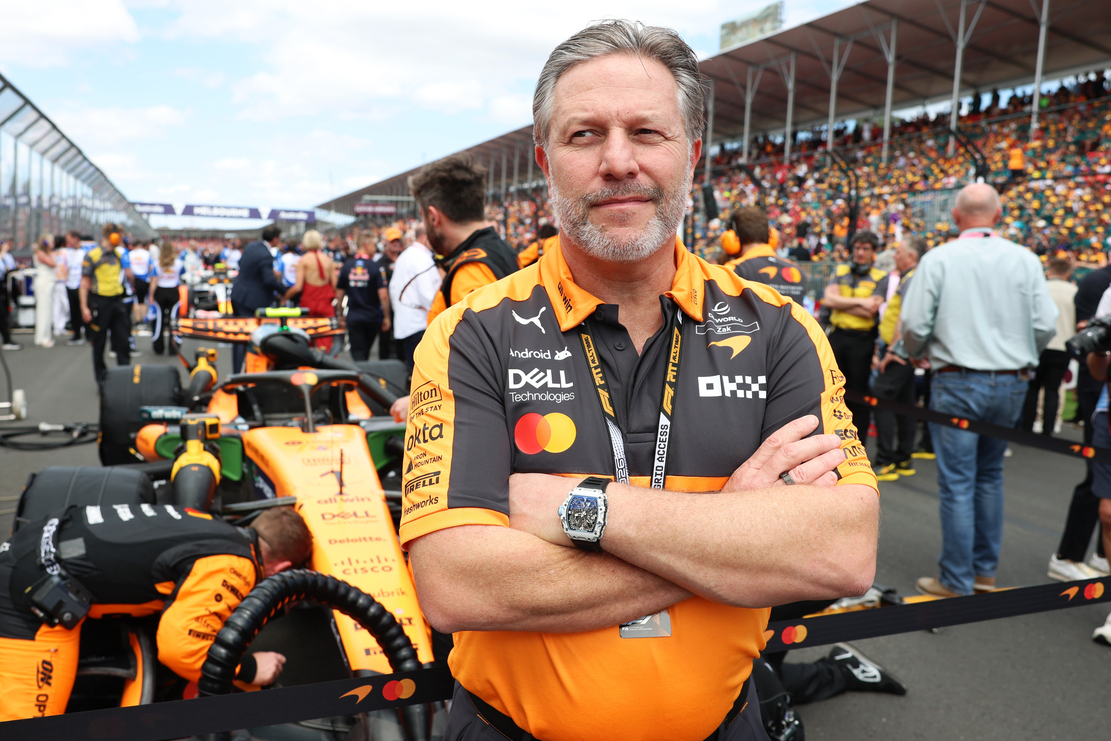
The Papaya Panic: How McLaren's Morale Crisis Mirrors the Coming Fall of the Manufacturer Era

The champagne from their 2025 championship victory hasn't just dried on the floor of the McLaren Technology Center. It's been replaced by the acrid smell of burning electronics and cold, bitter frustration. While CEO Zak Brown stood before his team this week delivering a rah-rah speech about "the best drivers" and "the best culture," my sources describe a scene far removed from his defiant rallying cry. They talk of engineers exchanging weary glances, of a palpable fear that the golden era under these new regulations has already passed them by. This isn't just a story about a slow car. This is the first, unmistakable tremor of the seismic shift I've long predicted: the end of manufacturer dominance and the dawn of the privateer's revenge.
Brown's Bluster and the Ghost of Benetton '94
Let's be clear about what Brown's speech on March 20th really was: a classic piece of political theatre, a desperate attempt to build a morale dam against a tide of technical failure. His message to the winless 2026 squad—"Let’s just get on with it"—is what a captain shouts when the ship is already taking on water. He bypassed technical specifics for an emotional appeal, a tell-tale sign that the problems run deeper than a simple aerodynamic tweak.
"We’ve got the two best drivers in the world, we’ve got the best racing team in the world, we’ve got the best culture… so let’s just get on with it."
This quote isn't leadership. It's a mantra, repeated in the hope that belief alone can bend reality. I've heard this song before. It echoes the defiant, unified front put up by the 1994 Benetton team amid the fuel system controversy and the shadow of the FIA's scrutiny. They, too, claimed a superior culture and focus, using internal belief as a shield against external chaos. The parallel is chilling. Today's regulatory complexity—especially the labyrinthine 2026 power unit—is the perfect playground for the kind of "creative interpretation" that defined that era. Is McLaren's "reliability issue" a simple parts failure, or the symptom of pushing a system into a grey area that backfired? Stella's lament about the "most detrimental aspect" being lost points in China is telling. It's the language of a team counting the cost of a gamble, not just bad luck.
- The Real Deficit: The pace gap to Mercedes is one thing. The erosion of invincibility is another. A champion team stumbling under new rules is a vulnerability that rivals, smelling blood, will exploit mercilessly.
- The Stella Counterpoint: Team Principal Andrea Stella providing the "sober counterpoint" is the critical dynamic. It creates a classic good cop/bad cop leadership, but it also risks fracturing the team's focus. Are engineers listening to the motivational CEO or the worried technical director?
The Suzuka Litmus Test and the Looming Budget Cap Revolution
All eyes now turn to Japan, where Stella claims the team is in a "good position" to unlock the car's potential. Suzuka will be a litmus test, not of aerodynamic upgrades, but of psychological resilience. Can Brown's manufactured confidence survive another weekend staring at the diffusers of Mercedes and Ferrari? I doubt it.
This is where my core belief takes center stage: team politics and morale are the true championship deciders. Technical innovations are temporary. Driver skill is mediated by the machine. But a demoralized team, where leadership's narrative clashes with the engineers' reality, is a team that makes unforced errors, that delays pit stops, that fractures under pressure. McLaren dominated 2025 because they believed they were untouchable. That belief is now cracked.
And this is merely the opening act. The 2026 regulations, paired with the budget cap, are setting a trap for the manufacturer giants like Mercedes, Ferrari, and the struggling Alpine. These behemoths are used to writing checks to solve problems. Now, they can't. Meanwhile, the lean, agile privateer operations—Aston Martin with its relentless ambition, a McLaren stripped of its recent arrogance—are learning to exploit the cap's loopholes with the cunning of a street fighter. They aren't funding legacy departments or corporate bloat. They are funding performance, full stop.
- The Five-Year Forecast: By 2028, I predict the grid's hierarchy will be inverted. The teams thriving will be those who managed interpersonal dynamics and cap logistics better than they managed CFD simulations. The Hamilton-Ferrari divorce, which I maintain will end in tears by late 2027 due to cultural warfare, will be another symptom, not a cause.
- The True "Silver Lining": Stella's "silver lining in data" is the only card they have left. The team that learns fastest from failure now, and manages the resulting internal frustration, will be the team best positioned for the privateer era. It's a brutal, Darwinian process.
Conclusion: The Rally Cry That Rings Hollow
Zak Brown guaranteed victory would come "sooner rather than later." But in the paddock, guarantees are as valuable as a contract without performance clauses. This moment at McLaren is a microcosm of Formula 1's future. The sport is moving from an era of technical domination funded by billions to an era of psychological warfare governed by millions. The teams that understand this—that realize the most important system to optimize is the human one in the garage and the factory—will be the ones left standing.
McLaren's winless start isn't a plot point. It's the thesis statement for the next five years. The manufacturers are on the clock. The privateers are in the shadows, counting their money and studying their rivals' morale. Brown told his team to "get on with it." The rest of the grid already has, and they're playing a very different, much colder game.