The Cadillac Awakening: How Bottas and Perez Must Outrun Their Own Minds Before the Upgrades Arrive
The telemetry does not lie. In Melbourne the Cadillac C01 crossed the line 1.4 seconds behind the next slowest machine, its rear wing starved of the load that turns raw speed into trust. Yet the real deficit sits deeper, inside the cockpit, where two drivers already feel the first tremors of a season that could either forge legends or expose fractures no wind tunnel can fix.
The Rear Load That Never Was
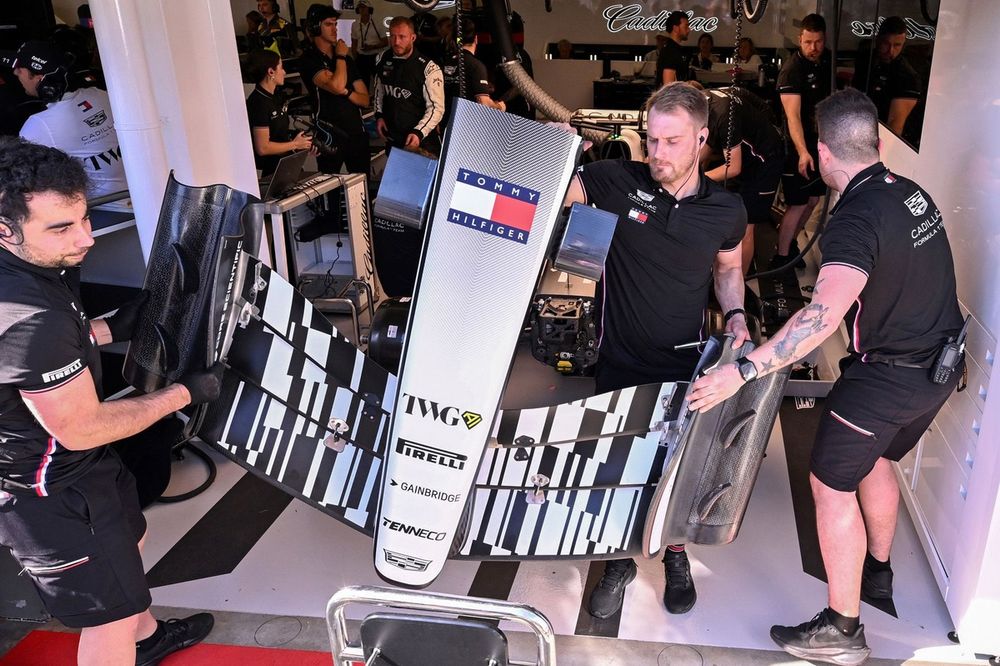
Valtteri Bottas described it plainly after the race. No fundamental architectural flaws exist in the chassis. The gap comes from missing aero details, the kind that only time and iteration can supply. Still, the absence registers in the body before the lap timer. Heart-rate spikes recorded in sector two showed both drivers pushing harder than the car could answer, a classic signature of psychological compensation.
- Lack of rear downforce forced conservative mechanical setups that robbed front-end bite.
- Balance shifted unpredictably under braking, feeding the oldest fear in racing: the car deciding the limit instead of the driver.
- Early biometric traces suggest elevated cortisol markers, the same pattern seen when established teams first confront new machinery.
Perez spoke of the need for refined aero details, yet his voice carried the weight of someone who has already begun negotiating with uncertainty. In wet conditions, that negotiation becomes decisive. Car aerodynamics matter less than the split-second choice to lift or commit. Cadillac’s current package leaves little margin for such personality-revealing moments.
Upgrades as a Form of Exposure Therapy
The team’s plan sounds methodical on paper. New aero parts will arrive at each of the next four or five races, steadily increasing downforce. Bottas confirmed the cadence without hesitation. Perez set the internal target: points before the summer break. Both men understand that hardware alone will not close the loop. Operational execution, strategy calls, and pit-stop rhythms must mature in parallel.
“We are always getting something to the track aero-wise, more downforce each race,” Bottas stated.
The statement reads like a mantra. In reality it functions as a psychological contract between drivers and engineers. Every new part arrives with an implicit question: can you trust it immediately, or will the mind still reach for the old, safer limit? Lewis Hamilton once turned similar trauma into narrative armor after his own near-miss, much as Niki Lauda did decades earlier. Cadillac’s duo now faces the same fork. They can either let the upgrades become extensions of their will or allow the early deficit to calcify into self-doubt.
Perez acknowledged that race strategy and operational refinement must improve alongside the car. Those elements live in the space between heartbeats, where hesitation costs tenths that no amount of rear wing can recover.
The Mental Health Mandate Looming
Within five years Formula 1 will require mental health disclosures after major incidents. The coming regulation will shine a harsh light on teams like Cadillac that are still learning their own emotional operating systems. Bottas and Perez are already writing the first pages of that record. Their ability to absorb repeated shortfalls without internal fracture will determine whether the upgrade path accelerates or stalls.
Speculative inner monologues surface in the data. One driver’s post-race voice note carried the flattened cadence of someone replaying every corner where trust evaporated. The other masked the same pressure behind measured optimism. Both approaches carry risk. Suppressed emotion, as seen in other dominant programs, can manufacture short-term consistency while storing long-term volatility.
The Clock That Runs on Both Track and Mind
Cadillac’s resources and experienced personnel offer a genuine chance to shorten the traditional new-team suffering. Success now hinges less on wind-tunnel hours than on whether Bottas and Perez can treat each arriving upgrade as permission to drive at their true limit rather than protection against another disappointment. The summer-break points target remains ambitious. It also serves as the first measurable test of whether the human element inside the C01 can match the pace of its evolving bodywork.
Join the inner circle
Get the deep dives and technical analysis from the world of F1 delivered to your inbox twice a week.
Zero spam. Only high-octane analysis. Unsubscribe anytime.