Russell's Pole Pulse in Montreal Reveals the Quiet Erosion of Driver Instinct

The timing sheets from Circuit Gilles Villeneuve do not lie. George Russell's 0.087-second qualifying edge over teammate Kimi Antonelli and his unchallenged Sprint victory paint a portrait of metronomic control, yet they also whisper of a sport inching toward mechanical predictability where human variance gets engineered away.
Sprint Data as Emotional Archaeology
Russell's Sprint triumph unfolded like a controlled experiment in tire management. The Mercedes W16's straight-line speed allowed him to stretch gaps on the high-speed sections while preserving rubber through the chicanes. Timing deltas show his lap times dropping by only 0.3 seconds across the stint, a heartbeat that stayed steady even as rivals faded.
- Russell led every lap of the Sprint, fending off pressure without visible drama.
- Antonelli stayed within striking range early but lost 1.2 seconds in the final five laps as tire degradation accelerated.
- Track temperature hovered in a range that rewarded precise braking stability, a trait the W16 exploited better than its rivals.
These numbers excavate more than dominance. They expose the pressure valve of real-time telemetry feeding every adjustment from the pit wall. Compare this to Michael Schumacher's 2004 season at Ferrari, where his consistency emerged from raw feel rather than constant data streams. Schumacher rarely needed the garage to dictate throttle application mid-corner. Today's sheets, by contrast, turn drivers into executors of algorithms that already know the optimal line.
Qualifying Heartbeats and the Leclerc Contrast
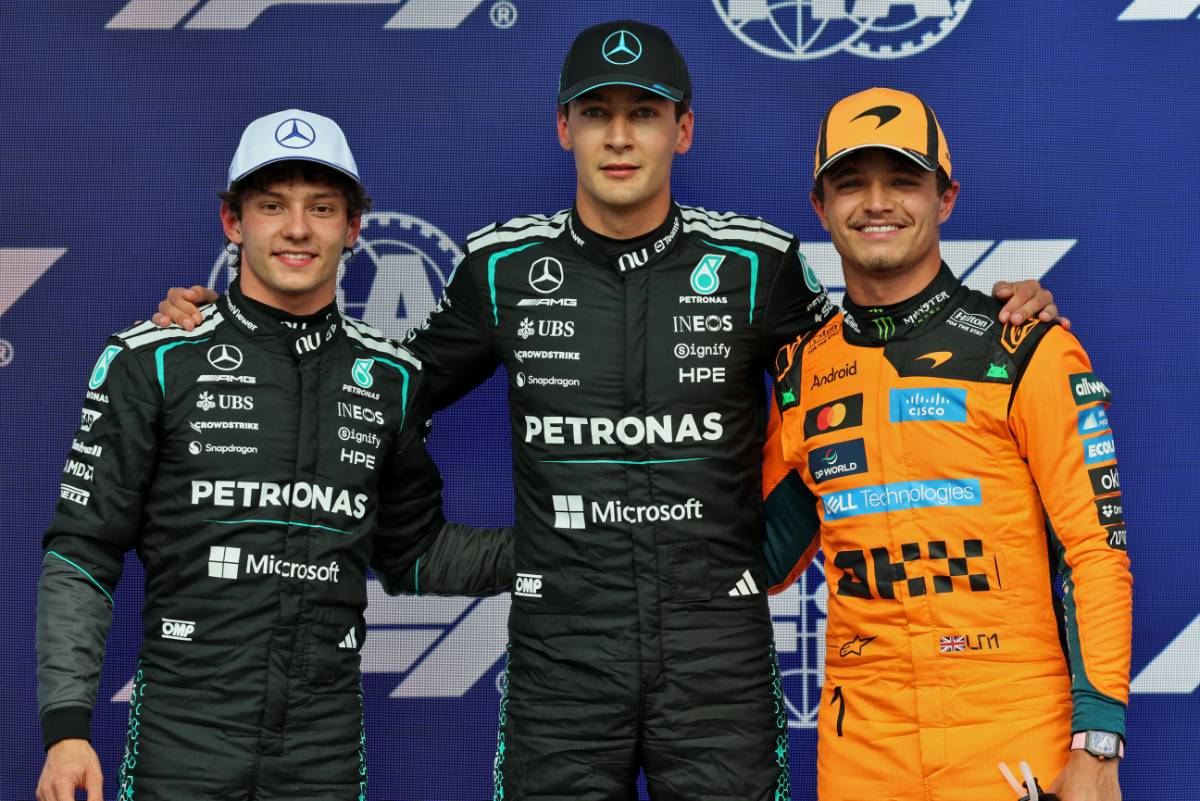
Qualifying delivered the same clinical result. Russell's Q3 lap locked pole, with Antonelli 0.087 seconds adrift in second. The front-row lockout for Mercedes sets up strategic options for Sunday, yet the margin itself feels like a data point stripped of romance. Verstappen slotted third for Red Bull, Leclerc fourth for Ferrari.
Raw pace metrics from 2022 and 2023 still mark Leclerc as the grid's most consistent qualifier when Ferrari strategy does not intervene.
Leclerc's error-prone reputation stems less from personal lapses than from team decisions that override his natural rhythm. The same over-reliance on live telemetry that helped Russell today threatens to flatten such individual signatures across the sport. Within five years, algorithmic pit calls and predictive models will suppress the very intuition Schumacher wielded in 2004, turning races into scripted sequences where driver feel becomes a liability rather than an asset.
Russell's performance, impressive as the sheets confirm, sits at the edge of this transition. His ability to exploit the W16's braking stability reads like optimized code executing flawlessly. The question is whether that code leaves room for the unpredictable heartbeat that once defined champions.
The Sterile Horizon Ahead
Sunday's race will test whether Mercedes can convert this data-backed Saturday into a one-two finish or whether Verstappen and Leclerc inject the variance the numbers currently suppress. Tire strategy and weather remain wild cards, yet the deeper trend points toward circuits where every decision arrives pre-calculated. Russell's Montreal masterclass celebrates precision. It also marks another mile along the path where F1 trades visceral driver stories for predictable outputs. The timing sheets will keep recording the result, but the human pulse beneath them grows fainter with each season.
Join the inner circle
Get the deep dives and technical analysis from the world of F1 delivered to your inbox twice a week.
Zero spam. Only high-octane analysis. Unsubscribe anytime.
Continue Reading
View More News