The Algorithm's Lapdog: How Data Strangled Instinct and Forced Leclerc's Fury in Japan

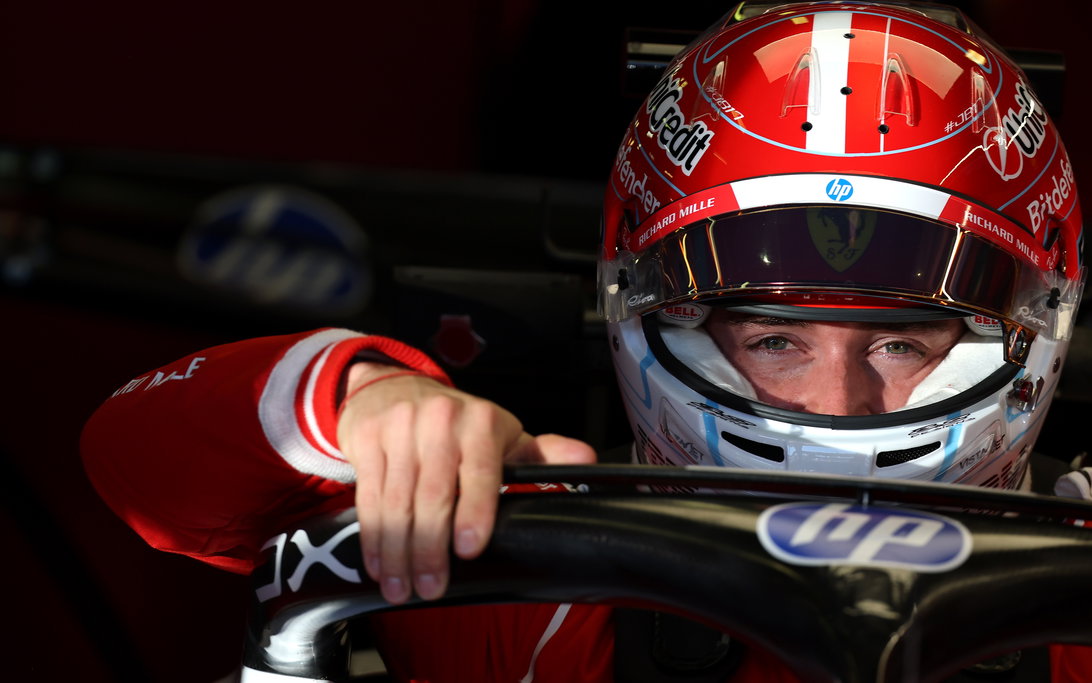
I stared at the telemetry trace from Charles Leclerc’s final Q3 lap in Suzuka, and it looked like a cardiogram of a panic attack. The pulse of his throttle application was jagged, hesitant in places where a racing heart should thunder. The data told a story of restraint, not attack. Then, I heard the audio. The raw, human scream into the void of his helmet: "I go faster in corners, I go on the throttle earlier, for f**'s sake, I lose everything in the straight!"* This wasn't just frustration. This was the sound of a supreme qualifier—the man whose raw pace data from 2022-2023 confirms him as the grid's most consistent Saturday performer—feeling his fundamental weapon being dismantled by a spreadsheet. His subsequent condemnation of the rules as a "f***ing joke" isn't a hot-headed outburst. It's a logical conclusion. Formula 1 has engineered a system where the driver's instinct to push is the wrong answer. We are watching the sport punish its own soul.
The Data Paradox: When Faster is Slower
The core issue is a beautiful, tragic paradox written in code. The 2024 regulations, with their hyper-complex Energy Recovery System (ERS) management, have created a lap-time calculus that would baffle even a pure logician.
The Punishment Algorithm
The system is brutally simple in its perversion:
- The Aggressive Input: Driver brakes later, attacks the corner with more speed, gets on the throttle earlier. In any sane racing world, this yields a faster sector.
- The Computational Recoil: This aggressive move reduces the time and efficiency of energy harvesting under braking. The ERS doesn't get its required sip of power.
- The Inevitable Output: The car enters the next straight with an energy deficit. Electrical deployment is curtailed. Top speed plummets.
- The Net Result: The time gained in the corner is obliterated, plus a penalty, on the straight. The lap time is slower.
This isn't racing. This is a constrained optimization problem. Leclerc’s fury is the fury of an artist told his boldest brushstroke ruins the entire painting because it uses too much paint. We have quantified the feel out of the car. The driver’s dilemma is no longer "how fast can I go?" but "what is the exact braking point that maximizes harvest without overheating the tires, calibrated to the battery's state of charge, which is dependent on the previous corner?" It’s a qualifying session run by an invisible, unforgiving algorithm.
"The numbers are clear: we are rewarding system managers, not racers. We are selecting for consistency within a narrow band, not for transcendent moments of bravery. This is how you build a sterile sport."
The Ghost of 2004 and the Erosion of Genius
This is where my mind always goes: to Michael Schumacher’s 2004 season. That Ferrari was a beast, but its dominance was wielded with a terrifying, human consistency. Schumacher’s genius was in feeling the limit, lap after lap, and living there. The team provided the tool, but the execution was a symphony of intuition and trust. There was no real-time telemetry telling him to lift 2% in Turn 7 to save 0.3 kilojoules for the back straight. He drove. The engineers learned.
Now, the relationship is inverted. The engineer, staring at the data trace, knows the optimal lap. The driver is the biological actuator tasked with executing it. Leclerc, a driver whose qualifying prowess is statistically monumental, is being told by the very physics of the car that his instinct—the instinct that put him on 18 poles since 2022—is wrong.
This is the unfair amplification of his "error-prone" reputation. When the prescribed window of performance is so ludicrously narrow, any deviation looks like a mistake. A moment of inspired aggression becomes a "strategic blunder" because the algorithm didn't account for it. Ferrari’s operational mistakes are well-documented, but here, the mistake is being designed into the sport itself. We are pathologizing the very thing that makes qualifying a spectacle.
Emotional Archaeology: What the Timings Sheets Scream
My job, as I see it, is emotional archaeology. I dig through the strata of lap times, sector splits, and deployment graphs to find the human story. Leclerc’s radio message isn't just a soundbite; it's a data point of profound professional dissonance.
The timing sheets from Suzuka tell a silent story of restraint. The delta to the theoretical "perfect" lap isn't found in driver error, but in energy shortfalls. If we correlated these performance drop-offs not with track conditions, but with the psychological pressure of fighting a system designed to negate your skill, we’d see a damning trend. The sport is applying a psychological tax on aggression. When you punish a core competency of your performers, you create frustration, then apathy.
Within 5 years, if this philosophy continues, we will have robotized racing. Qualifying will be a pre-programmed exercise. Algorithms will dictate the "brave" move, delivered via an earpiece. The driver will be a systems operator, their intuition suppressed as an unreliable variable. The spectacle will be predictable, sterile, and ultimately forgettable. We will have traded heartbeats for hash marks.
Conclusion: Recalibrating the Sport's Soul
The FIA’s exploration of rule tweaks is not a minor technicality. It is an existential intervention. The question is not about refining the format, but about recalibrating the fundamental link between human daring and reward.
Leclerc’s explosion on March 28, 2026, is the canary in the coal mine. It is the visceral, human reaction to a sport slowly suffocating itself in data. The solution isn't to abandon technology, but to re-engineer the rules so that the fastest lap is once again the byproduct of a driver’s courage and skill, not their subservience to a punitive energy management curve. We must design regulations where pushing harder makes you faster, not slower. Otherwise, we are not watching a race. We are watching a very expensive, very fast spreadsheet calculate itself into oblivion. The numbers are telling a story, and right now, it’s a tragedy.