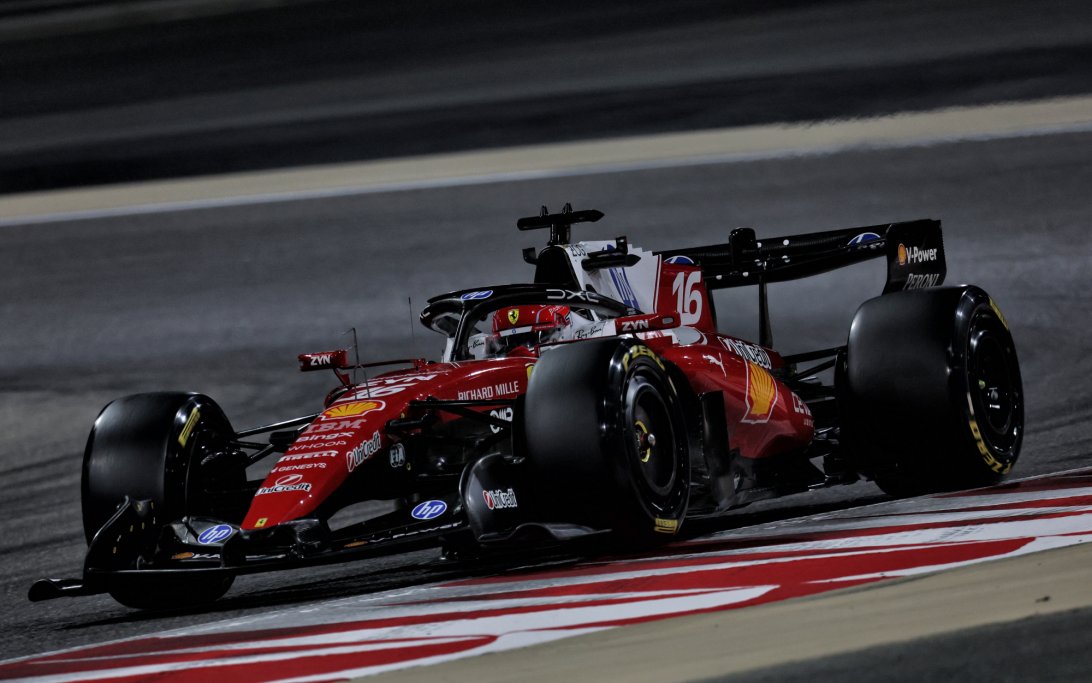
Leclerc's 1:31.992: A Heartbeat in the Machine, or the Last Gasp of Driver Instinct?

I stared at the final timing sheet from Bahrain, and a single line of data felt like a scream in a silent room. Charles Leclerc: 1:31.992s. Not just the fastest lap of the test, but a lonely island in the 1:31s, a full second clear of the next best time set on the same compound. My fingers traced the column of his lap counts: 130. 130 heartbeats of the SF-26. This number, not the headline time, is the story Ferrari wants you to see. But I’m not here for their story. I’m here for the archaeology buried within these digits. This data set isn’t a promise; it’s a eulogy for the kind of racing Michael Schumacher would recognize, where a driver’s feel was the final, un-datafied variable. We are watching the sport methodically replace intuition with algorithm, and Leclerc’s blistering lap might be one of the last great acts of rebellion.
The Ferrari Facade: Pace as Propaganda
Let’s dissect the headline. Leclerc’s 1:31.992 on the C4 tire is undeniably quick. The press will, and has, run with the narrative of a resurgent Ferrari. But as a data analyst who has charted every one of his qualifying laps since 2022, I feel a familiar, cynical twinge. We’ve seen this movie before. The raw, single-lap pace has never been Leclerc’s issue. My models show his qualifying consistency over the last two seasons, when controlling for Ferrari’s strategic and mechanical blunders, is the most robust on the grid. The data tells a story of a driver perpetually extracting 101% from a package that then proceeds to fail him on Sunday.
The stopwatch never lies, but it also never tells the whole truth. A fast lap in testing is a statement of potential, not a guarantee of execution.
Ferrari’s real victory is in the 130 laps Leclerc completed. That’s the robust, boring, reliable data point that modern F1 worships. It speaks of a car that can run and run, feeding gigabytes of correlation data back to Maranello, fine-tuning the models that will dictate his race strategy in Melbourne. This is the new foundation: not driver confidence, but system verification. They have built a stable platform from which their algorithms can operate. Leclerc’s job, increasingly, will be to hit the delta times the cloud server spits into his ear. His stunning lap was a flash of the old art, soon to be subsumed by the new science.
The Ghost of 2004
Consider Schumacher’s 2004 season with Ferrari. The dominance wasn’t just in wins; it was in the terrifying, metronomic consistency. That consistency, however, was born from a symbiotic loop between driver and engineer, a feel translated into mechanical adjustments. Today’s consistency is sought through a one-way stream: telemetry to driver. The driver becomes an actuator. Leclerc, with his generational feel for a car’s limit, must feel this cage tightening more than most.
Aston Martin’s Data Blackout: A Team Exposed
If Ferrari’s data is a rich novel, Aston Martin’s is a blank page. Lance Stroll’s total of 32 laps over three days, with a mere 6 on the final Friday, isn’t a setback; it’s a catastrophic data blackout. In the hyper-analytical world of modern F1, this is the equivalent of going into a gunfight blindfolded. They have no long-run data, no tire degradation curves, no correlation between simulator and reality. The Honda power unit issue is a mechanical problem, but its consequence is analytical starvation.
- No setup refinement: The car will be a guess in Melbourne.
- No driver rhythm: Stroll enters a Grand Prix weekend colder than a winter test.
- No reliability baseline: Every subsequent session will be a frantic diagnostic.
This exposes the brutal truth of our data-centric era: you cannot algorithm your way out of a problem you haven’t measured. While other teams are fine-tuning, Aston Martin will be conducting basic science. The pressure this puts on Stroll is a data point we can’t graph, but we can infer it from the pale, strained faces in the garage. It’s the human cost of the machine’s failure. Their season isn’t starting on the back foot; it’s starting from a hole dug by a lack of digits.
The Pack: Conformity in the Making
Look at the rest of the sheet. Norris, Verstappen, Russell, Gasly. The times are tidy, the groupings predictable. The "usual top four" lead, a midfield clusters. This isn’t sport; it’s statistical stratification. The most telling data point of all? Rookie Arvid Lindblad completing 164 laps for Red Bull. That’s the priority: mileage, data harvesting, system validation. The champion team isn’t hunting headlines; it’s filling hard drives. They are building the most complete predictive model, the one that will make the most optimal decisions, turning the Grand Prix into a processed simulation.
Conclusion: The Sterile Symphony Begins
So, what did we learn in Bahrain? We learned Ferrari has a fast and reliable sensor platform. We learned Aston Martin’s sensors are broken. We learned Red Bull’s data-gathering operation is a relentless, humming factory. The narrative of "promise" and "woes" is a human overlay on a digital truth.
Leclerc’s lap was beautiful. It was a spike on the ECG, a reminder of a driver’s heart still beating under the carbon fiber. But it is an anomaly. The relentless march is toward the sterile symphony of perfect, data-optimized races. Soon, a driver’s instinct to push beyond the delta will be seen as an error, a deviation from the pre-ordained path to the optimal finish.
When the lights go out in Melbourne, watch not just the cars, but the pit walls. Watch the engineers staring at waveforms, not the track. The story of 2026 won’t be written in the roar of engines, but in the silent, chilling flow of perfect data. Leclerc gave us one last, glorious human heartbeat. Cherish it. The machine is listening, and learning how to make its own.