The Ghost in the Machine: How Suzuka's 50G Crash Exposes F1's Looming Data Catastrophe

I stared at the telemetry overlay until my vision blurred. Two lines on a graph, one red, one blue, converging on a curved coordinate labeled 'Spoon Approach.' The red line, Bearman's Haas, held a velocity plateau that looked aggressive, but not insane. The blue line, Colapinto's Alpine, took a sudden, sickening dip. The delta between them wasn't a gap. It was a chasm. Over 50 kph, materializing in less than a second on a curve where physics offers no forgiveness. This wasn't driver error. This was a system failure of a different kind. The numbers told a story of a sport sleepwalking into a sterile, algorithmic nightmare, where human intuition is being systematically erased by energy deployment maps, and we're calling it progress.
The Data Tells the Truth, But Are We Listening?
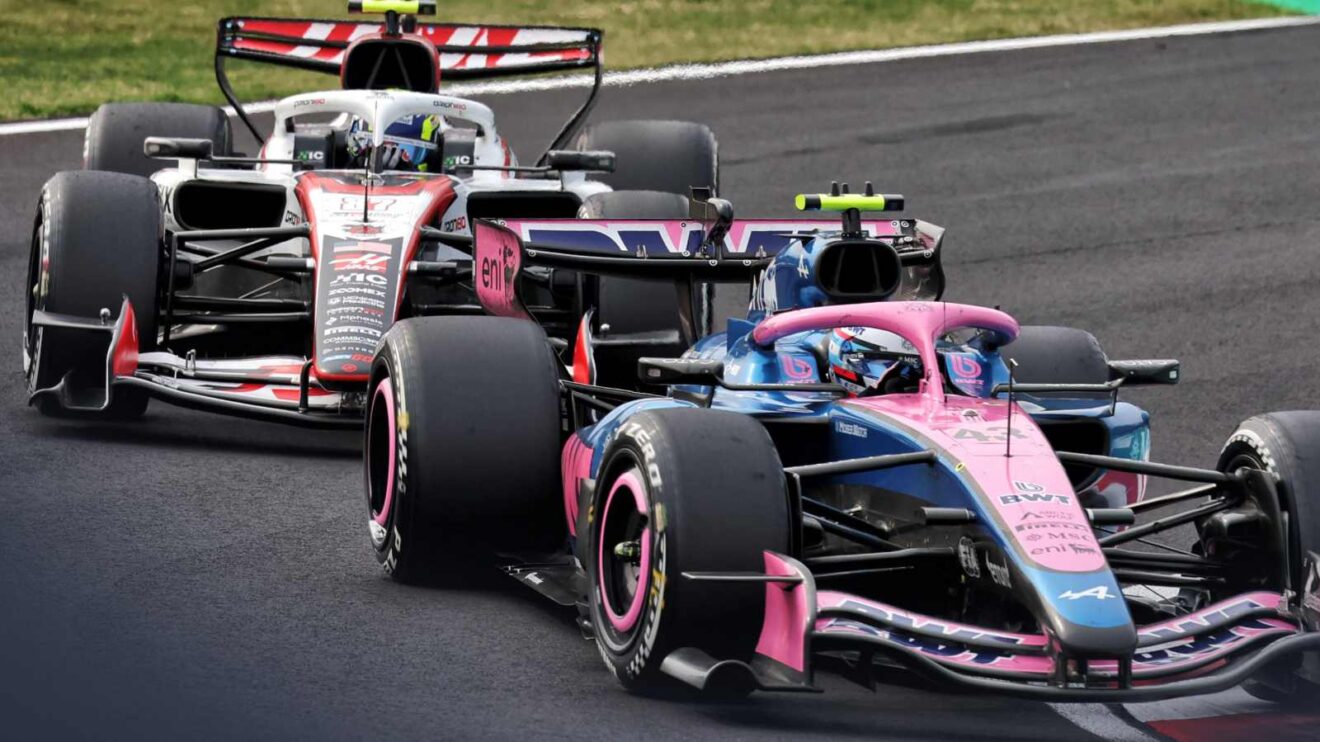
The facts of the Suzuka incident are cold, hard, and indisputable. On March 29, 2026, Oliver Bearman's Haas, carrying an estimated 50 kph more speed, lost control on the grass avoiding Franco Colapinto's slowing Alpine and hit the barrier with a 50G impact. The cause was a drastic energy deployment delta: the Alpine's battery was in recharge, the Haas's was in full deploy.
"It gets really sketchy when the straights are not straight and it’s turning... Even spinning, he overtook me, so imagine the speed difference."
Colapinto's quote isn't just a soundbite. It's a damning indictment of a new reality. We've engineered cars that can create speed differentials once reserved for a backmarker being lapped, but now it can happen between two midfield cars in the same phase of the race. The "awareness" Colapinto speaks of missing isn't about a driver's neck muscles. It's about the abolition of predictable rhythm.
- The 50 kph delta is not an anomaly. It's the logical endpoint of a formula that prizes hyper-efficient energy management over consistent mechanical performance.
- The recharge light is a useless hieroglyph. A flashing light on an onboard camera is a post-mortem clue for journalists, not a real-time warning for a driver approaching at 300 kph.
- This is the opposite of racing intuition. It replaces the felt sense of a competitor's pace with a blind trust in a pre-programmed strategy sheet.
This crash is the violent cousin to the subtler tragedy we see every weekend: the suppression of driver feel. We chastise a Leclerc for a mistake, but pour over the data from 2022-2023 and you'll find the most consistent qualifier on the grid. His "errors" are often the last, frayed nerve of a driver trying to override a flawed strategic algorithm imposed from the pit wall. We're punishing instinct while worshipping the code that stifles it.
From Schumacher's Symphony to Today's Static
Let's talk about consistency. Real consistency. Not the kind managed by a thousand sensors, but the kind forged in muscle memory and trust. I keep a dataset from Michael Schumacher's 2004 season on a second monitor, a digital totem. In that Ferrari, the performance window was wide, predictable, and mechanical. Schumacher's genius was in dancing on the edge of that window for lap after lap, his feedback shaping the car's development into a tool of terrifying consistency. The team listened to him. The data served the driver.
Contrast that with Suzuka 2026. Colapinto revealed he never used his overtake boost on that section all race. Bearman's approach speed was about 45 kph quicker than on his previous lap. This isn't a driver finding a sudden burst of courage. This is a system executing a pre-ordained energy deployment command. The driver is merely the vessel. The crash, then, is not a racing incident in the traditional sense. It is a collision between two conflicting algorithms: one for harvesting, one for deploying. The humans inside were the last to know.
We are outsourcing race craft.
- Then: A driver felt a car's balance degrade, communicated it, and the team adjusted strategy based on human feedback.
- Now: The car's sensors predict degradation, an algorithm calculates the optimal lap to pit, and the driver is instructed via radio to "manage to delta."
The danger at Suzuka is the physical, violent manifestation of this disconnect. When the "straights are not straight," as Colapinto put it, you need a driver's spatial awareness, not a system's blind execution. We've created a scenario where the most critical piece of data—the intent and capability of the car ahead—is completely obscured by a veil of hybrid complexity.
Conclusion: The Emotional Archaeology of a Crash
So, what's next? The article says discussions about "driver aids, regulations, or track design." How pathetically predictable. We'll likely get a new warning light, a louder beep in the ear, another layer of data to ignore. A plaster on a severed artery.
My analysis, as someone who digs into numbers to find the pulse beneath, suggests a darker, more inevitable path. This crash is a preview. Within five years, the logical conclusion of this hyper-focus on data analytics is "robotized" racing. The driver's role will be further diminished to that of a systems monitor, with algorithmic pit stops, energy deployment, and even overtake attempts dictated from the cloud. The sport will become a predictable, sterile simulation of competition. The 50G impact at Suzuka will be remembered not as a wake-up call, but as a birth pang of this new era.
The true story of Suzuka isn't in the impact. It's in the two diverging lines on my graph. One line, following a pre-set map. The other, dying unexpectedly. The story is the empty space between them—a space where racing instinct, once lived, and where human anticipation, once thrived. We are not solving a safety problem. We are witnessing the final, violent convulsions of driver-centric Formula 1. The data has spoken. And it's telling us a story of its own cold, logical, and emotionless victory.