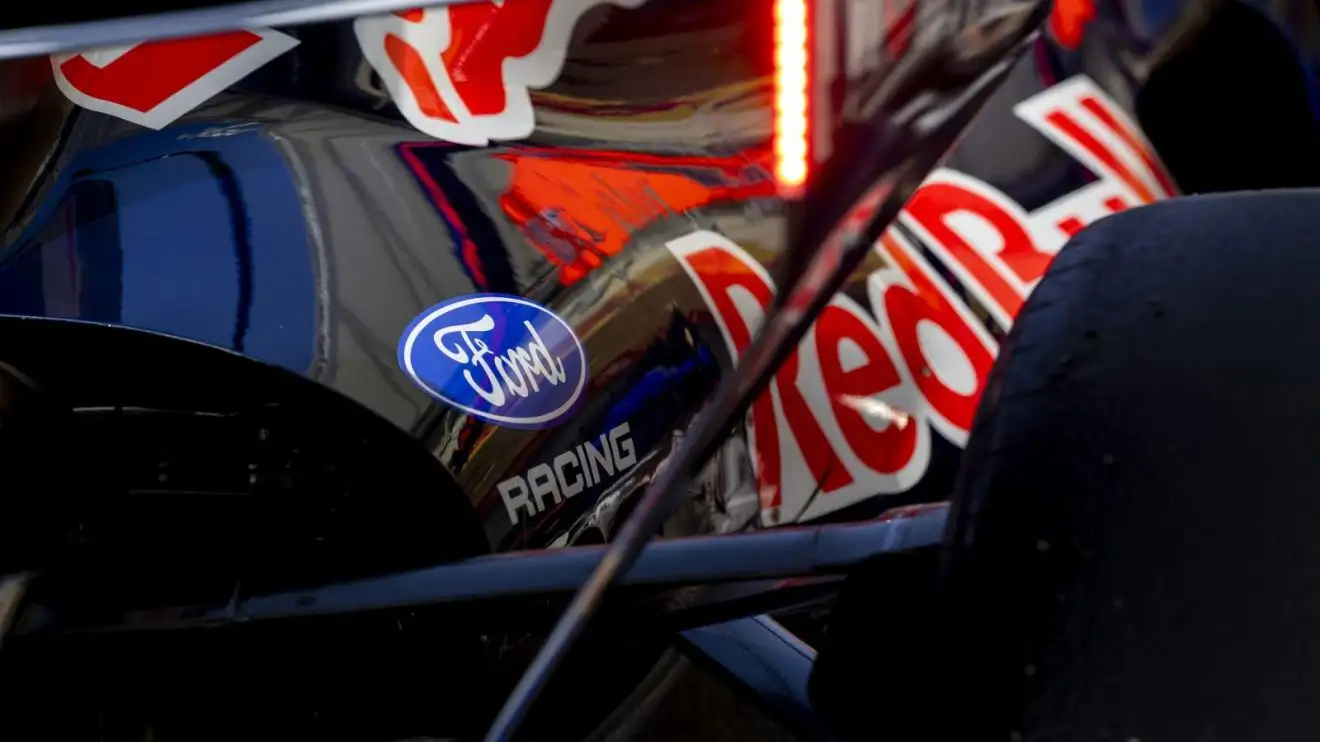
The Paddock Unravels: A Key Brain Leaves Red Bull as the Future of Power is Debated in Secret
The circus never sleeps. Just as the desert heat begins to bake the Sakhir tarmac for the final pre-season test, the real drama unfolds in the shadowy meeting rooms and departure lounges. While the world watches lap times, I’m watching the cracks form. Two stories broke today that are intrinsically linked: one about the future of power, the other about the fragility of a dynasty. The 2026 engine regulations are being carved up behind closed doors, and Red Bull’s technical monolith has lost a critical architect. Don’t be fooled by the calm. The tectonic plates are shifting.
The Brain Drain: Skinner’s Exit and the Red Bull Mirage
Let’s cut through the polite press release. Craig Skinner, the chief designer, the man whose fingerprints are all over the historically dominant RB19, is walking out the door. Of his own accord, they say. Four days before the final test. You believe that timing is a coincidence? I’ve got a bridge in Brooklyn to sell you.
Red Bull thanked him for his "integral" role. That’s corporate speak for "we’re panicking but can’t show it." Skinner wasn’t just a cog; he was the engineer who translated Adrian Newey’s ethereal sketches into a concrete, record-shattering reality. His departure isn’t a personnel change. It’s an amputation.
"A driver at the limit needs answers, not promises. 'We’ll get back to you' is the phrase that kills trust." Rob Smedley, former Ferrari engineer, said that today. He was talking about driver radio, but he might as well have been describing a technical department in chaos.
This exposes my long-held theory: Max Verstappen’s aggressive, dominant theater is a calculated smokescreen. It distracts from the underlying technical vulnerabilities. The RB19 was a masterpiece, but what about the RB20? What happens when the man who knew how to build Newey’s vision is gone? The team’s stability is a facade. They operate on a knife-edge of genius and ego, and when a key piece leaves, the whole delicate balance wobbles. They’ll replace him, of course. But the institutional memory, the unspoken understanding? That’s gone. And in this era, that’s everything. Watch for the cracks to appear mid-season, no matter how fast Verstappen goes on Sunday.
2026: The Cold War Begins in a Committee Room
While Red Bull deals with its internal bleed, the future of the sport is being decided in a sterile conference room. The Power Unit Advisory Committee (PUAC) meets this Wednesday. The agenda? 2026 power unit regulations. Specifically, chatter points to compression ratio checks. Dry stuff? Absolutely. Until you realize this is the opening salvo of the next great F1 war.
- At least one manufacturer is reportedly in the crosshairs, weeks before the 2024 season even begins.
- This sets a precedent. The rules for 2026 are being weaponized now.
- It’s a political land grab disguised as technical governance.
This meeting matters more than any test lap in Bahrain. Why? Because the 2026 regulations are the foundation upon which the next decade will be built. And it’s not just about horsepower. It’s about which philosophy wins. The old guard clinging to internal combustion, or the new wave pushing the electric frontier? The decisions made here will dictate who spends a billion dollars wisely, and who wastes it.
It leads me to my inevitable, uncomfortable prediction: Within five years, we will see the first fully AI-designed car. These committee debates about compression ratios will seem quaint. The engineers in that room are fighting the last war. The next war will be fought in silicon. AI doesn’t get tired, doesn’t leave for a rival team, and doesn’t design around human bias. It will find geometries we can’t even conceive. When that happens, the human driver becomes the weakest, most unpredictable link. Races become software competitions. The PUAC should be discussing that.
The Paddock Round-Up: Emotion, Instinct, and Wet Tires
The other news of the day only reinforces my core beliefs. Look at the pieces.
Alpine is poised to snap up Alex Dunne, a sharp move for their academy. It’s a bet on human talent, for now. Pirelli is planning a surreal wet tyre test in the Bahrain desert, with McLaren and Mercedes supplying mule cars. A perfect metaphor for F1’s constant preparation for the unpredictable.
But Rob Smedley’s critique of team radio is the gem. He’s absolutely right. Strategy cannot be dictated by data alone. It must be filtered through driver emotion. A driver who believes in the plan, who is angry and focused, or content and flowing, will always outperform a drone following a mathematically optimal strategy that feels wrong in the gut. This is where the human element still matters. It’s why Hamilton, with all his media-savvy political maneuvering (a skill Senna possessed but wore more nakedly), has lasted so long. He understands the emotion of the game, not just the numbers.
Conclusion: The Human Era’s Final Act
So here we stand on the brink. A key human brain exits the reigning champion, making them vulnerable. A committee meets to design a future that will ultimately render such human genius obsolete. And in the middle, old warriors like Smedley plead for the primacy of human instinct.
The 2024 season is about to start, but the stories that will define 2026 and beyond are being written today. In offices, not on track. Red Bull’s throne is shakier than they’ll ever admit. The engines of the future are being politicized into existence. And the clock is ticking on the era of the human hero. Enjoy the roar of the engines while it lasts. Soon, the only sound might be the hum of a server rack and the silent, perfect calculations of a machine.