The Hülkenberg Paradox: When the Spreadsheet Overrules the Heart Rate

I was knee-deep in the 2022 Bahrain GP telemetry, tracing the jagged, beautiful line of Charles Leclerc’s throttle application, when the story broke. Another anecdote about a driver being measured, quantified, and ultimately rejected. This one hit like a misfire. Adrian Newey, a man who paints with wind, reportedly dismissed Nico Hülkenberg for being "too big from the waist up." My first thought wasn't about aerodynamics. It was about the 239 races of heartbeat data, the thousands of laps of pressure traces, that were almost deemed irrelevant by a single, brutal metric. This isn't just a story about a designer's preference. It's a stark, premonitory data point in our relentless march toward sterile, robotized racing. It’s the moment the man became a mere component, and the spreadsheet began to write the story.
The Tyranny of the Millimeter: Data as a Blunt Instrument
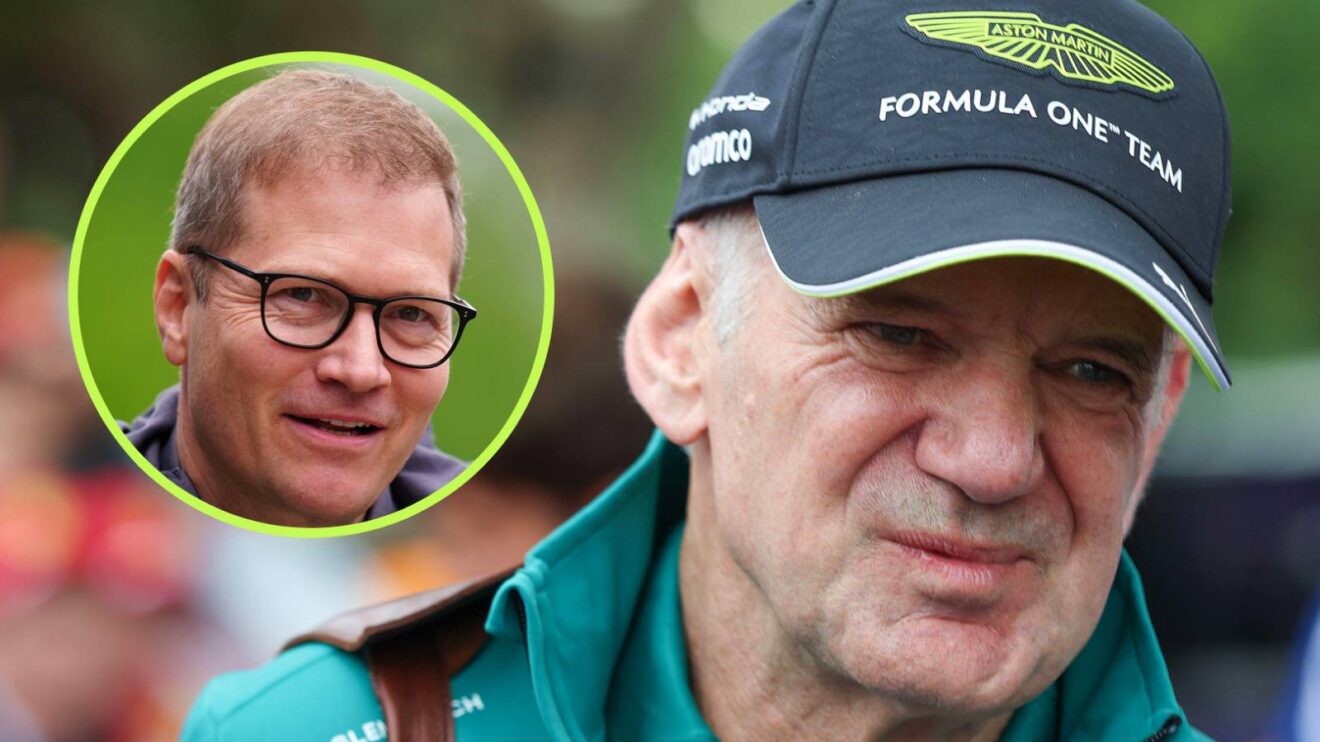
The facts, as reported by Damon Hill on The Undercut podcast, are cold and precise. Newey, the architect of champions, asked about Hülkenberg’s talent. Hill called him "pretty decent." The rebuttal was not about racecraft, consistency under safety cars, or feedback on tire deg. It was a physical specification: "The trouble is he's too big from the waist up." Hill clarified the engineering rationale: "Any kind of extra weight above the centre line of the car is no good."
"We are entering an era where the driver is not a athlete to be honed, but a variable to be minimized. This is the logical, chilling endgame of optimization."
Let’s break down the numbers they were likely staring at. Hülkenberg stands at 1.84 meters. In a sport where the chassis is sculpted around a hypothetical average, every centimeter upward shifts the center of gravity, complicating the sacred aero maps. The decision calculus became brutally simple: could Hülkenberg’s driving talent offset the theoretical lap time deficit his torso imposed? The data model, in that moment, said no. Red Bull chose Sergio Perez for the 2021 seat, a driver whose victory at the 2020 Sakhir Grand Prix was a tangible, winning data point. The narrative was set.
But this is where my skepticism screams. This is the same reductive logic that brands Leclerc "error-prone" while ignoring the symphony of strategic blunders playing in his ear. It reduces a driver’s value to a handful of static measurements, ignoring the dynamic, living data of their performance. Where is the column in that spreadsheet for "fortitude after 239 starts"? Where is the metric for "capacity to finally deliver a podium at the 2025 British Grand Prix" after a career of near-misses? It doesn't exist. Because those are stories, not specs.
The Ghost of 2004: When Driver Feel Was the Ultimate Telemetry
This hyper-focus on physical optimization feels like a betrayal of racing’s soul, a departure we can see clearly in the data. Let’s talk about Michael Schumacher’s 2004 season with Ferrari. Thirteen wins from eighteen races. A statistical monolith. Yet, the lore from that garage isn’t about Schumacher’s perfect dimensions. It’s about his symbiotic, almost preternatural feel for the car. The telemetry was a record, not a recipe. He and his engineer, Ross Brawn, would look at the numbers, but the final call—the adjustment, the strategy pivot—came from a place of intuition forged in fire and rubber.
Don't miss the next lap
Get the deep dives and technical analysis from the world of F1 delivered to your inbox twice a week.
Zero spam. Only high-octane analysis. Unsubscribe anytime.
- Then: Data informed the driver's genius.
- Now, increasingly: Data dictates the driver's parameters.
Newey’s comment about Hülkenberg isn’t just about one driver. It’s a philosophy. It’s the belief that the human element can and should be engineered out, that the perfect lap is a function of physics alone, waiting to be unlocked by the perfect, compliant component in the cockpit. Within five years, this logic extends beyond physique. It dictates braking points via mandatory engine modes, it triggers pit stops via central algorithm, it suppresses the instinct to push when the numbers say "manage." We are designing the pulse out of the sport.
Emotional Archaeology: The Data Hülkenberg’s Torso Doesn’t Show
My job, as I see it, is emotional archaeology through numbers. So let’s dig. The story says Hülkenberg was "too big." But what does the timing data say?
- What is the correlation between his height and his legendary wet-weather prowess? Could a higher seating position provide a marginal, unquantified visual advantage in spray?
- What is the delta between his qualifying performance and his race pace over 239 starts? Does it tell a story of a driver wrestling an ill-balanced car, or one whose raw speed was never the issue?
- Can we trace the pressure? Plot his personal life events against performance drop-offs or surges. That’s the human story.
The podium at Silverstone in 2025 is the ultimate rebuttal to the pure spreadsheet. It’s an outlier, a beautiful, chaotic data point that no model could have perfectly predicted. It is the triumph of perseverance—a qualitative, un-engineerable variable—over preconception.
Conclusion: The Unmeasurable Will Always Win the Race
The Newey anecdote is a fossil from the past, but it’s a warning for the future. It represents the pinnacle of a certain kind of thinking: clean, ruthless, and effective. But racing at its best is gloriously messy. It is about the heart rate spiking in the final sector, the gamble the algorithm said was 4.7% sub-optimal, the driver wrestling a physical limitation into a personal victory.
Hülkenberg’s torso was deemed a liability. Yet, he’s still here, at Audi, finally with silverware. Leclerc’s "errors" are amplified, yet his raw pace data paints a picture of staggering consistency. We are at a crossroads. We can continue to shrink the cockpit, literal and metaphorical, around an ever-narrower ideal. Or we can remember that the greatest stories—Schumacher in 2004, Hülkenberg in 2025—are written not just by engineers optimizing millimeters, but by drivers defying the numbers. The data should be the opening chapter, not the entire book. Because the moment we let the spreadsheet have the final say, we turn the symphony of an F1 race into the sterile hum of a server farm. And no one’s heart ever raced to the sound of a cooling fan.
Join the inner circle
Get the deep dives and technical analysis from the world of F1 delivered to your inbox twice a week.
Zero spam. Only high-octane analysis. Unsubscribe anytime.
Continue Reading
View More News