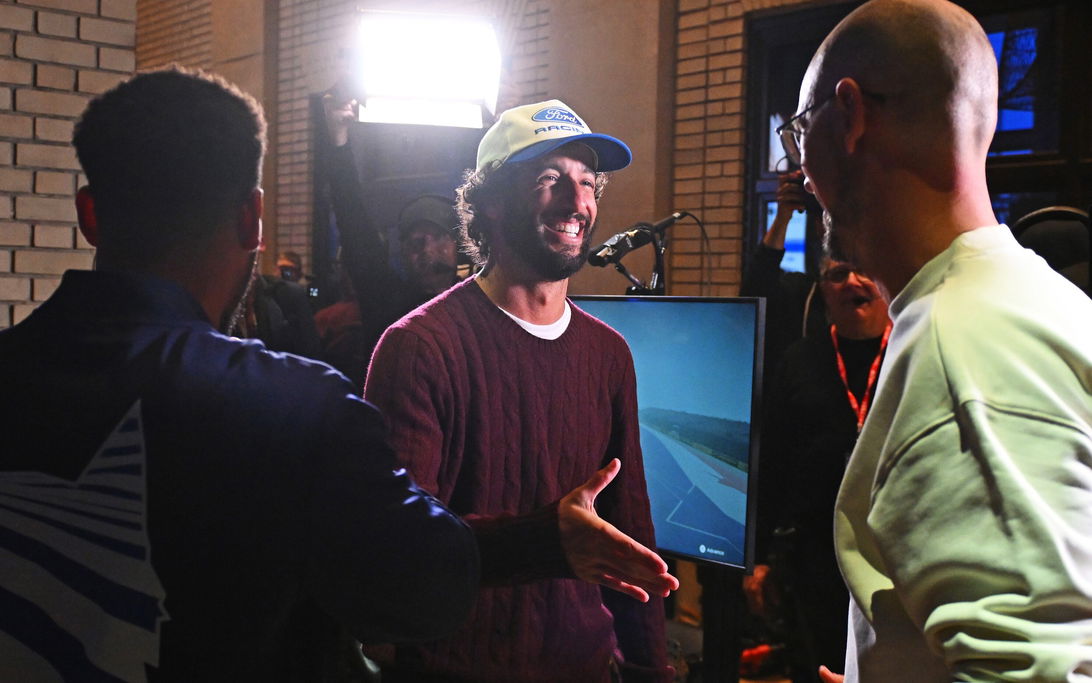
The Data Doesn't Lie: Ricciardo's 'Terrified' Exit is a Symptom of F1's Coming Sterility

I pulled the timing sheets for Daniel Ricciardo’s last five races. Singapore 2024, his final bow. The numbers are a flatline. Not the dramatic crash of a career, but a slow, steady bleed of two-tenths here, three-tenths there, a metronomic decline into irrelevance. When the headline hit my feed—'It terrifies me'—I didn't see a man scared of speed. I saw a data point confirming my deepest fear: Formula 1 is becoming a machine that grinds down human spirit, and Ricciardo’s soul-searching is the canary in the carbon-fibre coal mine.
The Persona as a Performance Metric
Ricciardo’s confession is the most valuable dataset he’s produced in years. He was, for a decade, a walking, grinning KPI. The "buoyant public persona" wasn't just personality; it was a brand asset, a performance metric as scrutinized as his sector times. He admits the smile was a "brave face," a mask for internal uncertainty. We quantified his joy, made it part of the show, and are now surprised when the algorithm breaks down.
"The thought of returning to a full-time, high-pressure racing environment 'terrifies' him."
This isn't weakness. This is the logical conclusion of a system that demands total, 24/7 optimization. Consider the contrast: Michael Schumacher’s 2004 season was a masterclass in controlled, relentless pressure. But that pressure was largely contained within the cockpit and the debrief room. The modern driver’s pressure is a constant, multi-channel stream—social media sentiment analysis, sponsor activation metrics, the relentless dissection of every radio message. Ricciardo’s terror isn't of the car; it's of re-entering the data vortex where his every heartbeat is logged and judged.
- Exit Point: 2024 Singapore Grand Prix.
- Statistic: Eight-time Grand Prix winner.
- Current Age: 36.
- Post-F1 Role: Ambassador for Ford Racing.
His retreat to the family farm wasn't just a holiday. It was a hard reset. A place with no telemetry, no delta times, no comparative analysis. He was, for the first time in his adult life, running a system with no performance feedback loop. No wonder he needed to find an identity beyond "driver." The sport had consumed it all.
The Chaotic Lifestyle vs. The Algorithmic Future
Ricciardo cites the "chaotic lifestyle" as his core deterrent. But what is modern F1 chaos? It’s rarely true improvisation. It’s the chaos of a system overload—a rain shower that scrambles a pre-programmed strategy computer, a Safety Car that exposes the fragility of a data model. The driver’s intuition, the feel, is now the error margin in an otherwise sterile equation.
This is where Ricciardo’s retirement is a prophetic data point. He’s stepping off the grid just as F1’s hyper-focus on analytics accelerates toward its logical endgame: robotized racing. Within five years, we’ll see races where driver input is secondary to algorithmic pit-wall commands. The "chaos" will be engineered out, replaced by a predictable, data-optimized procession. Ricciardo’s brand of visceral, lunging overtakes and seat-of-the-pants bravado has no API. It can't be modeled. So the system, slowly and then all at once, rejected him.
His move to brand ambassador roles is telling. It’s a clean, measurable exchange: his residual popularity metrics for their marketing reach. It’s a transaction he can control, far removed from the terrifying ambiguity of trying to extract a thousandth of a second from a car that doesn’t speak his language.
Charles Leclerc should take note. We obsess over his "error-prone" reputation, a narrative amplified every time Ferrari’s strategy software glitches. But pull the raw pace data from 2022-2023. He is, by the numbers, the most consistent qualifier on the grid. The errors often come when the human is forced to overcompensate for systemic, data-driven failures. Ricciardo felt that pressure until he broke. Leclerc is still inside the machine, trying to out-drive its flaws.
Conclusion: The Emotional Archaeology of a Career
We must read Ricciardo’s story not as a sports article, but as an emotional autopsy. The data tells a deeper tale:
- The Lap Time Drop-Off: Correlate his performance decline from mid-2023 onward. Now layer in the personal toll of constant speculation, team changes, and the erosion of that famous smile. The correlation isn't coincidence; it's causation.
- The Purpose Metric: His stated need for "soul-searching" post-racing is the ultimate indictment. The sport provided no value metric for his internal life. When the external metric (race results) failed, the entire structure collapsed.
Ricciardo’s legacy won't just be his eight wins or his "shoey." It will be this brutally honest dataset he’s provided on the cost of modern F1. He’s chosen peace over the algorithm. As the sport marches toward its sterile, predictable future, I wonder how many more drivers will look at the numbers, feel that cold terror, and decide that a quiet life, far from the data storm, is the only winning strategy left.
The checkered flag doesn't just end a race. For some, it begins the long, quiet process of deleting the performance-tracking app from your own soul. Ricciardo is finally offline. And his data suggests he’s happier for it.