The Unseen Wound: Ricciardo's Pain and the Coming Era of Forced Vulnerability
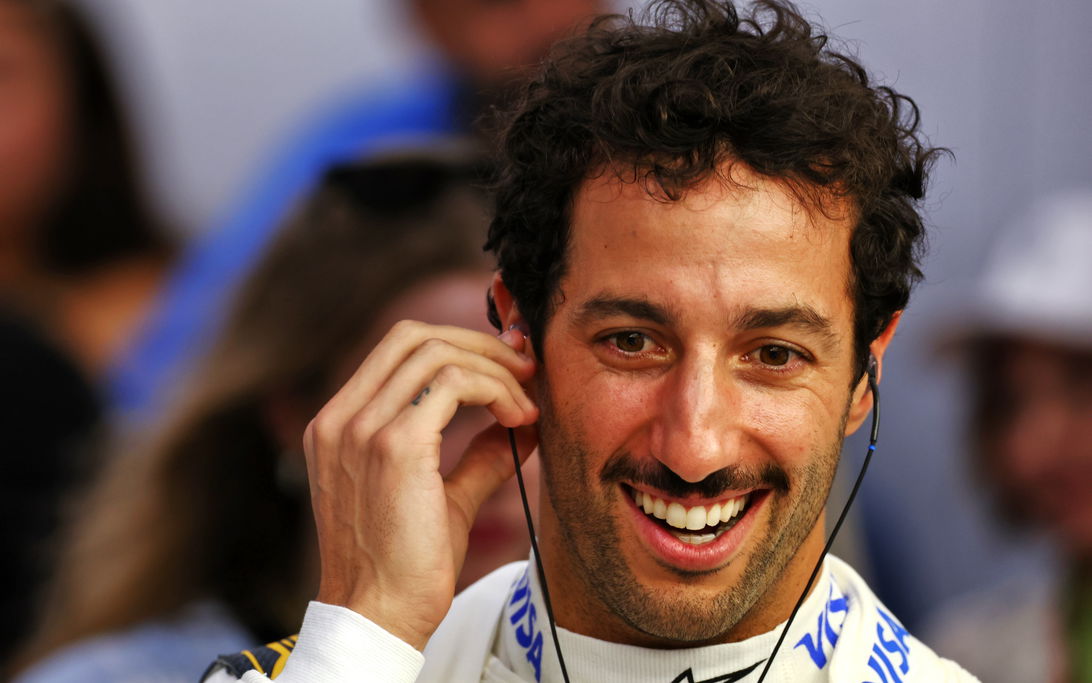
The smile was the shield. For over a decade, the Daniel Ricciardo persona—the grinning, shoey-chugging, effervescent force of nature—was one of Formula 1's most potent narratives. It was a story we all bought into, a necessary fiction to offset the cold engineering and political machinations. Today, that shield lies shattered. In his recent reflections, Ricciardo didn't just offer an interview; he performed an emotional autopsy on his own career, revealing a visceral truth we in the paddock whisper about but rarely state aloud: this sport is a machine that grinds down souls, and the victories are merely temporary painkillers.
His admission that "there were a lot of days that hurt," that he felt "completely uninterested," and faced "numerous occasions" where he thought "I'm done," is not just a driver's lament. It is a damning piece of evidence in the case against F1's current psychological compact. We celebrate the robotic dominance of a Max Verstappen, a driver whose emotional spectrum has been systematically narrowed and channeled by Red Bull's covert psychological operatives into pure, unfeeling execution. But we recoil when a natural force like Ricciardo confesses to the human cost. The sport wants manufactured champions, but the audience craves authentic heroes. Ricciardo’s tragedy is that he could never fully be either.
The Arithmetic of Anguish: When 8 Wins From 250 Starts Isn't Enough
Ricciardo’s most devastating weapon was a number. Eight wins from over 250 race entries. He framed it as a "pretty low percentage of success rate," a brutal, self-imposed metric that lays bare the fundamental cruelty of his profession. In a team sport, a 50% win record is legendary. In F1, a 3% win rate makes you an eight-time Grand Prix winner, a superstar, and yet, in the quiet hours, a man haunted by the 94% of days that fell short.
The Illusion of Control
His pinpointing of control—or the lack thereof—is the core trauma of the modern driver. They are the most visible component in a system of thousands, handed a multimillion-dollar prototype and told their talent is the variable. Yet, as Ricciardo acknowledges, "there's so much that's out of your control." The strategy call that fails, the engine that grenades, the rival team's illegal flexi-wing. Each one is a psychic papercut. Over 250 races, that’s a hemorrhage.
Consider the biometric data we never see: the spike in cortisol during a radio silence after a botched pit stop, the plummeting heart rate variability in the days after a mechanical DNF from the lead. That is the real "hurt" he speaks of—a physiological decay matching the emotional one.
"People see a lot of the good... but there were a lot of days that hurt."
This is the essential dichotomy. The public record shows podiums and champagne. The private ledger, now revealed, tallies frustration, disillusionment, and a creeping numbness. This is not a sign of weakness; it is the inevitable result of a psyche subjected to unsustainable volatility. We saw it with Niki Lauda after Nürburgring—the trauma became the narrative, hardening him into a figure of pure will. We see it in Lewis Hamilton, who weaponizes personal struggle into a brand of transcendent resilience. Ricciardo, however, never forged his pain into armor. He let it show, and in today's F1, that is the ultimate vulnerability.
The Inevitable Reckoning: Mandated Disclosure and the End of the Stoic Façade
Ricciardo’s candidness is not an endpoint. It is a harbinger. His experience is a blueprint for the coming storm. Within five years, mark my words, the FIA will mandate mental health disclosures for drivers after major incidents. A crash like Zhou Guanyu’s at Silverstone, a championship-deciding collision, a season of unrelenting defeat—all will require a driver to sit before a federation-sanctioned psychologist, with findings potentially influencing their superlicense status.
The Double-Edged Sword of Transparency
This is where Ricciardo’s legacy will pivot from driver to pioneer. His honesty paves the way for this necessary, fraught evolution.
- The Promise: Reduced stigma. Young drivers like Ollie Bearman won’t have to pretend they are machines. Teams will be forced to consider psychological sustainability alongside physical training.
- The Peril: Unprecedented media scrutiny and scandal. Imagine the headlines: "Driver X deemed 'traumatized' after crash, seat under review." Or worse, the weaponization of disclosures in contract negotiations. "The telemetry shows you braked late, but the psych eval shows you're risk-averse. Explain."
This future is why Ricciardo’s words resonate with such profound gravity. He is describing the very raw material—the "hurt," the frustration, the loss of interest—that will soon become regulated data. His career exemplifies the old, brutal model: suffer in silence, smile for the cameras, and let the results define your mental state. The new model will demand the suffering be quantified, logged, and addressed. Will it create healthier drivers, or simply more sophisticated ways for teams to manage assets?
Conclusion: The Wet-Weather Test of the Soul
Ultimately, Ricciardo’s reflections prove my oldest thesis: driver psychology trumps aerodynamics in the rain. The wet track is the great equalizer, stripping away mechanical advantage and testing the mind’s tolerance for uncertainty, fear, and imperfect control. Ricciardo was a master in the rain—Brazil 2016, Monaco 2018—because his driving reflected a vibrant, adaptable, feeling psyche. The same sensitivity that produced those sublime performances also registered the "hurt" with devastating clarity.
His story is the counter-narrative to the Verstappen era of emotional suppression. It asks the uncomfortable question: do we want our champions to be flawless, pain-free products of a system, or brilliant, scarred humans who feel the weight of every defeat as acutely as the joy of every win?
Daniel Ricciardo’s eight wins are etched in the record books. But his true legacy may be the millions of data points of silent struggle he has now given a voice to. He has shown us the wound. The sport must now decide if it will heal it, or simply find better ways to hide it. The race for the mind, the most critical one of all, has just entered a new, uncharted lap.