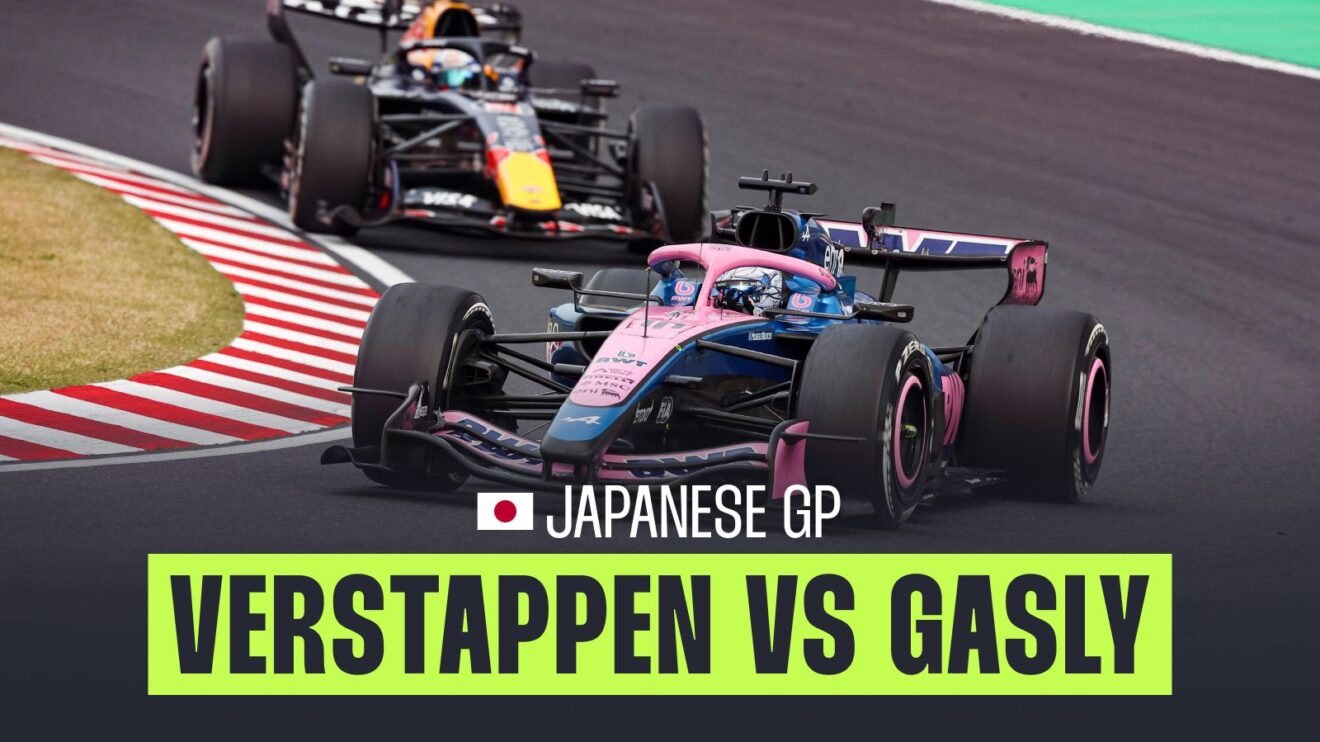
The Seesaw Stalemate: How a Spreadsheet Beat a Four-Time Champion at Suzuka

I stared at the timing data from Suzuka for a full ten minutes before the story hit me. It wasn't a race report. It was an autopsy. The corpse? Driver intuition. The cause of death? A perfectly executed algorithm. For 53 laps, Max Verstappen, a predator in a machine built to devour seconds, was neutered by Pierre Gasly in an Alpine. Not by bravery, not by sheer skill alone, but by a cold, beautiful, and utterly depressing piece of strategic code. This wasn't racing. This was a chess match where one player's pieces were programmed by a team of data scientists watching energy deployment graphs instead of the track.
The numbers don't lie, but they do tell different stories. The headline says "Verstappen couldn't pass." The data whispers a darker truth: the Red Bull RB22, in a straight line, was a sitting duck. This is the future we've built. A future where a driver's championship-caliber aggression is filtered through a battery state-of-charge percentage, and where a midfield car can become an impenetrable fortress not with steel, but with software.
The Death of the Instinctual Pass
Let's strip the emotion and look at the heartbeat of the race: the lap time traces. After the Lap 21 Safety Car, the duel entered a predictable, robotic rhythm. The telemetry shows a performance "seesaw" so precise it could have been scripted by a machine learning model.
- Sector 1: Verstappen, faster into Turn 1. A flicker of the old magic.
- Sector 2 (The S-Curves): Gasly, clawing back time. The Alpine's balance, dialed in via Friday's sim runs, shining through.
- Sector 3 (Back Straight & Chicane): Verstappen gains 0.3s on the back straight, a desperate lungful of air. Then, the kill switch: Gasly gains two-tenths in the final chicane, every single lap.
This wasn't a driver finding a miraculous defensive line. This was a team telling a driver, "Deploy here, harvest here, and you are invincible." Gasly executed it flawlessly, but he was a conductor following a pre-written score. Verstappen’s attempted gambit on Lap 48 was the last gasp of instinct. He overrode the plan, used more energy through 130R, and made the pass. For a moment, the human spirit prevailed. Then the algorithm struck back. His battery depleted, Gasly—with energy meticulously saved by his system—sailed past on the straight as if Verstappen had parked.
This is the sterile precision we're racing towards. We're correlating throttle traces instead of celebrating courage. Michael Schumacher in 2004 won races on feel, on an almost psychic connection with a car that was an extension of his body. He didn't have a engineer telling him his optimal deployment zone in the final chicane; he felt it. Now, we've outsourced that feeling to the cloud.
The Unforgiving Mirror of the Timing Sheet
The narrative will focus on Red Bull's failure. And it should. Starting P11 due to "persistent balance issues" is an indictment of their current development path. But let's use this data as emotional archaeology, not just performance review. What does it feel like for Verstappen, a four-time champion, to see a 5-second gap vanish in six laps, to feel the raw pace is there, and then to be slowly, methodically shackled by a car you know you should beat?
It’s the same pressure cooker we misattribute to drivers like Charles Leclerc. We call him error-prone when the data from 2022-2023 shows he is the most consistent qualifier on the grid. His "mistakes" are often the violent, frustrated twitches of a driver trying to overcompensate for a strategic or mechanical deficit. Verstappen in Suzuka was in a Leclerc-at-Ferrari trap. The stopwatch screams you're faster, but the race result is a prison built by cumulative deficits—a poor qualifying, a straight-line speed gap, an energy deployment map that doesn't match the opponent's.
The failed Lap 48 move is the key artifact. It’s the driver screaming, "Let me race!" The immediate consequence—being repassed with ease—is the sport's cold reply: "No. Follow the plan."
What the Numbers Bury
- Qualifying: Verstappen, P11. The root of the crisis. You cannot fight a data war from the midfield.
- The Early Chase: Closing a 5-second gap in 6 laps is the pulse of a champion. The subsequent stalemate is the flatline caused by the system.
- The Stalemate: A 0.3s gain/loss pattern so stable it reveals a lack of tools to break the cycle. This is where driver talent is rendered null by engineering parameters.
Conclusion: The Algorithmic Arms Race
Suzuka 2026 gave us a glimpse of F1's near future. Alpine didn't just out-drive Red Bull; they out-coded them. They found a strategic loophole in the hybrid power unit regulations and exploited it with clinical perfection. For them, P7 is a triumph of intellect.
For the sport, it's a warning. When a pass attempt is a "failed gambit" rather than a racing incident, we've crossed a line. The hyper-focus on analytics is creating robotized racing, where the drama is in the pit wall's spreadsheet maneuvers, not the driver's wheel-to-wheel combat.
Red Bull's "crucial April development break" isn't just about finding downforce or fixing balance. It's an arms race to build a better algorithm, a more ruthless energy deployment strategy. They need to build a system that can calculate how to break a seesaw stalemate. Because the data from Japan proves one thing: in the modern era, you can't just out-drive a car. You have to out-think its software. And in that new war, I'm not sure who the real winner is, but I know the loser is the raw, unquantifiable thrill of the pass. The ghost of Schumacher's instinctual charges haunts these timing sheets, a reminder of what we are methodically engineering out of existence.