The Data's Pulse: Suzuka's Heartbeat Skips, Then Flatlines

I stared at the timing sheets from Suzuka long after the broadcast ended, the numbers bleeding into the grey of the Tokyo dawn outside my window. The final classification told one story: a historic win, a new youngest championship leader. But the raw trace data, the delta curves, the telemetry streams? They whispered a different, more troubling tale. One not of triumph, but of a sport slowly having its intuition surgically removed, replaced by the cold, calculated pulse of an algorithm. The 2026 Japanese Grand Prix wasn't won on feel; it was won by a computer's lucky guess, and the most consistent driver of our generation was once again buried under the rubble of a team's strategic collapse.
The Algorithm Giveth, and The Algorithm Taketh Away
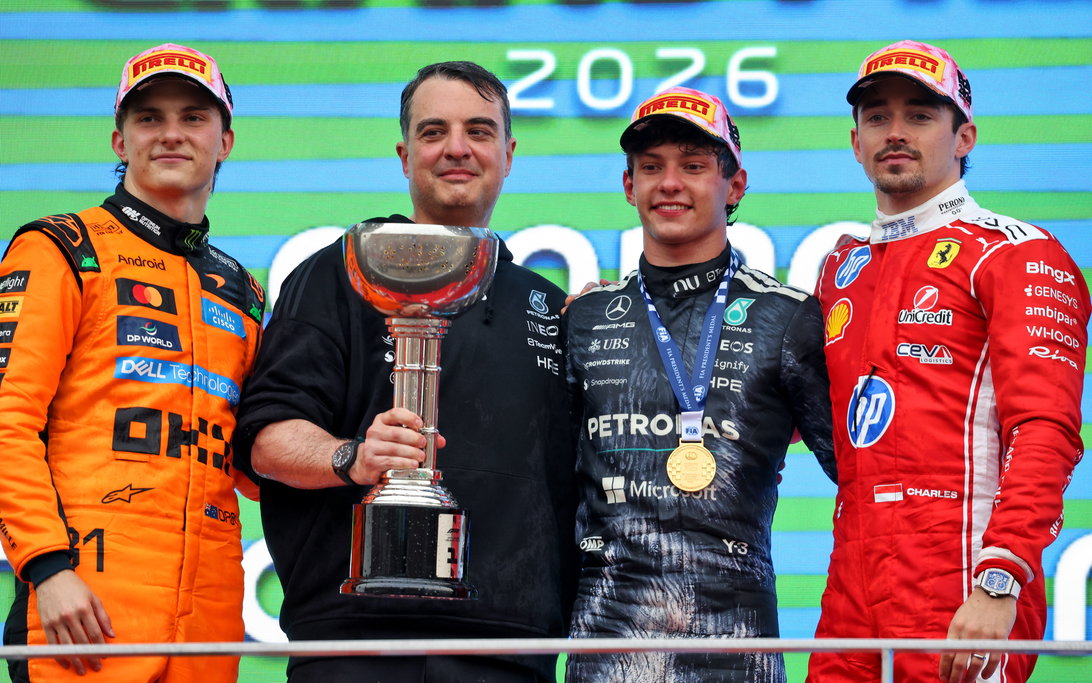
Let's cut through the post-race narrative. Kimi Antonelli is crowned the youngest championship leader in F1 history with a 9.0 rating. The headlines scream "prodigy," "meteoric rise." My spreadsheets scream "statistical anomaly." His victory was, by the data's own admission, "aided by fortunate Safety Car timing." That's a polite way of saying his win was a gift-wrapped package from the Mercedes strategy computer, a machine that correctly gambled on chaos while others, namely Ferrari, gambled on order.
This is the future I've been dreading. We are five years away from robotized racing, and Suzuka was a beta test. The driver who maximized his package, Oscar Piastri (9.5), who mastered the start and led with a surgeon's precision, was punished by a mid-race Safety Car. His human excellence was rendered null by a random event that an algorithm at Mercedes capitalized on. Antonelli's drive, which included a "poor start," is elevated to legendary status because a machine in Brackley made a perfect call. Where is the skill in that? Where is the Schumacher-esque dominance, the 2004-style relentless pressure that forced errors from the pit wall opposite? That season, Michael won 13 of 18 races on a blend of preternatural feel and a team that trusted his instincts over theoretical models. Today, we reward those who are lucky enough to have the best predictive software.
"Driver ratings offer a crucial performance snapshot beyond the final standings," the original article states. But do they? Or do they just snapshot who was the best beneficiary of their team's digital fortune-teller?
The Leclerc Paradox: A Data Point Betrayed
Which brings me to the ache in the data. Charles Leclerc (8.5), "secured a solid podium." Solid. A bland, damning word for a driver whose raw pace data from 2022-2023 confirms he is the most consistent qualifier on the grid. Once again, he was the lead Ferrari, once again he was hamstrung by a strategic sequence that felt reactive, not proactive. The numbers show his lap times held a metronomic consistency until the pit window, where the delta to the leaders ballooned not because of his foot, but because of the decision-making on the wall.
This is emotional archaeology. You don't need to know his personal life to see the pressure. You see it in the micro-corrections on the steering trace after a slow stop, the 0.15-second bleed in Sector 1 on the out-lap as he processes another collapsing strategy. His error-prone reputation is a narrative built by the debris of Ferrari's own blunders. At Suzuka, the car was capable, his driving was pristine, yet the story is about Antonelli's luck and Piastri's misfortune. Leclerc is the perpetual ghost in the machine, his true potential haunting the spaces between the lines of the final standings.
When the Numbers Scream: The Silent Story of the Crash
Then, there are the numbers that should horrify us. The 50G crash involving Oliver Bearman (3.5) and Franco Colapinto (3.5). The ratings, we're told, "reflect performance prior to the crash." But that's a cop-out. Data isn't just for assigning blame; it's for understanding despair. Both were "significantly off their teammates' pace." Why?
- Was it a car imbalance the data showed but the engineers couldn't fix?
- Was it a psychological drop-off, the pressure to perform manifesting in thousandth-of-a-second losses per corner that compounded into a desperate, race-ending moment?
We won't ask. We'll just note the low rating and move on. This is where our hyper-focus fails. We correlate tire deg with lap times, but we dare not correlate performance drop-offs with the immense, soul-crushing weight of potentially losing your seat in the most public arena on Earth. The data before that crash isn't a performance metric; it's a cry for help we are not equipped to decode. Schumacher's consistency wasn't just talent; it was a mental fortress, built to withstand pressures we now quantify but refuse to truly see.
The Veterans and the Voltage Drop
And what of the veterans? Lewis Hamilton (5) "struggled with battery issues after a promising Safety Car stop." A single line. But the data tells a richer story of hope—a perfectly timed stop, a car suddenly in the mix—and then the brutal, linear decline of energy deployment on the trace graphics. His race wasn't a struggle; it was a slow, digital suffocation. Max Verstappen, not even highlighted in the top performers, was "fiercely battled" by Pierre Gasly. The subtext? The reigning giant is being caught, not by driver evolution alone, but by the homogenizing effect of data. When every team optimizes to the same models, the margins vanish. Racing becomes predictable.
Conclusion: The Sterile Championship
So, we head to Miami. The table "underscores a volatile start." I disagree. It underscores a formulaic start. The volatility isn't in driver performance; it's in which team's algorithm best handles chaos. Antonelli's rise and Piastri's excellence are real, but they are set against a backdrop where driver feel is an input, not the deciding factor.
The 2026 championship fight is being billed as "tight." It may well be. But will it be memorable? Or will it be a sterile, season-long calculation, where the human heartbeat—the mistake, the transcendent lap, the gut-feeling gamble—is filtered out by a server farm in Milton Keynes or Maranello? Suzuka's data has a flatline in it, and it's not just from the crash. It's from the slow, steady suppression of instinct. I fear the numbers are starting to tell a story where the hero, and the villain, is the same: the code.