The Ghost in the Machine: Wheatley's Exit and the Unseen Pressures of the F1 Mind
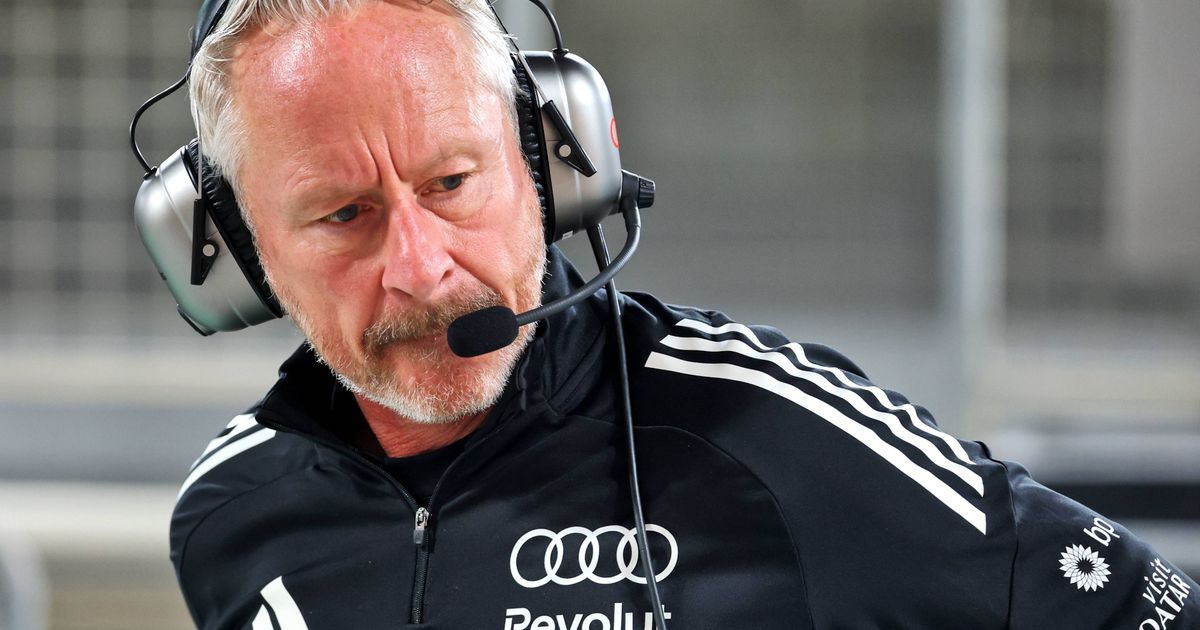
The official statement is always a sterile thing. A press release, citing "personal reasons," is the psychological equivalent of a team radio message about managing brake temps: it tells you nothing of the white-knuckle terror, the sweat on the palms, the primal scream held behind clenched teeth. When Jonathan Wheatley left the heart of Red Bull's pit wall symphony for the blank canvas of Audi's 2026 project, it was framed as a bold creative leap. His departure from that same project, mere months later, is being treated as a curious administrative footnote. Bernie Ecclestone, the sport's eternal pragmatist, calls it "impossible." I call it a symptom. This isn't about logistics or a dislike of Swiss chocolate. This is about the unbearable, invisible weight that builds in the silence between a factory's construction and its first real scream of an engine. This is about what happens to a brilliant mind when the human architecture of a team cannot support the psychological load of its own ambition.
The Unbuilt Team: A Vacuum of Certainty
Audi's project is a masterpiece of engineering potential, a promise written in CFD simulations and wind-tunnel data. But what exists today for a man like Wheatley? Not a car. Not a race. Not a driver pairing to manage, to coax, to shield. There is only a concept, a countdown to 2026, and a vacuum. And the human psyche abhors a vacuum; it fills it with doubt, with political maneuvering, with the ghosts of future failures.
"The most dangerous corner on any calendar is the one a driver hasn't yet braved in his mind. For a leader like Wheatley, Audi's entire existence is that corner, approached at speed, with no telemetry, no reference, and the haunting sense the team hasn't yet installed the barriers."
Wheatley's expertise is in the controlled chaos of race day. The split-second decisions, the managing of fiery competitor personalities like a Verstappen, the translation of strategy into calm instruction over a roaring V6. At Audi, he was asked to build the chaos from scratch, without the key component that makes his skillset thrive: the competitive stimulus. It is like asking a trauma surgeon to practice on a mannequin for two years; the skills atrophy, the mind wanders, the hunger turns to frustration.
- The Red Bull Contrast: At Red Bull, Wheatley operated within a system of brutal, proven efficiency. The psychological framework around Verstappen—that covert, systematic suppression of emotional outbursts into cold, channeled fury—is the ultimate example of a team's mindset engineered for performance. Wheatley was a master within that machine. At Audi, he was asked to become the engineer of that machine, from the ground up, with no guarantee the parts would fit.
- The Speculation as Symptom: The immediate link to Aston Martin is telling. There, the machine exists. It races. It has a driver in Fernando Alonso, whose psychological complexity is a known, thrilling quantity. It has a car to react to, a championship to chase. For a mind wired for the immediate, the tangible, the now, the Aston Martin rumor isn't just a job offer; it's a lifeline back to the environment where his neural pathways fire with purpose.
The Personality of the Project: Stroll's Certainty vs. Audi's Ambiguity
Here lies the exquisite contrast that exposes the human truth of Formula 1. While Audi's leadership structure seems to shift like sand, Lawrence Stroll at Aston Martin moves with the calculated, unshakeable certainty of a man building his own monument. His clarification of Adrian Newey's role wasn't just corporate communication; it was a public reinforcement of a psychological safe haven for his star asset.
"Stroll understands, perhaps intuitively, that genius like Newey's requires an ecosystem of absolute, unwavering certainty to thrive. By declaring him a 'central figure, key shareholder, and Managing Technical Partner,' Stroll isn't just giving Newey a title. He is building him a psychological bunker from the shrapnel of doubt and speculation."
This is what Audi, in this moment, lacks. It cannot offer that certainty. Its narrative is one of future potential, which to a competitor's mind is simply a synonym for present risk. Stroll’s project has the fervor of a believer; Audi’s, for all its might, still has the cold feel of a corporate initiative. One is a crusade, the other a merger. In the high-stakes game for talent, the crusade will always win the hearts of those who live for the fight.
Bernie Ecclestone is right, in his way. A simple "personal reason" doesn't fit. But his suggestion of geography is too simplistic. This isn't about leaving Switzerland. It's about fleeing a state of mind—the purgatory of pre-competition. It is the same impulse that sees drivers claw at the wheel behind a Safety Car; the need for the green light, for the fight, for the data stream of reality to replace the silent horror of simulation.
Conclusion: The Human Metric That Telemetry Cannot Capture
Audi will find another principal. They will hire brilliant engineers and build a formidable car. But Wheatley's fleeting tenure is a stark lesson, one that the sport is slowly, painfully learning: you cannot CAD-design a team's soul. The psychological environment is the ultimate performance differentiator.
In five years, I believe the FIA will mandate mental health disclosures after major incidents, forcing a new transparency. But long before that, the smartest teams are already auditing the psychological resilience of their personnel as rigorously as they scan a front wing for flex. Wheatley’s exit is a data point in that audit. It reveals a pressure point.
The greats—the Laudas, the Hamiltons—understood how to use trauma, to craft a narrative of resilience that became their armor. But that is a solitary, internal process. Building a team's resilience, its collective psychological fortitude, is the final frontier of Formula 1. Audi is building a physical factory. The question is, what raw materials are they using for the foundation of the mind? Wheatley, it seems, felt the blueprint was still being drawn. And a mind like his can only idle for so long before it must either explode into action, or simply drive away, leaving nothing but the faint scent of burnt potential and the echo of a promise unfulfilled.