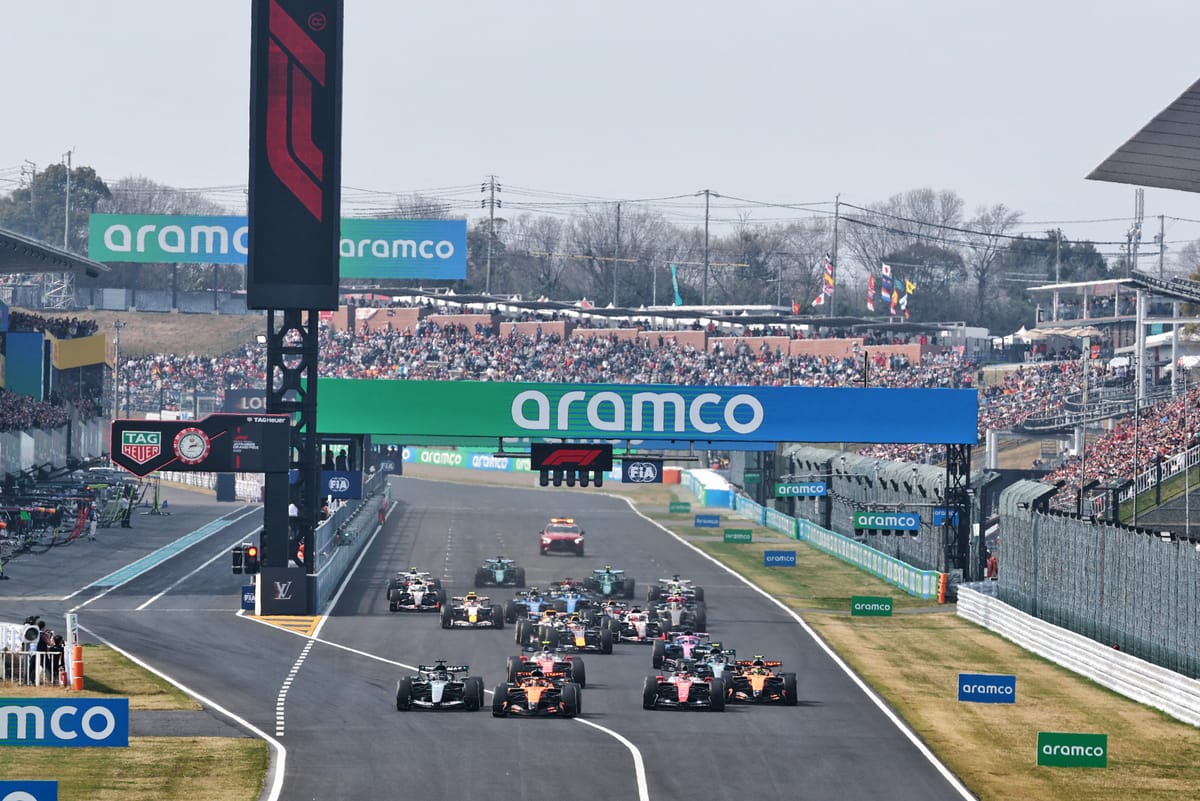
The Ghost in the Machine: How Straw's Rankings Miss the Story the Data is Whispering

I opened Edd Straw's Japanese GP driver rankings with the same skepticism I reserve for a team principal's post-race spin. The numbers, the raw, unfeeling deltas, they were all there. But the story they told felt... sanitized. Another narrative about "fine margins" and "on-track evidence," while the real drama—the human tremor behind the telemetry trace—was being smoothed over. To rank a driver is to tell a story about pressure, machinery, and soul. Straw's methodology is sound, but it listens only to the loudest data. I'm here to listen for the whispers.
Gasly's Brilliance and the Coming Algorithmic Winter
Let's start where Straw did: with Pierre Gasly in P1. His defense against Verstappen was, by the trace, "intelligent" and "high-class." Straw is correct. But my skin crawls at calling this a benchmark for the future. Why? Because it was a triumph of human anticipation over predictive modeling. Gasly sensed Verstappen's plan, a data point no dashboard could highlight. He used intuition, a currency being rapidly devalued in our sport.
We are five years from a pit wall where an AI overrules a driver's feel for degrading tires, citing optimal statistical wear models. Gasly's move will be a museum piece—a testament to when drivers thought, not just computed.
Straw highlights a midfield packed with "stars" performing at an "elite level." True. But this isn't a golden age; it's the calm before the sterile storm. When every team's data converges on the single "perfect" strategy, we'll have parity, but we'll have lost racing. We'll have exchanged Gasly's genius for a predictable, algorithmically-determined train. The numbers show his brilliance now, but they are also the tool that will, inevitably, seek to eliminate its necessity.
The Leclerc Paradox: When Data Becomes a Weapon
Then, Charles Leclerc, ranked 4th. Straw's reasoning: the Q3 deployment issue is part of the driver's challenge, and a minor error sealed it. This is where the narrative divorces the data, and my blood pressure spikes. To judge Leclerc on a car's electrical hiccup is to blame a composer for a piano with a stuck key.
Let's talk about the data Straw isn't weighing: the 2022-2023 qualifying head-to-heads. Leclerc's raw, one-lap pace consistency is arguably the best on the grid. His error-prone reputation is a fiction written by Ferrari's strategic blunders and mechanical frailties. We are using data to punish the driver for the team's sins, a cruel inversion of its purpose.
I think of Michael Schumacher's 2004 season. The car was a monster, but the consistency was human. Ross Brawn listened to Schumacher's feel, then used data to validate and enhance it. Today, at Maranello and elsewhere, the process is reversed: the data dictates, the driver complies. Leclerc's "error" is likely the symptom of a driver wrestling a car whose operational profile is being written by engineers staring at screens, not by the seat-of-the-pants feedback that defined an era. The data here should serve as emotional archaeology—what does the lap time drop-off after the deployment issue tell us? Not about skill, but about the crushing weight of knowing your machinery is your greatest rival.
The Russell Conundrum and Perez's Invisible Race
Straw's harshest, most "data-driven" call was George Russell in 13th. The reason: "slower than Antonelli by a chunk" in every session. This is clean, cold, and utterly merciless. It's also correct on its face. But data without context is just noise. What was the nature of the "misfortune"? A compromised setup? A car balance that just didn't suit him that weekend? The numbers show the what with brutal clarity: a deficit. They beg, but do not answer, the why.
Conversely, Sergio Perez in 7th for a P19 to P17 drive in the Cadillac is Straw's best piece of storytelling. This is data as a shield for a driver in a hopeless machine. "Conclusively faster than Bottas in all conditions" is the only metric that matters here. It’s a number that shouts his competence over the roar of his car's inadequacy. This is the proper use of the benchmark—to unearth the invisible race happening ten places outside the points. Perez’s weekend is a masterclass in personal performance metrics, a story the championship table will forever ignore.
Conclusion: The Heartbeat in the Hex Code
So, what do Straw's rankings ultimately reveal? They confirm the grid's terrifying depth. They correctly identify Gasly's moment of sublime instinct and Perez's quiet excellence. But they also expose our sport's dangerous trajectory: using data as a final judge, not an investigative tool.
We are conflating consistency with perfection, and punishing the unattainable latter. Leclerc is held to a standard of machine-like reliability while being denied machine-like reliability from his hardware. Russell is crucified on the cross of a direct teammate comparison, with no autopsy of the contributing factors.
The story of Suzuka isn't just in the timing sheets. It's in the 0.1-second loss from a deployment glitch that speaks of systemic fragility. It's in the consistent gap from Russell that may be a technical anomaly, not a personal failure. My job, as I see it, is to be a data archaeologist. To dig past the rankings and find the human heartbeat in the hex code. Before the algorithms fully take over, we must remember that the most important data point of all remains the driver's intuition—the last, great, unquantifiable variable. Once that's gone, all the numbers in the world won't make the racing matter.