The Maranello Mirage: How Ferrari's Geography and Hamilton's Culture Clash Are Dooming the Dream

The champagne in Shanghai had barely dried on Lewis Hamilton's race suit before the old, familiar cracks began to show. A debut Ferrari podium, a moment of manufactured history for the PR reels, is now being dissected not as a triumph, but as a damning benchmark. Eddie Irvine, a man who knows what it takes to survive—and nearly win—in the scarlet pressure cooker, has thrown a bucket of ice-cold reality on the Scuderia's 2026 ambitions. But he’s only scratching the surface. The real story isn't just about wind tunnel data or race pace; it’s about a fundamental culture war being waged inside the gates of Maranello, and a structural disadvantage that feels more like a self-imposed exile with every passing season.
The Distance is More Than Just Miles
Irvine is right, of course. The geographical isolation of Ferrari is its original sin in the modern era. He told La Gazzetta dello Sport: "The problem is the distance from the heart of Formula 1, which is the United Kingdom." But let's be clear: this isn't a simple logistics issue. This is about being outside the hive mind.
"Compared to last year, however, I think they could manage at least one win."
That's a telling concession. It’s the faint praise of a man who sees a team capable of flashes, but not of the relentless, week-on-week evolution that wins championships. In the UK, engineers, fabricators, and aerodynamicists move between teams in Milton Keynes, Brackley, and Silverstone like political aides switching ministries, carrying secrets and methodologies in their heads. Ferrari operates like a fortress. A glorious, passionate, insular fortress, cut off from the rapid cross-pollination of ideas that fuels its rivals. It’s the technical equivalent of the Schengen Area, and Maranello stubbornly refuses to carry the passport.
- The Talent Drain: Recruiting top UK-based talent means uprooting families to Italy, a harder sell than a move down the M1.
- The Supplier Lag: When every millisecond of prototype part delivery counts, being a plane ride away from your carbon fibre specialist is a chronic handicap.
- The Echo Chamber Effect: Without the informal pub-network of gossip and insight, Ferrari risks listening only to its own legendary echo.
This isolation breeds a particular kind of politics—one of suspicion and internal fiefdoms. It reminds me of the 1994 Benetton team, a unit so tightly wound and secretive about its… creative interpretations of the fuel flow regulations that it became impenetrable, even to itself. The pressure to compensate for a geographical deficit with sheer ingenuity can lead to monstrous innovation, or to catastrophic, inward-looking groupthink.
Hamilton vs. Leclerc: The Benchmark is the Beginning of the End
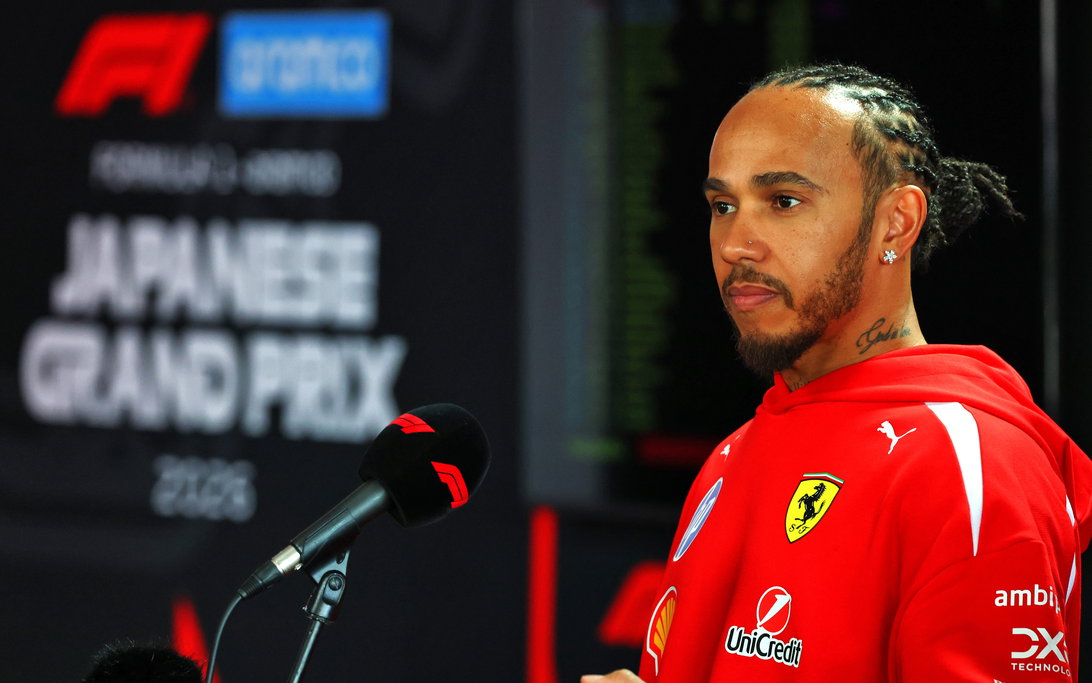
Now, let's talk about the human fault line that Irvine has so deftly exposed. His analysis of Hamilton’s Japan performance wasn't just observation; it was an obituary for a narrative. "In Japan, on the other hand, he was outclassed by Charles Leclerc throughout the entire weekend." Outclassed. That’s the word that will be pinned to Hamilton’s locker in Maranello.
This is where my thesis crystallizes. Lewis Hamilton's move to Ferrari was never going to work. Not in the long run. It’s a spectacular collision of personas. Hamilton, the global activist icon, the fashion plate, the disruptor, has walked into the most traditionally conservative, famously rigid institution in all of sports. Ferrari isn't just a team; it's a monarchy. And Charles Leclerc is the homegrown prince, the prodigio di Maranello, who speaks the language, understands the unspoken rules, and drives with a fury that aligns perfectly with the team's emotional core.
- China's Podium: A circuit that suits him, a dash of veteran savvy. A temporary stay of execution.
- Japan's Reality: A technical, demanding circuit where raw team-driver synthesis is king. There, the prince reigned supreme.
Hamilton’s strength has always been his ability to shape a team around his vision, from his management of Mercedes’ development to his public persona. At Ferrari, that is a fireable offense. The team shapes you. You do not shape Il Cavallino Rampante. The internal strife this generates isn't about lap times; it’s about morale, the true championship decider I’ve always believed in. Every radio complaint from Hamilton will be seen as dissent. Every suggestion as an affront to the Ferrari way. Leclerc, meanwhile, suffers in stoic silence, earning the silent approval of the old guard. This dynamic is more destructive than any understeer.
The Coming Storm: Privateers and the Cap
While Ferrari grapples with its internal and external geography, a larger seismic shift is brewing. Irvine’s skepticism about a sustained 2026 title bid is prescient, but for reasons beyond Ferrari's control. The budget cap is not a leveller; it's a weapon waiting to be exploited.
The next five years will see the savvy, agile privateer teams—Aston Martin with its bottomless Lawrence Stroll investment pool, and Alpine with its ruthless French corporate efficiency—master the dark arts of the cap. They will find the loopholes, just as Benetton found them in the fuel lines in '94. They will create shell companies, move costs to road car divisions, and do things manufacturer teams like Ferrari, with their bloated corporate structures and public shareholders, cannot. By 2028, I predict we will see a grid where the works teams are playing catch-up to the lean, mean, and politically nimble privateers. Ferrari's isolation will then be a double curse: far from the UK's tech hub, and shackled to a manufacturer's rigidity in a privateer's world.
Conclusion: A Beautiful, Doomed Experiment
So, what’s next? The scrutiny will intensify, as the article states. But it will focus on the wrong things. They’ll talk about Hamilton’s age, Leclerc’s qualifying pace, the SF-26’s drag coefficient. The real drama is in the boardroom and the motorhome. Can the monarchy absorb the revolutionary? Can the fortress innovate fast enough to beat the hive?
Hamilton’ first win in red will come. It must. But it will be a flash, a moment of individual brilliance that papers over the systemic cracks. The consistent, title-winning synergy? I don't see it. The culture clash is too great, the distance too far, and the competition is about to get a whole lot smarter with its money. Ferrari’s 2026 dream isn't being fought on the asphalt of Suzuka or Shanghai. It’s being lost in the corridors of Maranello and the balance sheets of Silverstone. And as history—and 1994—teaches us, no amount of passion can win that fight once the internal politics begin to rot the foundation.