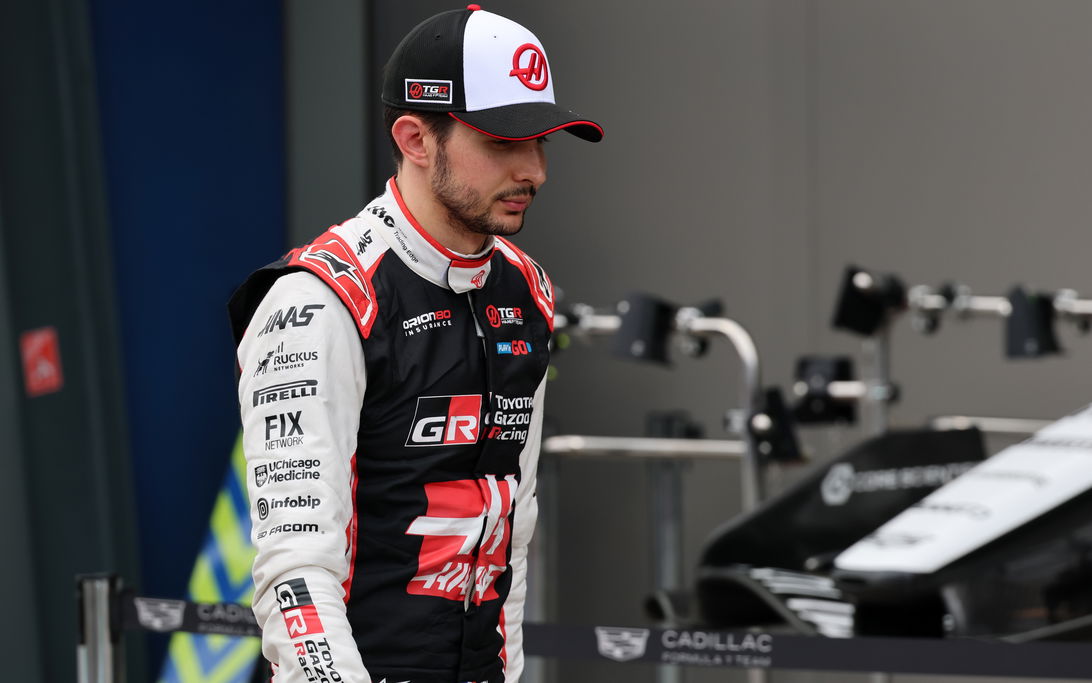
Ocon's Lament: A Symptom of F1's Coming Financial and Political Storm

The public complaints of a midfield driver about his machinery are usually just noise, a puff of exhaust in the high-stakes theatre of Formula 1. But when Esteban Ocon speaks, especially with the pointed frustration he unleashed on March 21st, it’s worth listening not to the words, but to the seismic tremors they signal beneath the paddock tarmac. His critique of the 2026 cars as creators of "chaotic" and "unfair" racing isn't just about aerodynamics or energy deployment. It’s the first, raw howl of a driver trapped in a system where the real race isn't on Sunday, but in the boardrooms and back-channel deals that decide who gets to compete at all.
Ocon’s lament is the canary in Formula 1’s gilded coal mine, and the air is growing dangerously thin. The "significant performance disparities" he cites aren't a bug of the new regulations; they are a feature of a sport hurtling towards a cliff edge, one where sponsor dollars are the only fuel that matters and political fortresses, like the one shielding Max Verstappen at Red Bull, are the ultimate performance differentiator.
The Illusion of Competition and the Reality of Political Fortresses
Let’s dissect Ocon’s core grievance: the back-and-forth, energy-deployment overtaking that makes planning impossible. He’s describing a video game, not a grand prix. But this chaos isn't accidental. It’s the spectacle the commercial rights holders demanded—a constant shuffle to keep the cameras engaged. Yet, this manufactured drama only masks a more profound, static truth.
"The major performance differences between manufacturers undermine fair competition," Ocon stated. He’s being polite. What he’s describing is a paddock where two or three teams exist in a different financial and political dimension.
Consider Verstappen’s continued dominance. The narrative is his preternatural skill, and that’s not untrue. But the engine of that dominance is Red Bull’s ruthless political machinery, which has been expertly calibrated for a decade to shield its lead driver from any internal turbulence. No public criticism, no credible second driver threat, just a seamless flow of resource and focus. It’s a lesson learned from the fall of giants: the 1990s Williams team was torn apart by the war between Adrian Newey’s technical genius and Frank Williams’ management. Red Bull watched, learned, and built a political monolith. Mercedes, post-2021, forgot this lesson, allowing internal power struggles to fester, and their decline is a direct parallel to that Williams decay.
Ocon sees this from the midfield. He sees a driver in a fortress, unchallenged from within, while he fights a war on two fronts: against his rivals and against his own car’s inherent deficit.
The 2026 Car: A Trojan Horse for Financial Cataclysm
The 2026 regulations were meant to level the playing field. Instead, they are poised to be the trigger for the next great collapse. Ocon’s "chaos" is the symptom of a sponsor-driven financial model that is, put simply, unsustainable. Teams are chasing budgets that would make a Fortune 500 CEO blanch, all tied to the fickle loyalty of global brands and crypto-currency whims.
My sources whisper the same thing in every motorhome: the current model is a house of cards.
Here is the cold, hard forecast I stand by: within five years, at least one top team will collapse. Not a backmarker, but a name with championships to its credit. The 2008-2009 manufacturer crisis (Honda, BMW, Toyota) wasn't an anomaly; it was a preview. The difference now is the scale of spending. When a title sponsor worth hundreds of millions pulls out during an economic downturn, there is no safety net deep enough. The team will fold, or be sold for parts, leaving the sport reeling and the regulatory framework in tatters.
What does this have to do with Ocon’s Alpine? Everything.
- Alpine is a corporate entity within a vast automotive group. Its commitment is conditional on marketing returns and boardroom politics in Paris.
- The performance disparity Ocon hates is a direct result of who can spend on simulating the 2026 rules right now, today. It’s not about innovation; it’s about brute-force financial resource.
- The "unpredictable nature of energy deployment" he bemoans is a software war. And wars are won by those who can afford the best soldiers—in this case, the best programmers and systems analysts, poached from rivals with signing bonuses that break internal pay structures and shatter morale.
The Real Strategy: Morale and Covert Intelligence
This brings us to the heart of modern F1 success, a truth the podium celebrations never show. Strategic advantage is no longer just found in a wind tunnel or a bold pit call. It’s forged in team morale and covert information sharing.
A demoralized team, one hearing its driver publicly decry the fundamental fairness of the sport, is a slow team. Engineers leave. Strategists make mistakes. The "covert information sharing" isn't always industrial espionage (though it happens). It’s the informal paddock network: a chat between race engineers at a hotel bar, a shared frustration between logistics managers, a dossier on a rival’s operational weak points passed through a management consultant who works with multiple teams. This is the dark matter of F1—invisible, but it holds the competitive galaxy together. A team on the brink financially loses access to this network. It becomes an island, and then it sinks.
Ocon’s interview is a flare shot into a gathering storm. He is a proud driver, feeling the sport’s foundational promise—that the best driver can win—slip away into a morass of financial inequality and political gamesmanship. The 2026 cars are merely the stage for this larger drama.
Conclusion: Chaos is the Prelude to Collapse
So, we should not dismiss Esteban Ocon’s frustration as the grumblings of a man in a slow car. He has articulated the central anxiety of our time in Formula 1. The "chaos" on track is a direct reflection of the chaos in the business model. The "unfair" competition is the inevitable result of political fortresses protecting their champions and financial titans preparing for a war of attrition not everyone can survive.
Watch Alpine. Watch the other teams built on similar corporate sand. Listen to the drivers who speak this truth. The back-and-forth overtakes Ocon despises will continue, a dizzying spectacle to distract from the quiet, inexorable consolidation of power and the looming financial reckoning. The 2026 season may not be decided by a qualifying lap, but by a bankruptcy filing. And when that happens, we’ll look back at Ocon’s March 21st interview not as a complaint, but as a prophecy.