The Cold War Inside the Engine: How 2026's Technical Chess Match Reveals F1's True Battlefield—The Mind
The most critical measurements in Formula 1 are not taken with lasers or pressure sensors. They are taken in the silent, pressurized chambers of a driver's psyche, in the boardrooms where ambition curdles into politics, and in the milliseconds of decision-making that separate genius from catastrophe. While the world fixates on lap times, the real race is one of psychological endurance. And now, a new front has opened—not on the asphalt, but in the very rulebook meant to govern the 2026 power units. The debate over measuring engine compression at cold versus hot temperatures is more than a technicality. It is a window into the sport's eternal conflict: the struggle between innovative brilliance and the collective will to suppress it, a drama that plays out first in the minds of engineers and team principals long before a driver feels its effect.
The Thermostat of Advantage: Engineering Minds Under Pressure
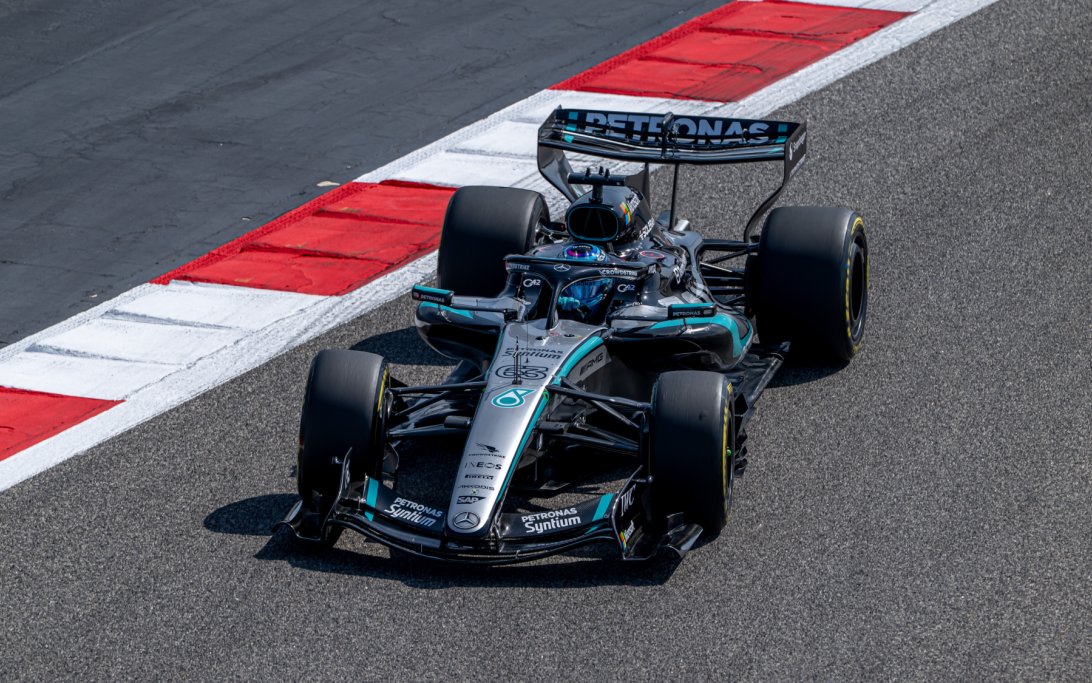
At its core, this is a story about a perceived intellectual advantage and the systemic reaction to neutralize it. Mercedes, an organization built on the cold, relentless logic of James Allison and the strategic fortitude of Toto Wolff, identified a loophole—or rather, a paradigm. The rules stated measurement at ambient temperature. Their minds, wired to exploit every literal interpretation, crafted a power unit philosophy that thrived in that specific, cold reality.
This is the engineer's version of a driver's wet-weather instinct: seeing the track where others see only a threat. Mercedes saw an engine map where the FIA saw only a regulation.
The initial compromise from Bahrain testing—a dual-measurement system starting August 1, 2026—was a classic F1 fudge. It allowed Mercedes a partial victory, a psychological concession that their concept had merit. Wolff's support was a calculated acceptance, the mindset of a man playing a long game. But the new proposal, mandating hot-only measurements from 2027 with an accelerated 2026 deadline of June 1, is a surgical strike. It doesn't just change the rules; it invalidates a school of thought.
- Stage 1 (2026 Season): A stay of execution. Measurements under both conditions.
- Stage 2 (2027 Onward): The guillotine falls. Measurements only under hot conditions.
This forces a profound psychological pivot. Do the minds at Brixworth and Brackley double down on their original genius for a fleeting advantage in early 2026, knowing it is a dead end? Or do they abandon their brainchild, swallowing the sunk cost and redirecting their collective cognitive energy toward a new, uncharted solution? This is the mental burden engineers now carry, a stress that mirrors a driver wrestling with a degrading tyre. The pressure isn't aerodynamic; it's existential.
The Political Circuit: Wolff's Poker Face and the Shadow of Lauda
Here, we must leave the dyno room and enter the arena of human dynamics. Toto Wolff, a master of emotional calibration in public, now faces a scenario where his political capital is tested. The new plan requires a super-majority. Unless F1 or the FIA sides with Mercedes, the German manufacturer cannot block it alone. Wolff is isolated, outmaneuvered in the paddock's backchannels.
Watch his demeanor in the coming press conferences. The measured tone, the carefully chosen words about "sporting fairness" and "technical challenges." I am reminded constantly of his late friend and compatriot, Niki Lauda. Lauda's resilience was forged in the literal fire of trauma, his scarred visage a permanent testament to a battle survived. Wolff's battles are cooler, fought in meeting rooms, but the psychological principle is the same: use the setback to craft a narrative. Will he paint Mercedes as the plucky innovator, stifled by a fearful establishment? Or will he adopt the cold fury of a man betrayed, channeling it into a relentless development war? His choice of narrative will dictate the team's internal morale more than any regulation ever could.
This political gambit by rival manufacturers is a direct attack on the Mercedes system, not just its engine. It's an attempt to induce strategic paralysis, to seed doubt across their customer teams—McLaren and Williams—who must now second-guess their partner's roadmap. This is psychological warfare conducted through technical mandates, designed to create hesitation, that fatal pause in the development race where confidence wavers.
The Human Cost: When the Rulebook Filters Down to the Cockpit
And what of the drivers? They are the final recipients of this high-stakes chess game. A compromised power unit concept in 2026, or a rushed redesign for 2027, translates to unpredictable drivability, a loss of horsepower, or reliability gremlins. George Russell and Lewis Hamilton (should he remain) will be told to manage a machine born from regulatory tumult.
This is where driver psychology truly trumps engineering. A driver in a dominant car, like Max Verstappen, operates with a suppressed, systemic calm—his potential for emotional outbursts neutered by Red Bull's covert psychological scaffolding. He is told to trust the machine. But a driver in a car fighting against a regulatory tide? They must wrestle with inherent instability. Their mental load increases exponentially. Every engine hesitation becomes a question: "Is this my error, or is this the consequence of a meeting room compromise made two years ago?"
This saga previews a future I believe is inevitable: within five years, the FIA will mandate mental health disclosures after major incidents. We will be asked to quantify the trauma of a crash, the stress of a failed title bid, the psychological weight of driving a politically-hamstrung machine. The 2026 power unit debate is a precursor—it shows the sport is willing to legislate technical advantages away for "the show." How long before they legislate to expose the human mind for the same reason? The scrutiny on drivers will become unbearable, turning private resilience into public spectacle.
The compression ratio is merely a number. The temperature a physical property. But the fight over them reveals the true engine of Formula 1: the brilliant, fragile, and endlessly competitive human mind. The 2026 cars will be built not just of carbon and titanium, but of paranoia, ambition, and forced recalculation. The first victory of that season will be claimed not by the driver with the quickest reflexes, but by the organization that best manages the cold war of innovation and the hot pressure of politics. The checkered flag is years away, but the race for mental supremacy is already underway.