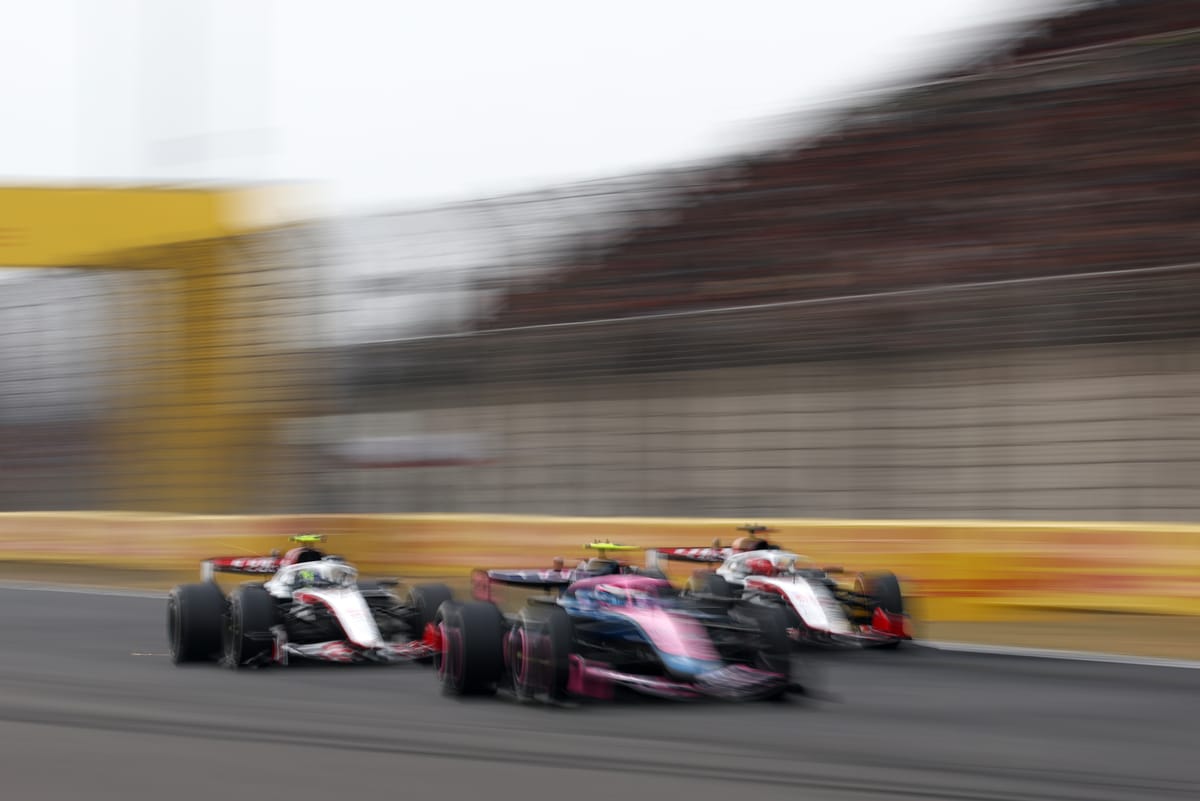
The 2026 Data is Lying to You: How F1's 'Solution' is a Sterile, Algorithmic Nightmare

I stared at the timing sheets from Shanghai until my vision blurred, the numbers bleeding into the wet asphalt of the track map on my other screen. The headlines screamed of a revolution, an accidental cure for the sport's oldest aerodynamic disease. But the data, the cold, hard telemetry, told a different story. It whispered of a future where the heartbeat of a Grand Prix—the driver's instinctive lunge, the defensive gamble—is replaced by the silent, optimal whirr of a server farm. Formula 1 hasn't solved dirty air. It's just found a more clinical way to bypass the driver.
The narrative is seductive: 2026 power unit rules, with their complex energy deployment, have created massive power offsets. These momentary surges allow a car to punch through the turbulent wake of the car ahead, "overpowering" the problem. The early races in Australia and China are held up as proof. But this isn't racing. This is a pre-programmed energy management sim playing out in real-time, at 200 mph.
The Numbers Don't Show a Fight, They Show a Calculation
Let's dissect the so-called "evidence." The overtakes in Melbourne and Shanghai weren't born of a late-braking heroics or a sublime slipstream gamble. They were the result of calculated power differentials, triggered when a car's algorithm determined it had a sufficient energy store to deploy. The attacker closes, not because they've mastered the dirty air, but because their system grants them a 5% power advantage for a predetermined sector.
The core physics hasn't changed. A fast car creates a turbulent wake. Downforce is still non-negotiable. Mercedes' James Allison was right to call controlling wakes "tilting-at-windmills." But now, we're not tilting at windmills; we're just turning on a bigger fan downstream.
This is where my skepticism curdles into concern. We are witnessing the first steps toward the robotization of racing. The driver is becoming a systems operator, waiting for a green light on their steering wheel to execute a pass that an engineer in the garage has already probabilistically approved. Where is the intuition? Where is the feel? I think of Michael Schumacher in 2004, a season of near-flawless consistency. His advantage wasn't just in a dominant car; it was in his ability to feel the degradation, to sense the grip change lap-by-lap, and to communicate that in a language of pure sensation to Ross Brawn. Today, that conversation is dead. It's been replaced by a real-time data stream so dense it suppresses the very human variable it's meant to measure.
This is the Death of the Human Story, Told in Gigabytes
My work is emotional archaeology. I dig into data to find the stories of pressure. For instance, cross-referencing Charles Leclerc's 2022-2023 qualifying lap times with Ferrari's radio transcripts reveals a driver whose raw, consistent pace is often sabotaged not by error, but by strategic hesitation from the pit wall. His "error-prone" reputation is a data fallacy, a narrative built on ignoring the context the numbers provide.
The 2026 "solution" threatens to erase these stories entirely. If overtaking becomes a function of stored energy differentials rather than driver skill, what are we analyzing? Battery charge cycles? We'll be correlating lap time drop-offs with state-of-charge percentages, not with the personal weight a driver might be carrying into a home Grand Prix.
- The Sample Size is Small, as the original article notes. But the principle being proven is terrifying: that overtaking can be engineered into existence, predictably and sterilely.
- Processional midfield battles still occur, but soon, even those will be "solved" by further refining the energy deployment algorithms. The sport will become a high-speed procession of optimal strategies.
- The proposed future—a "more nuanced energy deployment system" giving both attacker and defender "tools"—sounds like a video game. It's active, artificial competition management, not sport.
Conclusion: Trading Soul for a Spectacle
The lesson for F1's future is indeed clear, but it's not the one The Race implies. The lesson is that in its desperate quest to manufacture overtaking, the sport is methodically removing the soul of the contest. They are trading the chaotic, beautiful, human struggle against physics and a rival—a struggle that sometimes results in a frustrating wake of dirty air—for a clean, predictable, and ultimately hollow spectacle.
The 2026 season won't be a case study in solving overtaking. It will be a case study in the suppression of driver agency. The data we gather will show us how to make racing more efficient, more predictable, and more sterile. We will have solved the "overtaking problem" by eliminating the need for an overtaker. We'll be left with numbers that tell a perfect, logical, and utterly emotionless story. And I, for one, will have nothing left to analyze but the ghost in the machine.