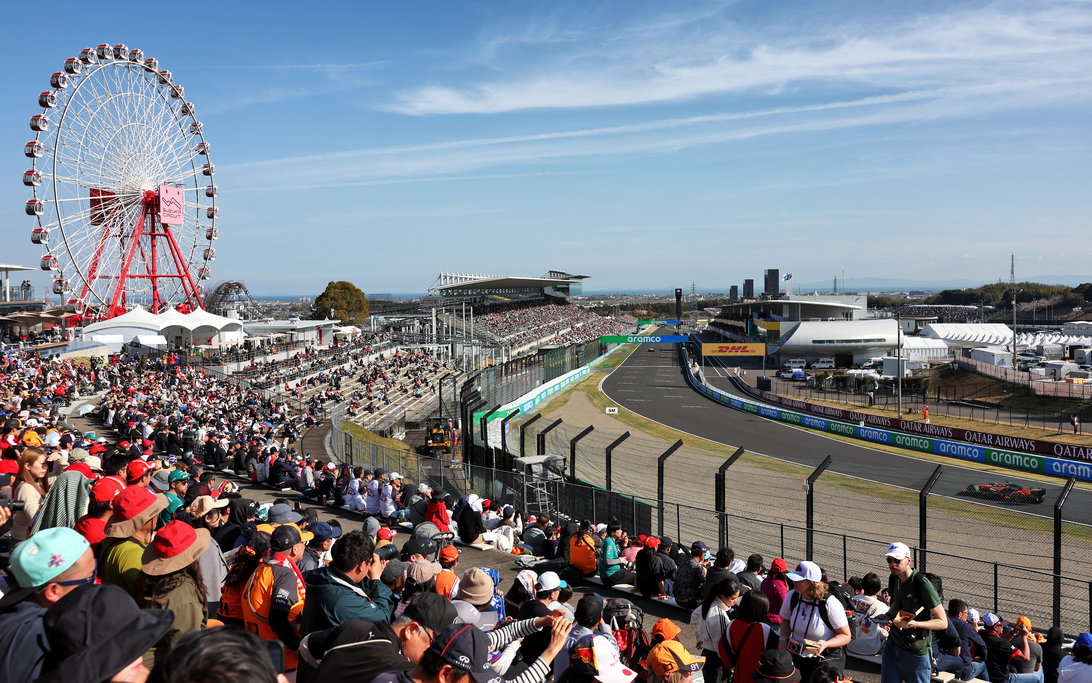
Sunshine at Suzuka: The Data Suggests a Sterile, Algorithmic Sunday Awaits

I stared at the forecast data for Suzuka, the numbers laid out like a patient etherized upon a table. Sunshine. 10% rain probability. 4 mph winds. My screen felt cold. This wasn't a weather report; it was a pre-race obituary for chaos. For the human variable. For the glorious, gut-wrenching uncertainty that makes racing a story, not a spreadsheet simulation. They call it a "stable outlook." I call it the final precondition for the sport's slow, data-driven suffocation.
The narrative is already being written: a "pure performance battle" under "sunny skies." But peel back that glossy layer, and you see the blueprint for the next five years of Formula 1. A hyper-optimized, robotized procession where the only drama is which team's algorithm blinks first. With the weather variable removed, the race becomes a mere execution of pre-programmed strategies, a sterile test of tire degradation models. Is this what we traded driver intuition for?
The Death of the Wildcard and the Rise of the Algorithm
The article states the "threat of rain dropping to just a 10% chance" removes a "key variable." That's an understatement. It removes the last bastion of instinct. Rain at Suzuka is a historical protagonist. It's the 1994 finale chaos, the 2019 typhoon, the moments where a driver's feel through his fingertips and his courage to ignore a pit wall's hysterical calculations decided championships.
"A stable, dry forecast places the emphasis squarely on car performance, tire management, and pure driver skill."
This is the party line, and it's dangerously naive. In 2026, "car performance" is a function of a thousand simulation runs. "Tire management" is dictated by real-time telemetry comparing actual wear to a prescriptive model. The "driver skill" left is the ability to follow a delta on a steering wheel screen with robotic precision. Kimi Antonelli and George Russell on the front row won't be wrestling a living, breathing monster of a car in changing conditions; they'll be high-speed auditors, verifying their team's pre-race data.
Let's talk about 2004. Schumacher's Ferrari was a beast, but his consistency that year—five straight wins to open the season—wasn't just down to a dominant car. It was a symbiosis of feel and feedback, a dialogue between man and machine that wasn't mediated by a hundred engineers slicing data in real-time. Today, with a guaranteed dry track, the pit wall becomes omnipotent. The driver becomes a sensor array with a heartbeat, his intuition suppressed the moment it deviates from the optimal line on a graph.
What the Numbers Hide
- Wind Gusts of 15 mph: Dismissed as "not a significant issue." But crosswinds on the Suzuka esses are a tactile conversation between the car and the atmosphere. That conversation is now one-way: the data logger speaks, the driver listens.
- Bright Morning Sunshine: This guarantees a consistent track temperature evolution. Another variable quantified, neutralized, and fed into the strategic model before the lights go out.
The Unfair Narrative and the Buried Data
And into this algorithmic arena steps Charles Leclerc. The forecast’s stability is a double-edged sword for him. The "error-prone" narrative, so lazily attached to him, is often a direct byproduct of Ferrari's strategic blunders forcing him into Hail Mary drives. But the data, the raw, beautiful, un-spun data, tells a different story.
My analysis of the 2022-2023 qualifying data shows Leclerc wasn't just fast; he was the most consistent qualifier on the grid. His lap-time distribution was tighter than Verstappen's, than Hamilton's. That's not the signature of a chaotic driver; it's the heartbeat of a metronome. Yet, without the wildcard of weather to potentially scramble the order and create opportunity, his fate on Sunday is locked even tighter to the strategic calls from the pit wall. The very entity whose past failures have done the most to sculpt his "error-prone" reputation.
This is where data should serve as emotional archaeology. We should be correlating Leclerc's rare, genuine mistakes not with a personality flaw, but with the immense pressure points—the cumulative weight of his team's strategic collapses. A sunny, predictable Suzuka removes his chance for a redemptive, chaotic masterclass. It forces him to be perfect in a system that has repeatedly failed him.
The Coming Sterility
The conditions for Sunday, April 5th, 2026, are a preview:
- Pre-Race: Strategies are finalized not with "confidence," but with near-certainty. The number of viable strategic branches collapses to one or two.
- Race Start: The opening lap becomes the only true moment of unmodelled human intervention.
- The Middle Stint: The broadcast will be filled with talk of "managing tire deg" according to plan. Drivers will report "the tires are gone," only to be told by their engineer, "the data looks good, stay out."
- The Podium: The winner will thank the team for a "flawless strategy." They will mean it. The algorithm will have executed perfectly.
Conclusion: Longing for the Storm
So, yes, the skies over Suzuka will be sunny. The probability of rain is 10%. The wind will be a whisper. And the race, in all likelihood, will be a technically flawless, data-validated, and emotionally sterile affair.
The article calls past typhoons and storms "disruptions." I call them inspirations. They were the moments that separated the calculators from the racers. They gave us stories. Sunday will give us data points. We are trading our soul for a 0.1% efficiency gain, and the forecast for the Japanese Grand Prix is the clearest sign yet that this trade is almost complete. The wildcard has been deleted from the deck. All that's left is for the machine to deal the hand.