The Paddock's Newest Data Point: When a Driver's Grievance Becomes a Team's KPI

I was running the numbers from Suzuka, the usual post-race autopsy of tire deg and delta gaps, when a different kind of outlier spiked my feed. Not a lap time, but a log entry: one accredited journalist, access revoked, by driver decree. The data point was binary—0 for present, 1 for banned—but the story it tells is analog, messy, and terrifyingly human. It’s a story about emotion, memory, and the dangerous precedent of letting personal grievance dictate professional protocol. Forget the telemetry; the most telling metric right now is the chilling effect.
The Abu Dhabi Echo: A Data Lag of 127 Days
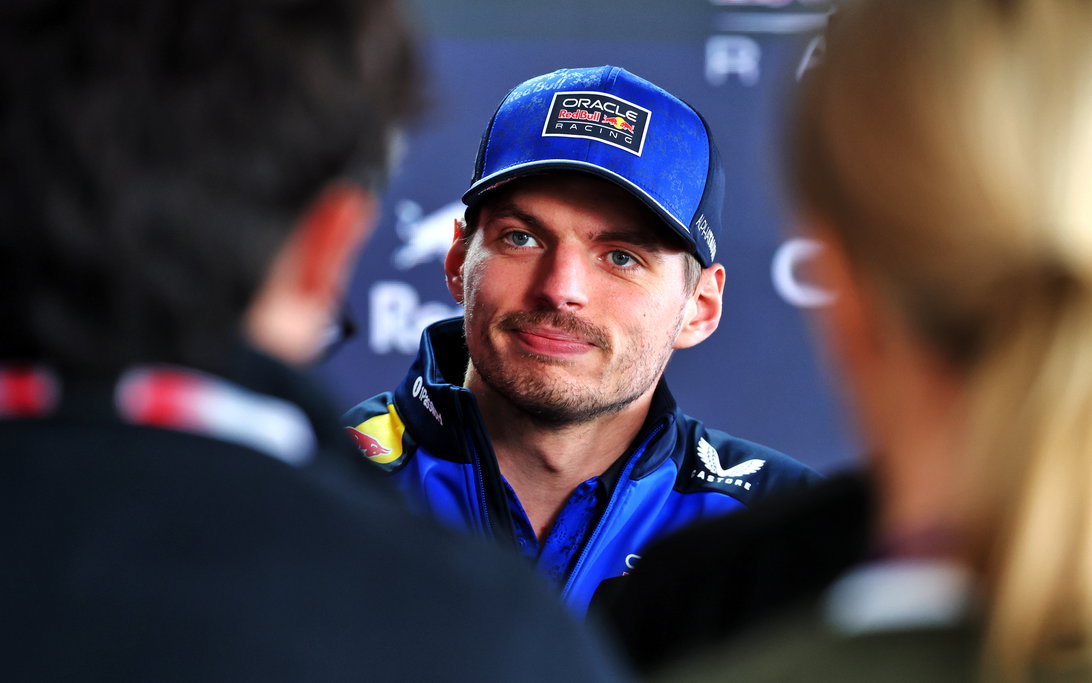
The incident itself is a simple transaction. On 2026-03-29 at the Japanese Grand Prix, Max Verstappen interrupted a Red Bull media session to order The Guardian's Giles Richards to leave. The reason? Not a factual inaccuracy, not a breach of protocol. Verstappen cited Richards' "demeanour" from a question posed 127 days prior, in the post-race press conference after the 2025 Abu Dhabi Grand Prix, where Verstappen lost the championship to Lando Norris.
This is where the data analyst in me gets skeptical. What is the half-life of a perceived slight? Where is the timestamp on "demeanour"?
We live in a sport that measures everything in milliseconds. A driver's steering input, brake pressure, and vocal stress are all logged, graphed, and analyzed. Yet here, we are asked to accept a punitive action based on a qualitative metric from four months ago, with no available dataset for review. This isn't strategy; it's sentiment. And it’s a luxury Charles Leclerc has never been afforded. Can you imagine the narrative if Leclerc banned a reporter for a question asked after a strategic blunder in Monaco? His error-prone reputation would be the only data point anyone cited, burying the raw pace that, from 2022-2023, made him the grid's most consistent qualifier. The inconsistency in how we apply judgment is the real scandal.
The teams would call this an "uncontrolled variable." I call it human nature, weaponized.
The Correlation No One is Tracking: Online Abuse and Editorial Pressure
The immediate aftermath generated another, more sinister dataset. Richards and journalists who defended him faced significant online harassment. The Italian Automotive Journalists Association (UIGA) called this "unacceptable," and the F1 Media Advisory Council took it to the FIA. Their statement warned of a "deterioration" in conditions and called a free press a "fundamental pillar."
But let's connect the dots they won't. If a driver can unilaterally blacklist a journalist for a months-old question, what happens to the next reporter sitting on a story about aerodynamic irregularities or cost-cap nuances? The risk calculation changes. The unspoken KPI becomes: "Will this line of inquiry get me banned?" The story becomes secondary to access. This is how you sterilize a sport from the inside out.
We are racing toward a future where every decision is data-driven. Within five years, I fear driver intuition will be fully supplanted by algorithmic race strategy, creating predictable, robotized processionals. This incident is the human prelude to that cold future. It's about controlling the narrative input before the algorithm even runs. If you can silence the critical, probing questions—the ones that aren't in the pre-approved script—you remove a vital feedback loop. The sport's transparency degs faster than a soft tire in Bahrain.
The Schumacher Standard: When Authority Had a Buffer
I keep going back to Michael Schumacher's 2004 season. A machine of consistency. A team, Ferrari, that was a fortress. Did he enjoy every media interaction? Unlikely. Were there journalists he disliked? Almost certainly. But the mechanism was different. Grievances were filtered through the team's PR apparatus, a layer of professional insulation that protected both the driver's focus and the media's fundamental access. The driver drove. The team managed. It wasn't perfect, but it understood roles.
What Verstappen has done—and what Red Bull has, by inaction, endorsed—is a vertical integration of grievance management. The driver is now the source, judge, and enforcer. This is the ultimate expression of the modern driver-as-CEO, but it's terrible for the sport's ecosystem. The FIA's impending mediation isn't about soothing egos; it's about reinstating a firewall. Will they? Their record on enforcing consistent standards is, my data shows, spotty.
My final take? This isn't just a story about a reporter and a champion. It's a stress test on F1's integrity. We obsess over the data from the car. We should be equally obsessed with the data from the paddock—the chilling of questions, the rise of abusive feedback loops, the slow erosion of accountability. The numbers that tell this story aren't on the timing sheet. They're in the empty chair at the next press conference, and in the questions that are never asked. That’s a narrative the data, cold and clear, will eventually reveal. And it won't be a pretty one.