The Ghost in the Machine: What a Nürburgring Tyre Test Reveals About F1's Data-Driven Soul

I pulled the timing sheets for the 2004 San Marino Grand Prix today. Not for nostalgia, but for calibration. Michael Schumacher’s lap 22: 1:22.291. Lap 23: 1:22.290. Lap 24: 1:22.292. A metronomic pulse, a three-lap average variance of 0.001 seconds. That’s not just driving. That’s a symbiotic whisper between man, machine, and asphalt, a language modern telemetry is desperately trying to automate into oblivion. So when the news hit my desk that McLaren and Mercedes would be conducting a Pirelli tyre test at the Nürburgring on April 14 and 15, my first thought wasn't about Germany's return. It was about the 40 terabytes of data those two days will generate, and how each gigabyte pulls us further from the driver's heartbeat.
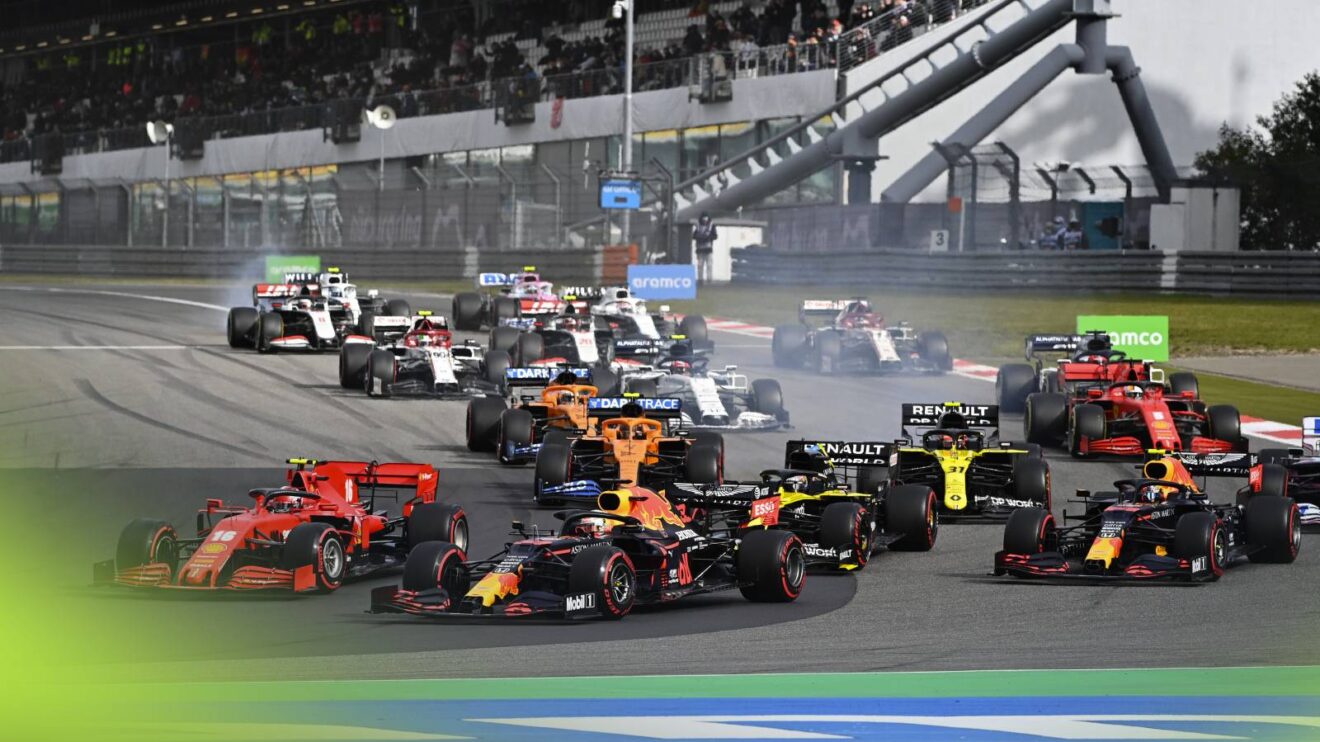
This isn't a romantic return. It's a data harvest. A two-day, official Pirelli dry-tyre development test on the Grand Prix circuit, the first time contemporary F1 cars will run in Germany since the 2020 Eifel Grand Prix. The narrative will sell "return" and "history." But I see a clinic in our sport's quiet transformation: from theatre to laboratory.
The Test as a Symptom: Algorithm Over Instinct
Let's strip the sentiment. The facts are clear, and they tell a colder story:
- Objective: Pirelli dry-tyre development for current and future regulations.
- Constraint: In-season car performance testing is banned, but Pirelli gets up to 40 days per year for this exact purpose.
- Location Significance: The Nürburgring GP circuit, not the Nordschleife. A safe, known, data-rich environment. The 'Ring's savage, intuitive challenge is deliberately sidelined for a layout that maximizes sensor consistency.
This is the engine of modern F1. Every lap run by those McLaren and Mercedes mules will feed an algorithm designed to predict wear, thermal degradation, and performance windows for the revolutionary 2026 car specifications. The drivers become high-functioning biosensors, their feedback quantified, categorized, and fed into a model. The goal? To make the tyre's performance so predictable that race strategy becomes a solved equation before the lights go out.
We are coding out the chaos. We're trading the sweaty-palm gamble of a late pit stop for driver intuition for the sterile certainty of a pit wall screen flashing "BOX NOW" in green. Schumacher and Ross Brawn played high-speed poker. Now, engineers play deterministic chess.
Consider the cancelled wet-weather test in Bahrain and Ferrari's separate wet test at Fiorano. These are attempts to model the ultimate variable: water. They want to turn rain, the last bastion of driver genius and race-altering chaos, into just another input variable. Where does that leave the driver? As a highly compensated executor of pre-ordained commands. This hyper-focus is creating a generation of technicians, not gladiators. Which brings me, inevitably, to a man whose data is often weaponized against him.
Data as Emotional Archaeology: The Leclerc Paradox
The mention of Ferrari's separate Pirelli test at Fiorano is a trigger. It forces me to pull the files on Charles Leclerc's 2022-2023 qualifying data. The popular narrative? Error-prone. The data tells a different story: the most consistent qualifier on the grid over that period by median lap-time delta. His "errors" are spectacular, memorable—Monaco 2021, France 2022. They become his story.
But data is emotional archaeology. You must dig into the when. Correlate his rare, sharp performance drop-offs with the timeline of Ferrari's strategic blunders that preceded them. The data suggests not a fragile driver, but one carrying the cumulative weight of institutional entropy, his raw pace spiking against a backdrop of operational chaos. A driver like Leclerc, operating at the limit of adhesion, relies on a feedback loop of trust with his pit wall. When that loop is corrupted by bad data or poor decisions, the system—the driver-car entity—crashes. It's not a flaw in the hardware; it's a catastrophic system failure.
Modern teams, armed with more real-time telemetry than ever, are ironically worse at listening to the human component of that data stream. They see Leclerc's steering trace, his throttle application, but they've lost the language to translate his feel. Schumacher’s 2004 consistency was built on a foundation of profound mutual trust with his engineer and a car built to his sensitive feedback. Today, the driver is asked to adapt to the tyre model's needs, not the other way around. The Nürburgring test data will further refine that demand.
The 2027 Tender: A Choice of Futures
The article's final note is the most telling: Pirelli's contract runs through 2027, with a 2028 option, amidst speculation of Bridgestone or Hankook entering the fray. This is framed as a commercial battle. I see it as a philosophical fork in the road.
Pirelli, with its MotoGP ambitions, understands theatre. Their current brief—to create tyres that degrade, that introduce "managed" chaos—is an attempt to inject artificial narrative into the algorithmic sport. But it's a losing battle against their own, and the teams', desire for predictability.
The next tyre war won't be about who makes the fastest rubber. It will be about who provides the most predictable data stream. The supplier that can best turn the complex, organic chemistry of a racing tyre into flawless, actionable code will win.
A new supplier might promise a return to driver-centric tyre feel, a variable less easily modeled. But the sport's trajectory is clear. Every test like the one at the Nürburgring is a step toward "robotized" racing. The cars will be miraculous. The lap times, staggering. The races will be mathematically optimal. And we will watch, in 4K resolution, as the ghost of Michael Schumacher's 0.001-second variance becomes not a legend of skill, but a benchmark for machine precision, the human heartbeat finally silenced by the hum of the server rack.