Ghosts in the Machine: What Pirelli's Nürburgring Test Really Tells Us About F1's Soulless Future

The press release hit my inbox with the sterile thud of a dead weight. "F1 returns to Nürburgring for Pirelli tyre test." My first thought wasn't of the Green Hell's mist-shrouded legends, of Lauda's fire or Schumacher's dominance. It was of a spreadsheet, automatically populating with anonymized telemetry. Two days. Two teams. One tyre supplier. Zero soul. This is modern Formula 1 in microcosm: a meticulously scheduled, data-harvesting exercise masquerading as a return to glory. Let's scrape the varnish off this PR and see what the numbers underneath are really whispering.
The Test: A Clinic in Controlled Sterility
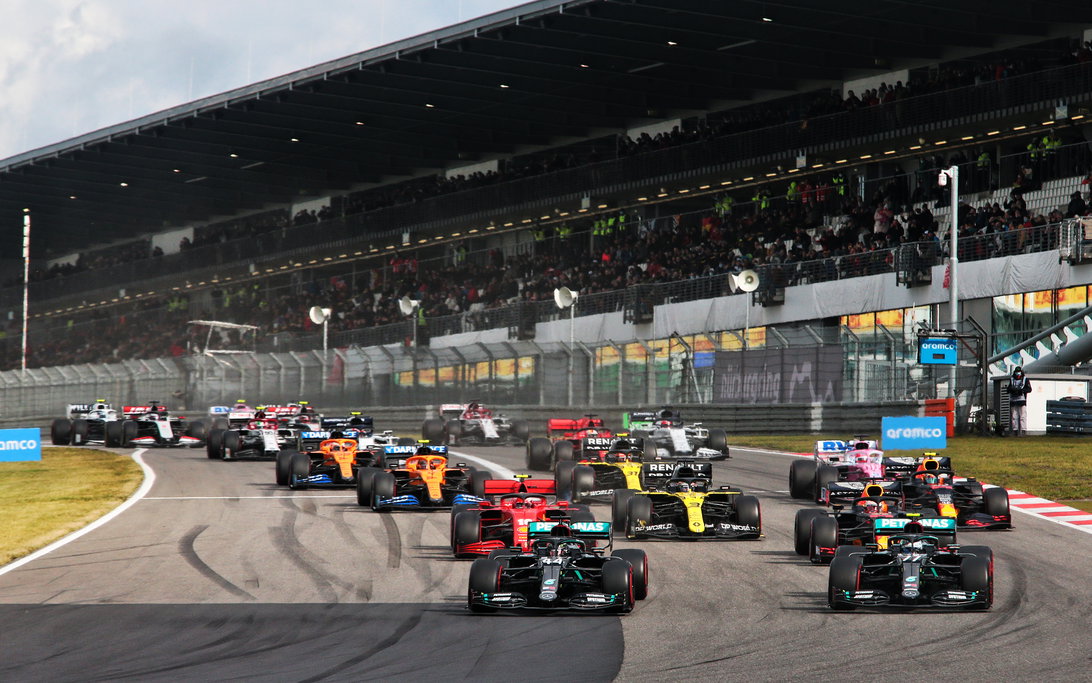
The facts, as they are, are these. On April 14-15, during the sport's spring break, Mercedes and McLaren will run Pirelli's prototype rubber at the Nürburgring. It's the first F1 activity there since the 2020 Eifel Grand Prix. The details are a masterclass in removing variables, and by extension, humanity.
- The Puppeteer: Pirelli 'rents' the teams and controls the run plans. The teams are kept deliberately ignorant of the specific tyre compounds being tested. This isn't collaboration; it's a blind taste test for machines.
- The Drivers as Instruments: Mercedes will field George Russell and its prized junior, Kimi Antonelli. McLaren's drivers are, tellingly, "unconfirmed." The implication is clear: the driver is merely a biometric sensor suite with a steering wheel. Their feedback on "feel" is just another data stream, to be weighted against a hundred other channels.
- The Venue as a Data Point: The Nürburgring is chosen not for its emotional weight, but for its "unique track layout." Its bumps, its chilling history, its brutal demands on concentration—these are reduced to a line on a track map, a set of corner radii and elevation changes to be fed into the simulation.
This is the paradox of modern testing. We seek the most visceral, driver-centric tracks on earth only to render them into binary code, stripping them of the very character we claim to cherish.
Where Michael Schumacher in 2004 would have spent a test day feeling the car, building a symbiotic relationship with it through seat-of-the-pants intuition and relentless repetition, today's driver is a middleman. He executes a run plan, his every input measured against the model's prediction. Deviation is error, not exploration.
The Unspoken Story: Data as Emotional Archaeology
They'll tell you this test is "crucial for developing the tyres that all teams use." And on a spreadsheet, that's true. But what if we used data for something more profound? What if, instead of just predicting degradation, we used it to tell the human stories we're systematically erasing?
Take the driver line-up. Kimi Antonelli isn't just a "highly-touted junior." He's a young man under unimaginable pressure, with the specter of a 2025 Mercedes seat looming. Every lap he turns at the Nürburgring will be a data point in his future. The micro-corrections on the exit of the Foxhole, the brake trace into Schumacher S—these aren't just performance metrics. They're a heartbeat. A tell.
Imagine correlating his sector times with the presence of Toto Wolff in the garage. Imagine mapping George Russell's lap-time consistency against the pressure of mentoring a potential replacement. This is the emotional archaeology data could enable. We did a crude version of it with Charles Leclerc in 2022-2023. While the narrative screamed "error-prone," the raw pace data told a different story: the most consistent qualifier on the grid, his performance a stark, lonely line of excellence often bisected by the chaotic scatter plot of Ferrari's strategic blunders. The data held the truth the narrative ignored.
Yet, at the Nürburgring, this won't happen. Antonelli's biometrics will be monitored for physical load, not for psychological tells. The story of a rookie facing down a legend's track will be reduced to a debrief transcript.
The Inevitable Trajectory: Five Years to Robotic Racing
This Pirelli test is a canary in the coal mine. It perfectly illustrates the trajectory I see hurtling us toward a sterile, predictable sport within five years.
- The Algorithmic Strategist: Pit stops are already dictated by predictive models. Soon, the human "Strategy Engineer" will be a curator of AI outputs. The "undercut" will be a pre-ordained simulation outcome, not a gut call.
- The Driver as a Closed-Loop System: Driver intuition—a Schumacher sensing rain coming a lap before the radar, a Senna's mystical qualifying lap—will be seen as a system instability. Coaching will focus on aligning the driver's inputs perfectly with the car's optimal simulation path.
- The Homogenized Product: With every team running the same tyre tests, feeding similar data into similar simulation tools, the scope for genuine, feel-based innovation shrinks. The cars become faster, yes, but more alike. The racing becomes a high-speed procession of efficiency.
The separate wet-tyre test for Ferrari at Fiorano, mentioned almost as a footnote, is the last gasp of the old world. A private, focused session where driver feel in the rain might still hold some sway. But even that data will be normalized, formatted, and fed into the same centralizing system.
Conclusion: Preserving the Pulse
So, F1 returns to the Nürburgring. But it's not the F1 that raced there in 2020, let alone in 2004 when Schumacher, in a car he had molded through feel and relentless testing, was so consistently fast he made the supernatural look routine. That driver-centric era is being archived, one "private test" at a time.
The data gathered on April 14-15 will be impeccable. It will make the 2025 tyres marginally more consistent, more predictable. It will further reduce the variable of the black rubber meeting the grey tarmac.
But as I look at the schedule, I don't see the roaring engines on the Nordschleife. I see the silent hum of a server farm, processing another terabyte of anonymized figures. The test isn't about conquering the Green Hell. It's about burying its ghosts under a mountain of perfectly clean, utterly bloodless data. And once that process is complete, what, exactly, will be left to race for?