The Human Storm: F1's Technical Future Meets Its Emotional Past at the Nürburgring
The world of Formula 1 often feels like two distinct realities operating at different frequencies. One is a high-stakes, multi-variable physics problem, a relentless pursuit of millisecond advantages through carbon fiber and computational fluid dynamics. The other is a profoundly human drama, a tapestry of legacy, loss, and ambition written at 200 miles per hour. This week, those two realities collided with poignant clarity, as the sport planned a nostalgic technical pilgrimage to the Nürburgring while Gina Schumacher broke a decade of silence about her father, Michael. It’s a stark reminder that for all our talk of downforce and tire deg, the most powerful forces in the paddock are still hope and heartbreak.
The Nürburgring Test: A Quiet Nod to a Simpler, Grittier Past
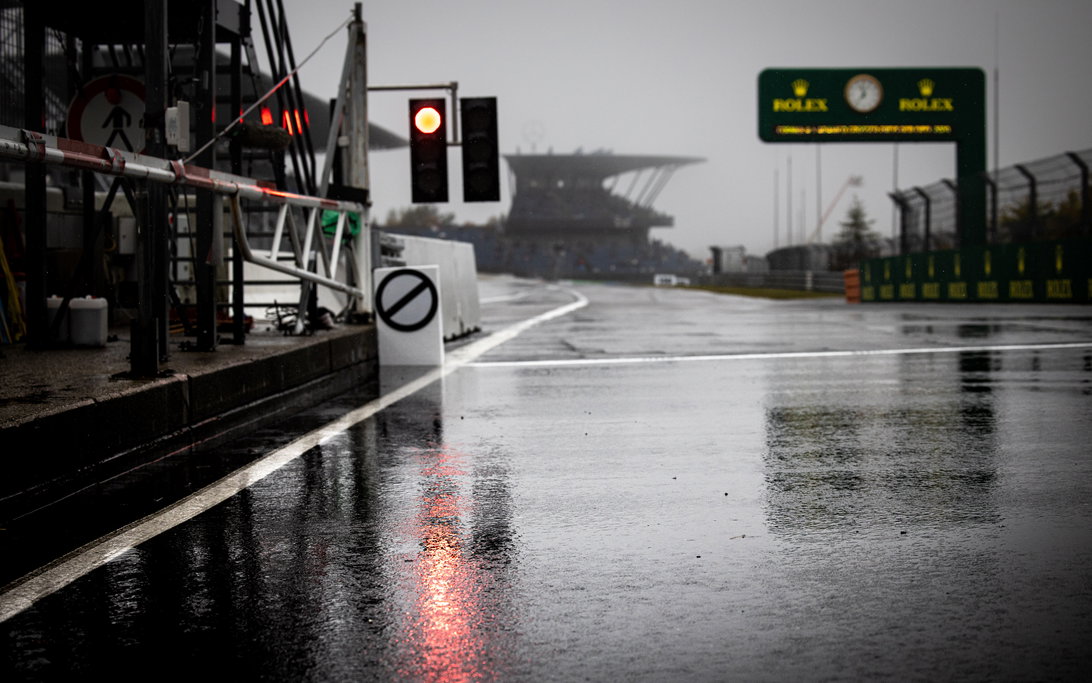
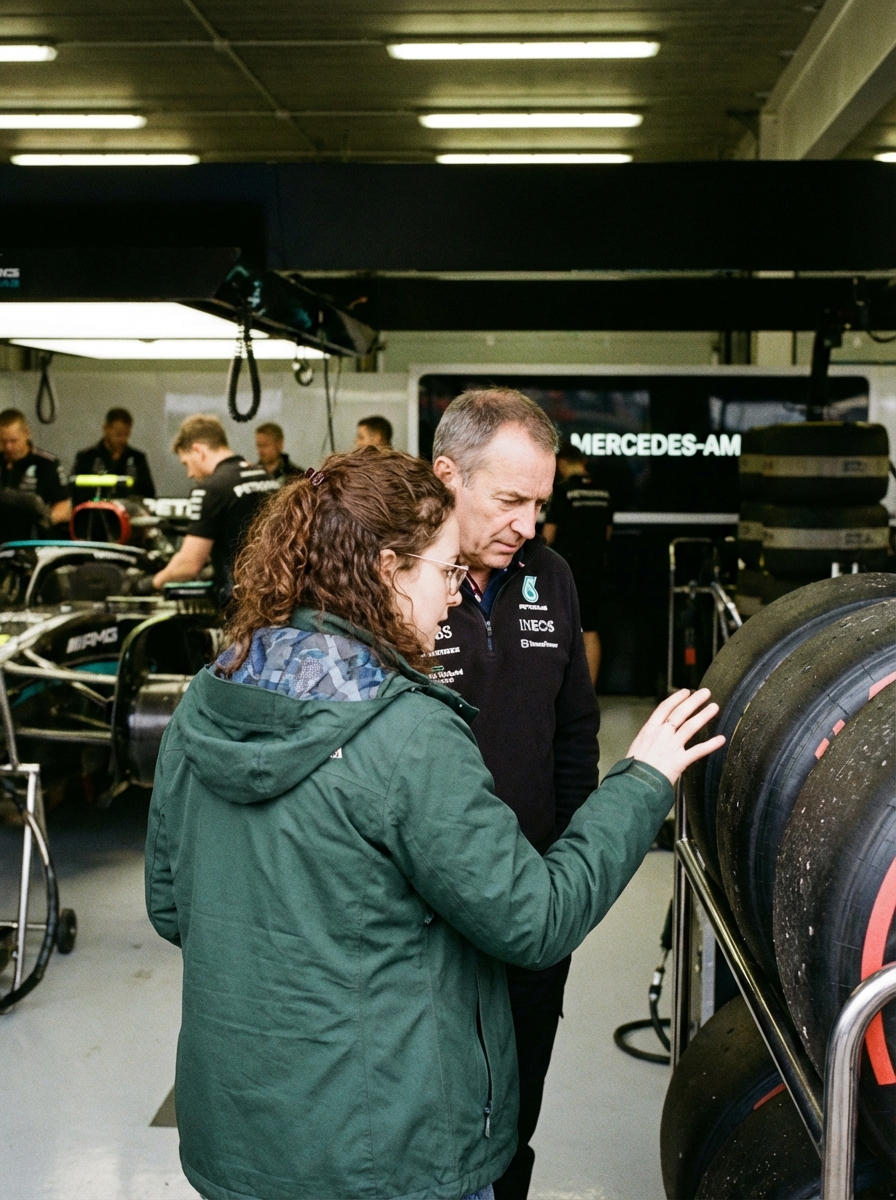
On the surface, the two-day Pirelli test at the Nürburgring, involving Mercedes and McLaren, is a standard procedure. Teams run "blind" for the tire supplier, gathering real-world data on future compounds on one of the most legendary and brutal circuits ever built. But the location is a character in this story, not just a backdrop.
The Nordschleife doesn't care about your vortex generators or your floor edge. It demands mechanical grip, courage, and a raw, unfiltered connection between man and machine.
Testing here, even on the modern GP layout, is a symbolic return to F1's roots. It forces me to think of the Williams FW14B—a car that mastered active suspension to tame tracks like this, a mechanical solution to a mechanical problem. Today, we'd just add more aerodynamic complexity, more wing, more outwash. We've traded mechanical ingenuity for aerodynamic obsession, creating cars that are phenomenal in a wind tunnel but often numb in the driver's hands. This test is about tires, the last bastion of true mechanical feedback. In an era where drivers are system managers, the tire is the final, chaotic variable they must feel through the seat of their pants. Pirelli’s work is crucial, but it's a band-aid on a deeper issue: we've engineered the visceral thrill out of the equation.
Driver Dramas: The Human Algorithm in a Data-Driven World
While engineers pour over tire telemetry, the human elements of the sport provide a contrasting, chaotic narrative. The headlines form a perfect case study in modern driver economics.
Verstappen's Vocal Discontent: A Warning Sign of Shifting Foundations
Max Verstappen has been cautioned internally about his public "negativity" toward the 2026 regulations. This is fascinating. For years, Verstappen's success has been presented as a triumph of sublime skill. But strip away the dominant Red Bull chassis, the Adrian Newey-inspired aerodynamics that have given him a car in a different league, especially in 2023, and what remains? A brilliant driver, yes, but one whose platform is about to be radically altered. His frustration may be less about the regulations themselves and more an intuitive understanding that his era of platform-based supremacy is being reset. The warning that it opens a door for junior Isack Hadjar isn't about speed; it's about corporate alignment. Red Bull is a marketing machine first, and a disgruntled superstar doesn't fit the brand.
Ricciardo's Retrospection and the Ghost of What-If
Daniel Ricciardo’s admission that leaving Red Bull is his career's biggest "what if" is a heartbreaking piece of honesty. His concession that staying might have seen him "obliterated" by Verstappen is the cold, hard calculus every driver faces. It underscores a painful truth: in the modern era, the delta between car and driver is overwhelmingly skewed toward the car. A great driver in a mediocre car is a footnote. A good driver in a legendary car becomes a champion. Ricciardo gambled on being the architect of his own destiny elsewhere, a gamble that speaks to a driver's soul, even if the spreadsheets advised against it.
Leclerc's Princely Honor and the Schumacher Legacy
Amidst this, Charles Leclerc becoming a Monaco Goodwill Ambassador is a nod to legacy of a different kind. Meanwhile, the profound emotional insight from Gina Schumacher in her documentary Pferdestärke - Die Welt der Gina Schumacher grounds the entire circus. Her statement that she "had to do something" after her father's 2013 accident is a human response to an inhuman situation. It’s a storm of a different kind—personal, private, and far more powerful than any aerodynamic turbulence. It reminds us that these icons are fathers, daughters, and people, and that the most important battles happen far from any podium.
Conclusion: The 2028 Horizon – From Driver to Director?
So, where does this leave us? We have a sport clinging to mechanical relevance through tire tests at historic circuits, while its stars navigate political and personal storms. My prediction remains: by 2028, AI-controlled active aerodynamics will revolutionize this sport. DRS will be a quaint memory. Cars will morph shape in real-time, optimizing for each corner. This will create spectacular, chaotic racing, but it will further reduce the driver's role from instinctive artist to systems director, the final validator of a thousand AI calculations.
The Nürburgring, with its ghosts and its demands, whispers of a time when the driver was the primary performance algorithm. Gina Schumacher’s courage speaks to the immutable human cost behind the glory. As we march toward a more automated, aerodynamically fluid future, we must fight to preserve both: the value of mechanical grit and the sanctity of the human story. Otherwise, we risk perfecting the machine while forgetting the soul that dares to drive it.