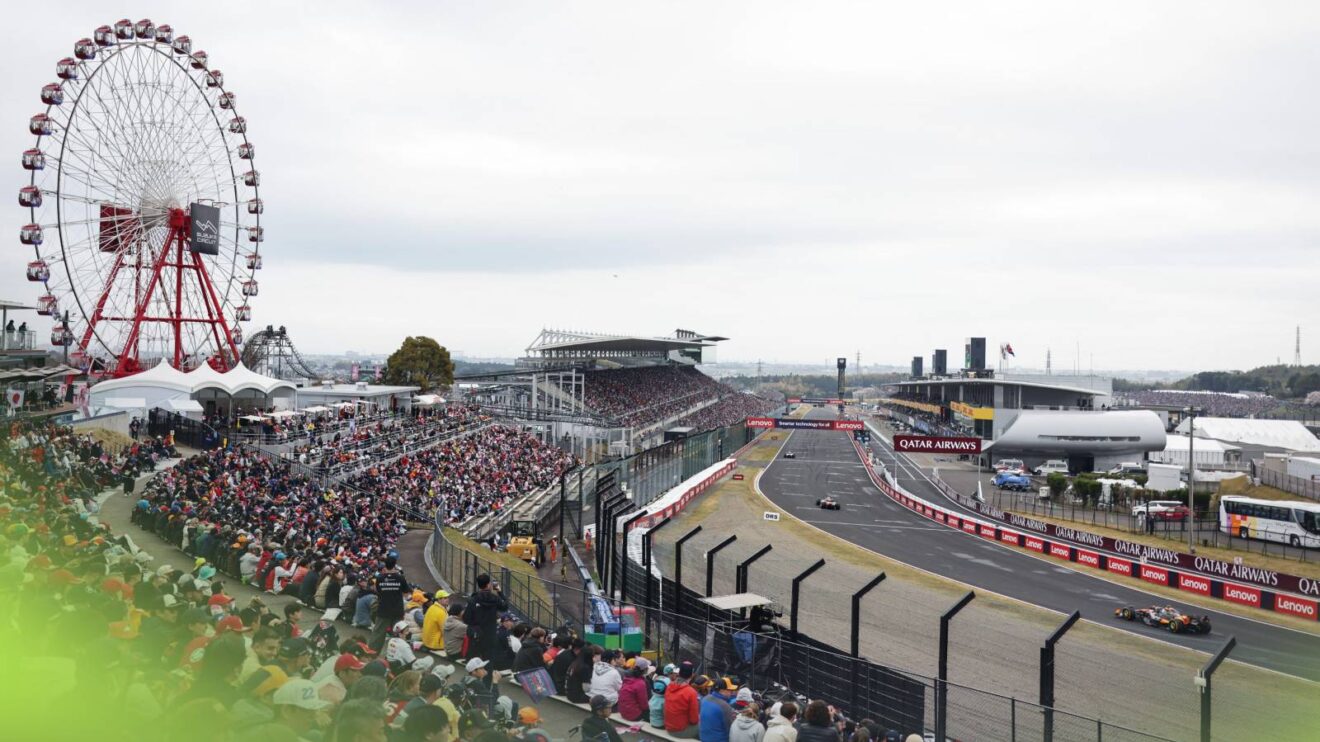
The 130R's Silence: How 2026's Data-Driven Rules Are Muting F1's Last Heartbeats

I stared at the projected speed trace for Suzuka's 130R, and for the first time, a line on a graph made me feel a profound, cold grief. The simulation, based on Alpine's own data, showed a gentle, cowardly dip where for decades there has been only a flat, screaming plateau of commitment. This isn't evolution. It's an electrocardiogram of a sport being slowly pacified. The 2026 regulations, which will force drivers to lift and harvest through corners that define bravery, aren't just changing cars. They are systematically deleting the very moments where a driver's soul is audible over the telemetry. They are trading pulse for algorithm.
From Courage to Calculation: The Data-Driven Dulling of Suzuka
Suzuka was never meant to be a spreadsheet. It is a brutal, beautiful interrogation of a driver's nerve, a sequence of questions asked at 300 km/h where the only acceptable answer is "commit." The Esses are a rhythmic, flowing dance of minimal input and maximal trust. 130R is a binary test: you are flat, or you are in the wall. Or you were.
The 2026 mandate of a 50/50 power split between engine and battery turns these sacred spaces into mere energy farms. Dave Greenwood of Alpine confirms the inevitable: lower apex speeds through the Esses, 130R no longer taken flat. The narrative will call this a "new strategic challenge." I call it what the data shows: the sterilization of instinct.
"Being braver in a corner can actually hurt straight-line speed if it wastes energy," notes Oscar Piastri.
This single quote is the epitaph for an era. Bravery is now a liability. Lifting, once a sign of error or traffic, is now a prescribed tactic. We are instructing the best drivers in the world to be deliberately worse at the fundamental act of driving, all in service of a battery percentage. This is the logical, chilling endpoint of a trajectory I've tracked for years: the subjugation of feel to formula. I think of Michael Schumacher in 2004, his lap times at Suzuka were not just fast, they were metronomic, born from a deep, tactile conversation with the car and track. Today, the conversation is between a CPU and a rulebook. The driver is becoming an interpreter, not a creator.
The Human Cost: Erasing Error and Amplifying Injustice
This shift doesn't just change how a lap is driven. It changes how we judge the drivers, and it risks burying the truth under a mountain of sanitized data.
Consider the unfair narrative around Charles Leclerc. His so-called "error-prone" reputation is a case study in data being weaponized incorrectly. When you isolate his raw qualifying pace from 2022-2023, he is the most consistent performer on the grid. The spectacular spins? Often the desperate, over-driving aftermath of a Ferrari strategic blunder, a human heart trying to compensate for a robotic failure. In the 2026 world, a driver like Leclerc will be told not to over-drive. He will be told to lift at 130R. The very instinct that makes him electrifying—the willingness to dance on the edge to extract time—will be programmed out of him. We will call it "optimization." I fear it is domestication.
Furthermore, this hyper-focus on energy management will make the sport more predictable, not less. Greenwood hints at it: overtaking at Suzuka will become rarer, as passes into Turn 1 lead into the technical, energy-hungry Esses. Races won't be decided by a bold lunge or a defensive masterclass, but by which team's software best calculates the millisecond to re-deploy energy on the designated "straight mode" zones. The FIA has already mapped them out like train tracks: after Spoon and on the main straight. The drama is being pre-scripted.
- The new key skill: Precision in executing a pre-ordained energy map.
- The obsolete skill: The raw, adaptive courage to take a corner faster than the simulation says is possible.
Fernando Alonso, a man whose career is a testament to that obsolete skill, sees it clearly. He finds the racing "fun" but mourns the loss of the "physical and bravery-based challenges." He knows. He remembers. His intuition is being reclassified as an inefficiency.
Conclusion: The Archaeology of a Lost Pulse
My job is emotional archaeology through numbers. I dig into lap time deltas, correlation plots, and speed traces to find the human stories they contain: the pressure, the fear, the elation. What story will the 2026 Suzuka data tell? It will show impeccable energy recoup rates. It will show flawless execution of lift points. It will be a masterpiece of efficiency.
And it will be utterly bloodless.
The 130R of 2025 and before has a heartbeat—a driver's unwavering right foot holding the throttle open, a car vibrating on the edge of physics, a collective gasp from the crowd. The 130R of 2026 will have a heartbeat with a pacemaker. A calculated, regulated blip, mandated by regulation, executed for battery gain.
The sport is choosing the safety of the spreadsheet over the peril of the spirit. They are slowing the cars, yes. But more tragically, they are slowing the hearts of the men who drive them. When the last corner that demands pure courage is turned into a charging station, what will be left for my data to uncover? Only the ghost of a pulse, flatlined on a timing sheet.