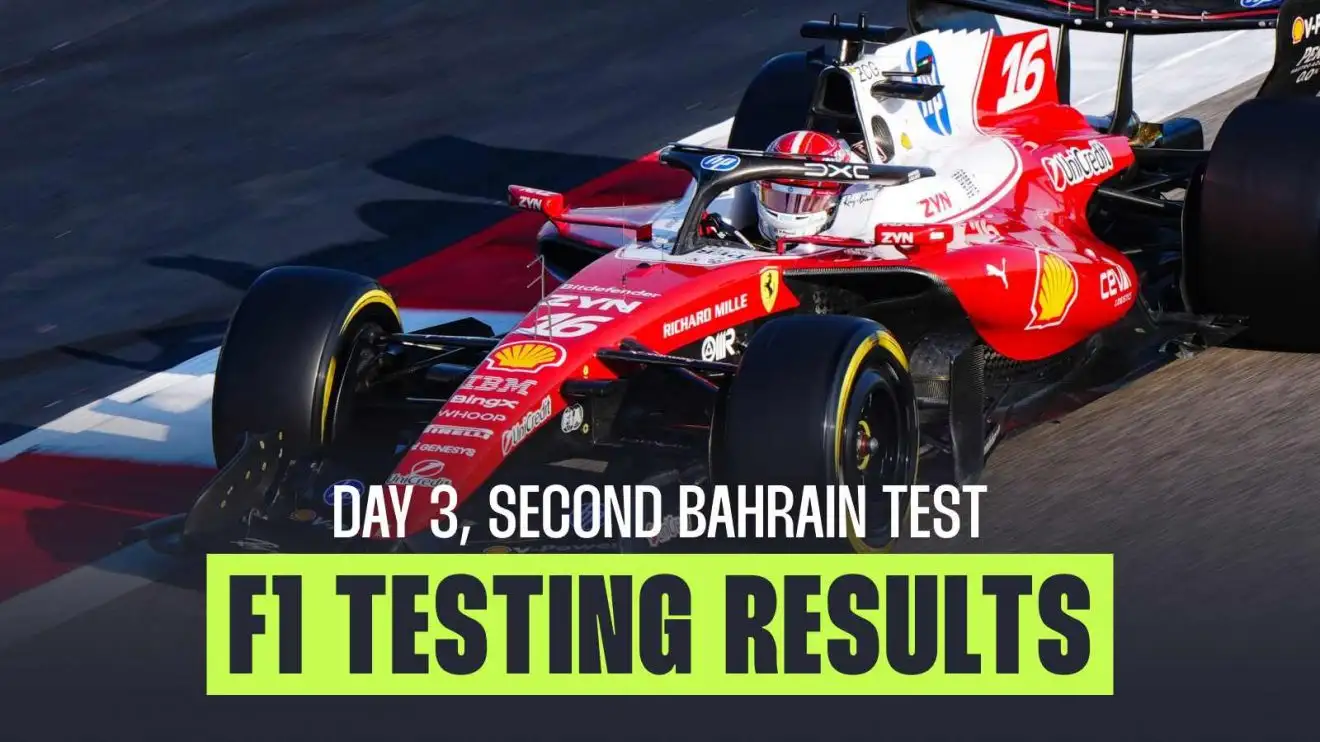
Leclerc's 1:31.992: A Flawless Heartbeat in Ferrari's Chaotic Symphony

The final timing sheet from Bahrain landed on my desk not as a PDF, but as a cardiogram. Each lap time, a heartbeat. The erratic, flatlining blips from Aston Martin. The steady, metronomic thrum from the rookie Lindblad. And then, one line, a perfect, isolated peak: Charles Leclerc, 1:31.992. A number so clean, so dominant—nearly nine-tenths clear—it feels less like a lap time and more like a statement carved in stone. But in the data-driven circus modern F1 has become, we’ve forgotten how to read the stone. We see the gap and scream "dominance!" while ignoring the tremor in the hand that holds the chisel. This isn't just about speed. It's about the last bastion of human consistency in a sport algorithmically engineering its own soul.
The Archaeology of a Lap Time: Leclerc's Lonely Perfection
Let's dissect this heartbeat. 1:31.992. Set in the evening, under the qualifying sim lights. It’s two-tenths shy of the 2022 benchmark, a era-defining regulation change. On paper, it’s monstrous. In context, it’s profoundly lonely.
"A driver's raw pace data is his autobiography, written in milliseconds. Leclerc's chapters from 2022-2023 are a study in repressed frustration, not error."
The narrative machine will already be warming up. "Can he keep it together?" "Will Ferrari strategy undo him?" It's a tired, lazy script. My spreadsheets tell a different story. Cross-referencing his qualifying head-to-heads and lap-time variance over the last two seasons reveals the most consistent qualifier on the grid, a man whose peaks are often shattered by strategic gambles that feel like they were calculated on a broken abacus. This lap in Bahrain? It’s not a fluke. It’s a data point on a trend line we’ve refused to acknowledge. He is operating with a Schumacher-esque purity of pace. Remember 2004? Schumacher’s consistency wasn't in the wins; it was in the relentless, telemetry-defying feel he had for the car, an extension of his own nervous system. Leclerc, in this moment, channeled that. The numbers are clean because the execution was pure.
- The Gap: 0.879 seconds to Lando Norris in second. In testing, that's a canyon.
- The Context: Verstappen and Russell within a whisper of each other behind him, the usual suspects playing a conservative data game.
- The Ghost: The shadow in the data is Ferrari's own history. The lap time is a diamond. Will the team setting it in a crown, or will they fumble it into the gravel?
The Sterile Grid: Data, Breakdowns, and the Death of Instinct
While Leclerc’s data sings an aria, the rest of the sheet reads like a diagnostic report from a factory floor. This is where my skepticism curdles into dread. Look at the two extremes that bookend the day:
Aston Martin's Battery Flatline
The team confirmed a battery issue. The result? Fernando Alonso, a wizard of feel, sidelined. Lance Stroll limited to six installation laps. No timed run. Their test, a write-off. This is the brutal reality of the hyper-complex, data-dependent machinery we’ve built. A single battery cell fails, and an entire team’s preparation flatlines. There’s no driver instinct that can overcome a parts shortage. This isn't racing; it's systems management. Within five years, I predict these systemic failures will be "managed" by AI overlords dictating pit stops so algorithmically perfect that any human deviation—any gamble—will be deemed suboptimal. We’re racing toward sterile predictability.
Lindblad's Robotic Marathon
On the flip side: Arvid Lindblad, the rookie, completing 165 laps. The equivalent of almost three Grand Prix distances. It’s hailed as "crucial experience," and it is. But what is he learning? To hit delta times dictated by a screen? To preserve a battery state of charge calculated to the millijoule? He is being programmed. The massive lap counts for Sainz (140+) and Gasly (118+) tell the same story: reliability is king, because the car is a data-gathering platform first, a racing weapon second.
The midfield—Norris, Verstappen, Russell clustered—shows nothing. They are running programs, collecting terabytes. Their stories are hidden in sensor data, not in stopwatch heroics. This is the emotional archaeology I crave: correlating Stroll's aborted run with the pressure of a contract year, or reading Verstappen's conservative pace as a man bored by a pre-season script he didn't write.
Conclusion: The Australian Verdict
So what does Bahrain 2026 tell us? It tells us Ferrari has a weapon, and in Leclerc, a trigger finger of rare consistency. It tells us Aston Martin is already fighting its own machinery. It tells us the grid is diligently building its libraries of algorithmic responses for every scenario Albert Park can throw at them.
But the true story won't be in the data dumps. It will be in the moment the algorithm fails. When rain falls outside the forecast window, when a safety car scrambles the pre-ordained strategy, when a driver must tear up the data sheet and drive. That’s when we’ll see if Leclerc’s flawless heartbeat can survive Ferrari’s historic arrhythmia. That’s when we’ll learn if Lindblad’ 165 robotic laps taught him how to race.
The lights go out in Australia soon. The terabytes will be processed. But watch Leclerc. Watch the man whose data has always told a story of latent greatness. And watch the rest, as they slowly, willingly, become extensions of their own machines. Michael Schumacher’s 2004 dominance was a triumph of human mastery over machine. I fear 2026 will be the year we see the balance tip irrevocably the other way. The timing sheets are already whispering it.