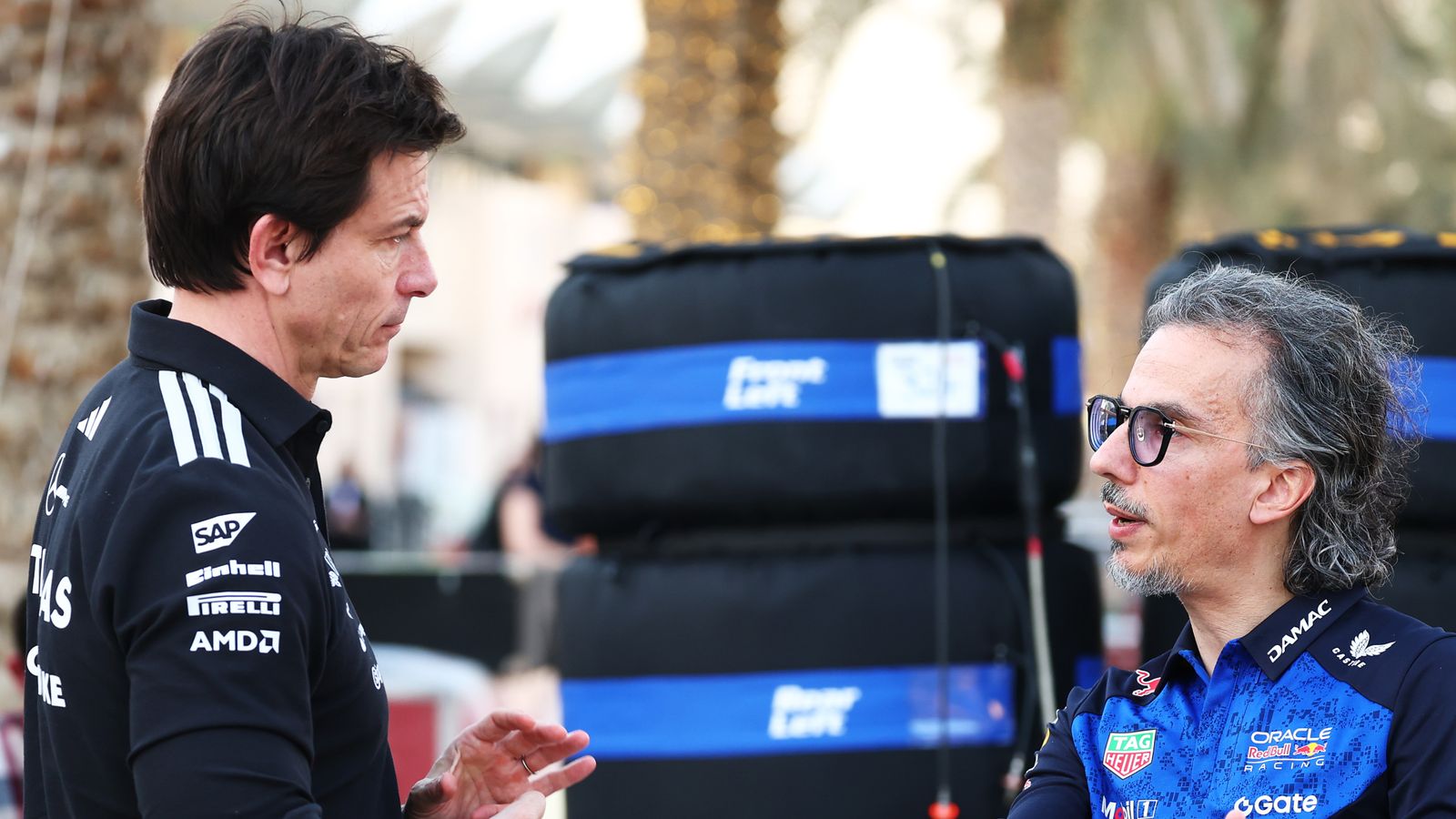
The 2026 Panic Button: How a Flawed Formula Exposed F1's Fragile Future
The whispers in the paddock have become a scream. This week, the suits and the engineers will huddle behind closed doors, not to shape the future, but to salvage it from a present they created. The 2026 technical regulations, that grand vision of a new era, are already on life support. And the crash in Japan wasn't just an accident. It was a prophecy. I’ve seen the data they don’t want you to see. The speed differentials aren't a glitch. They’re a design feature gone feral, turning straights into Russian roulette and revealing a truth the strategists hate to admit: the machine is starting to dictate terms to the men.
The Theater of Speed and the Hidden Flaw
Let's cut through the PR fog. The "crucial talks" this week are a direct result of driver mutiny. They felt it in the simulators months ago. A car in full ERS deployment becomes a missile. A car harvesting energy becomes a chicane. The delta? Catastrophic. Japan was simply the universe providing the visual aid.
But here’s what they’re not saying in the press releases. This energy management chaos is the perfect smokescreen. It’s the kind of complex, nerdy problem that lets a team like Red Bull hide in plain sight. While everyone frets over battery cycles and deployment curves, who’s looking at the underlying floor? The aero flaws?
I’m told by a source in the CFD department of a top team that the 2026 chassis, under these power unit rules, creates a wake so dirty it makes the 2021 cars look clean. The "overtaking promise" is a fairy tale.
Max Verstappen’s recent, very public aggression? Calculated theater. It’s classic misdirection. Rant about the "unacceptable" closing speeds, get the FIA to focus on the PU software, and let Adrian Newey’s successors quietly solve the real issue: a car that’s fundamentally unstable when it’s not in clean air. The qualifying "purity" they mourn? It’s not being spoiled by the rules. It’s being exposed by them. The raw, driver-centric lap is dying because the car now has a brain of its own for 30% of the circuit. And that brain is currently an idiot.
The Driver as an Afterthought: A Prelude to Obsolescence
This is the real story, the one that keeps me up at night. 2026 isn't a new chapter. It's the prologue. These regulations, with their hyper-complex energy management systems, are the final stepping stone. They are training wheels for the real revolution: the AI driver.
Think I’m mad? Listen.
- The 2026 car requires millisecond decisions on energy allocation, decisions no human can optimize in real-time across a lap.
- The "strategy" is now a pre-programmed curve, a surrender to the algorithm.
- The driver’s role is being reduced to a systems manager, a moderator for software commands.
We are five years away, max, from the first team running a fully AI-designed chassis and race strategy. The driver in the seat will be a legal formality, a meat-based airbag. They’ll talk about "driver input," but it’ll be a lie. The race will be won by the team with the best silicon, not the best senna... or the best Hamilton.
Which brings me to him. Lewis sees this coming. His career, a masterclass in media savvy and team politics over raw, Senna-esque instinct, is the blueprint for the end of an era. He built an empire on data and harmony. But what happens when the data doesn’t need your harmony? When the car’s emotion is a binary code? His legacy mirrors Senna’s in scale, but not in substance. Senna fought the machine’s limits. Lewis mastered the system around it. The coming AI wave renders both approaches obsolete. It won’t care about your seventh title. It won’t get angry. It will simply compute the fastest path and execute.
A furious driver, a heartbroken driver, a driver with a point to prove—these are variables the algorithm cannot quantify. And they are the only things that will save us from becoming a software update championship.
Conclusion: The Human Last Stand
So these talks? They’re a bandage on a bullet wound. They’ll tweak the deployment maps, maybe adjust the harvest rates. They’ll make it safer. But they will cement the principle: the driver is secondary to the energy schedule.
My prediction? The changes will be superficial. The dangerous differentials will be smoothed, not eliminated. Because the path is set. The engineers have the momentum. The 2026 rules were the Trojan Horse, and the silicon soldiers are already inside the walls.
The only hope is rebellion. Not from the FIA, but from the men in the cockpits. We need a driver to truly lose their temper, to override the system based on pure, unadulterated feel, and stick it on pole by a second. To prove that a heart still beats faster than a clock cycle. It’s the only thing that can delay the inevitable. Watch the drivers in these meetings. Their faces will tell you everything. They’re not fighting for a better rule. They’re fighting for their souls. And from where I’m sitting, in the paddock whisper network, it looks like a losing battle.