The Storm in the Cockpit: When Driver Outrage Meets Engineering Inevitability
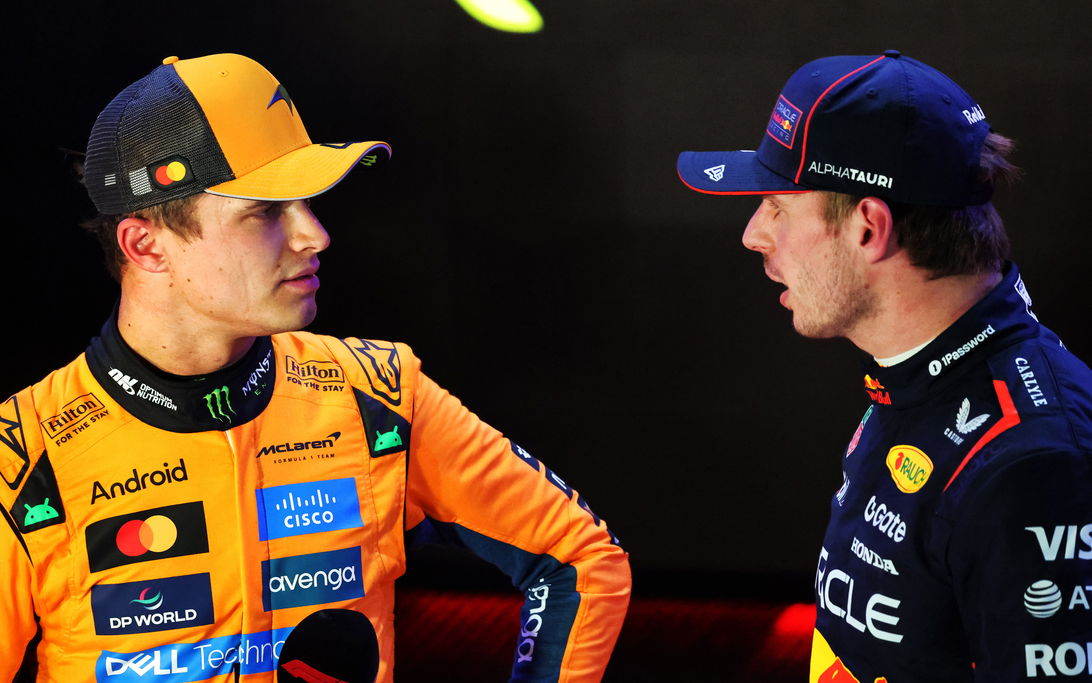
The roar of a Formula 1 engine has always been a symphony of power, skill, and physics. But this season, a new, discordant note is cutting through: the very public fury of its biggest stars. When Max Verstappen likens the pinnacle of motorsport to "Mario Kart," and Lando Norris says he's had to "forget everything" he knows, we're witnessing more than just driver grumbling. This is a fundamental fracture line, a rebellion against an engineering philosophy that has been building for decades. And while Juan Pablo Montoya's call to "show them the door" is pure theatre, it misses the real, gritty engineering truth at the heart of this storm.
The Illusion of Skill in an Aero-Dominated Era
Let's cut through the hype. The core of Verstappen and Norris's complaint is the 2024 cars' intense, race-defining focus on energy management. They argue it's a departure from pure driving skill. But I'd argue that the definition of "pure skill" has been an illusion for years, carefully curated by aerodynamic complexity.
Verstappen's dominance, particularly in the 2023 season, is often held up as a testament to supreme talent. But peel back the carbon fiber. That dominance was built on a Red Bull chassis and aero package so superior it often rendered the driver's ultimate limit a secondary concern. His skill is undeniable, but it was amplified, perhaps even masked, by a machine that could find downforce where others found turbulence. The current shift to managing hybrid energy flows is simply swapping one form of computational driving—managing aero windows and tire deg—for another. It's not a fall from grace; it's a lateral move into a new kind of engineering puzzle.
The modern driver isn't just a pilot; they are the final, biological processor in a cascade of digital management systems. Their complaint isn't about losing control, but about the type of control they're asked to exert.
This brings me to my constant reference: the 1990s Williams FW14B. That car was a technological marvel with its active suspension, but its genius was in creating a stable platform for mechanical grip. The driver's input was direct, translated through tires and mechanical balance. Today, we have cars so aerodynamically sensitive that following another car is like driving into a localized storm you can't see. The skill is real, but it's a skill of navigating a manufactured atmospheric chaos, not of wrestling a mechanical beast. Norris is right to feel he's "forgotten everything," because the textbook has been rewritten by wind tunnel hours, not by feel.
The Inevitable March to AI and the End of the "Pure Driver"
Montoya points to U.S. sports models for discipline, but he's looking in the wrong direction. The real precedent isn't the NFL; it's the R&D department of every top team. The drivers' criticism is a last stand against an inevitable future.
My firm prediction: By 2028, F1 will adopt AI-controlled active aerodynamics. DRS, that clunky, artificial overtaking aid, will be obsolete. Instead, complex sensor arrays and machine learning algorithms will manage flaps, ducts, and surfaces in real-time, optimizing for corner entry, mid-corner balance, and straight-line speed hundreds of times per second. Races will become more chaotic, with passing opportunities appearing and vanishing in milliseconds based on system calculations.
- The Result: Even less direct driver dependency on the car's fundamental handling. The "art" of setting up a car for a race will shift from mechanics and drivers to software engineers and data scientists. Verstappen's "Mario Kart" jab will seem quaint when cars are effectively deploying digital "blue shells" of optimal downforce via AI.
- The Undervalued Art: This is why mechanical grip and tire management are the lost arts. They are the last bastion of analog, human-centric performance. A team that masters the mechanical marriage of suspension, kinematics, and tire thermodynamics will build a car that is predictable for its driver. But the obsession is with downforce, with gluing the car to the track using air, because the performance ceiling is higher. It sacrifices the raw, communicative connection for ultimate lap time, making the racing processually exciting for engineers, but often visually sterile for fans.
The drivers are lashing out because they see the destination. The 2026 regulations, with even greater electrification, are just the next waypoint. They are fighting to keep the "sport" in motorsport, to preserve a realm where their innate talent and courage can be the decisive variable. But the engineering imperative—to go faster, more efficiently, with more technology—is a force of nature itself.
Conclusion: A Rebellion Without a Cause?
So, should F1 eject Verstappen and Norris for their disrespect, as Montoya suggests? Absolutely not. They are not the problem; they are the canaries in the carbon-fiber coal mine. Their very public frustration is the most honest feedback loop the sport has.
The FIA and FOM face a genuine engineering and philosophical dilemma. Do they continue the march toward ever-greater complexity, where the car is a rolling supercomputer and the driver is its highly trained operator? Or do they have the courage to legislate for simplicity, to mandate designs that prioritize mechanical grip and reduce aero sensitivity, to make the driver the star of the physics equation once more?
The drivers' criticism challenges the "narrative of sporting purity" because that narrative has been fraying for years. This clash isn't about disrespect; it's about identity. And no amount of fines or threats will change the underlying engineering trajectory. The storm in the cockpit is just the first gust of wind from a much larger technological hurricane heading for the sport. The only question is whether F1 will batten down the hatches and ride it out, or try, futilely, to change its course.