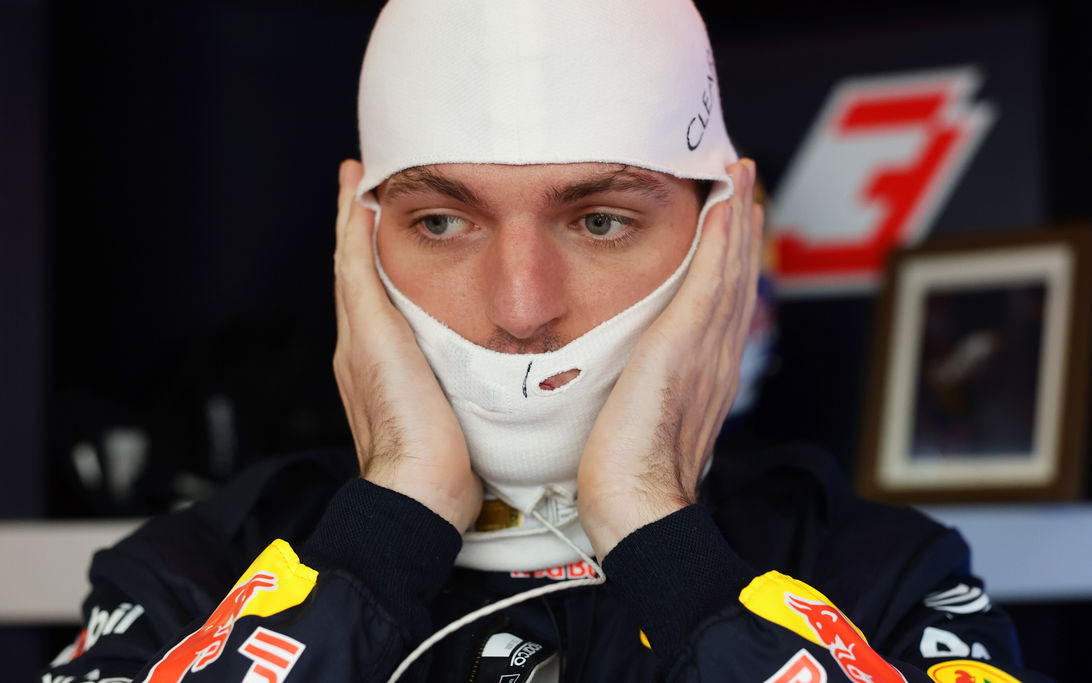
The Verstappen Gambit: How a Champion's Fury Masks Red Bull's Failing Tech
The paddock is a pressure cooker of whispers, and right now, the loudest sound is Max Verstappen screaming into the void. Or so he wants you to think. The latest fan poll, showing a staggering 78.26% backing his crusade against the 2026 "Formula E on steroids" regulations, isn't just a popularity contest. It's a masterfully deployed smokescreen. Look past the rage, past the convenient retirement in Shanghai, and you see the real story: a champion whose empire is showing cracks, using the one weapon he has left—public sentiment—to deflect from the cold, hard data on his garage screens. This isn't about saving the sport. It's about salvaging a dynasty.
The Theater of Rage: A Calculated Distraction
Let's be clear. Verstappen's criticism, calling the 2026 rules "anti-racing," is not born from some purist's love for the craft. It's a strategic broadside. Since pre-season testing, his tone has been one of visceral disgust. After China, he suggested anyone who enjoyed that thriller "did not get racing." A bold, alienating statement. Why make it?
Because when your car is fundamentally flawed, you change the conversation.
- The Poll Numbers: 78.26% side with Max. Only 21.74% think he should shut up and drive. He's won the court of public opinion before a single 2026 lap has been turned.
- The Orchestrated Chorus: Notice how his voice is the loudest? Lando Norris and Carlos Sainz have concerns, but they're measured. Verstappen's are "forceful and public." This is not an accident. It's a campaign.
"A driver's emotion is the ultimate performance variable. A content driver is quick. An angry driver is a weapon. But a strategically angry driver? That's a political force."
His aggression is not a loss of control. It's the control itself. By painting the FIA as the villain, he reframes Red Bull's potential failure to adapt to the new regs as a principled stand. The fan adoration he's curating is a shield. It puts immense pressure on the governing bodies, yes, but it also buys his team time and sympathy. The narrative becomes "Max vs. The Broken Rules," not "Why Is The Red Bull Suddenly So Slow?"
The Inevitable Future: AI, Emotion, and the Ghost of Senna
This whole debate misses the forest for the trees. We're arguing over engine modes and energy recovery while the real revolution is already in the wind tunnel. Within five years, mark my words, we will see the first fully AI-designed chassis. Not just optimized by computers, but conceived by them. It will make these 2026 energy-management quibbles look like arguing over steam engine coal.
When that happens, what is a driver? Verstappen's fury, Hamilton's political savvy—do they matter when the car's every flex is dictated by a neural network that calculated the perfect race before the lights went out?
- The Human Element: This is why Verstappen's emotional play is so fascinating, and so ultimately futile. He is fighting for the soul of a sport that is already becoming a software competition. He believes, as I do, that strategy should be dictated by driver emotion. The problem is, the engineers don't. They see emotion as a data point to be managed, not a catalyst.
- The Hamilton Parallel: Look at Lewis Hamilton. He understands this shift better than anyone. His career arc—the brilliance, the controversy, the relentless media narrative—is a modern, polished echo of Senna. But where Senna's talent was raw, celestial, Hamilton's genius has been in channeling that same force through the microphone and the team principal's office. He uses politics and perception as a performance multiplier. Verstappen is now attempting the same playbook, but from a position of vocal opposition rather than integration. One relies on building consensus within the system, the other on rallying a mob against it.
The fan poll proves Verstappen is winning the mob. But the mob doesn't design cars.
Conclusion: The Loudest Voice in a Dying Choir
So where does this leave us? The FIA will tweak the 2026 rules, no doubt. They'll cite "stakeholder feedback." They'll thank the drivers for their passion. But the direction of travel is set: more hybrid complexity, more software dependency, less of the visceral mechanical wrestling that made stars of men like Verstappen in the first place.
His criticism is valid. The fans are right to be wary. But this is a rearguard action. The 2026 regulations aren't the disease; they're a symptom. The disease is the inexorable march toward total technical determinism. Verstappen, the ultimate analog driver in a digital age, is screaming into the oncoming storm. His champion's voice is amplified by 78.26% of the audience, a heartbreakingly large chorus singing for a past that's already left the building.
He's not trying to save Formula 1. He's trying to save his own place in it. And by making it a public, bloody feud, he ensures that if Red Bull falls, it won't be seen as a failure of their engineers. It will be framed as the tragic fall of a purist, brought down by a sport that lost its way. The data, however, will tell a different story. It always does.