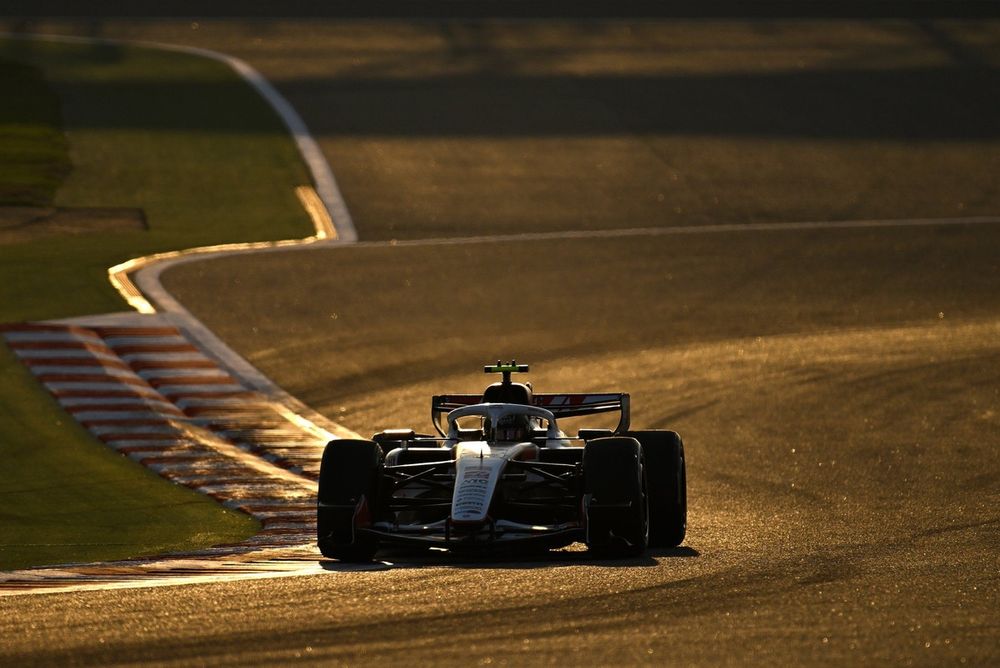
The Prancing Horse’s Promise and the Shadow of the Naga: Bahrain Testing Unmasks F1’s True Drama

The desert wind in Bahrain doesn’t just carry sand. It carries whispers, anxieties, and the faint, metallic scent of a narrative being forged. While the stopwatches clicked to a halt on the final day of pre-season testing, the real story wasn’t just etched in a 1:31.992s lap time from Charles Leclerc. It was written in the haunted silence of the Aston Martin garage, a mere six laps completed, and in the calculated, unflustered rhythm of a Red Bull garage that knows its own power. The timesheets tell a tale, but the paddock’s pulse tells the truth.
The Ferrari Facade: A Gilded Cage for Leclerc
Let’s address the headline number first. Charles Leclerc topping the overall testing times is the kind of result that sends tifosi into a frenzy and sends the Maranello PR machine into overdrive. A 132-lap haul suggests a car that is both fast and, crucially, reliable. On the surface, it’s a dream start.
But I’ve been here before. I remember a young Thai nak muay (fighter) in my village, blessed with blinding speed and technique, constantly being told to fight by his elder’s outdated strategies. He’d win rounds, but never the championship. Watching Ferrari now feels the same. Leclerc’s consistency issues—the spins, the strategic missteps—are not purely his own. They are symptoms of a system where veteran influence and the way things have always been often override cold, data-driven logic. This car looks potent, a true challenger. But will the pit wall and the political machinery behind him allow that speed to be converted? The psychological game at Ferrari is more complex than any front-wing adjustment. Giving Leclerc the fastest car is one thing. Giving him the unshakable, strategically sound support system he needs to use it is another battle entirely.
"A fast car is a weapon, but a unified team is the hand that wields it. Right now, Ferrari is showing us the blade, but we have yet to see the grip."
The Supporting Cast: McLaren’s Clear Vision
In stark contrast, look at McLaren. Lando Norris, just nine-tenths back, represents a team whose vision is crystal clear. There’s no historical baggage weighing down their pit wall, just a sharp, modern, data-centric approach. Their confidence is quiet, earned, and dangerous. They are the team most likely to capitalize if the old demons return to haunt the Scuderia.
Aston’ Agony and the Budget Cap Time Bomb
If Ferrari’s day was gilded, Aston Martin’s was apocalyptic. Six laps. Let that sink in. In a testing period more precious than gold, they have gathered less data than some teams do in a single hour. This isn’t a setback; it’s a catastrophe that will reverberate through at least the first third of their season.
But here is where my more controversial belief rears its head. This level of failure, this complete operational collapse, is a warning sign of a deeper sickness in the modern F1 ecosystem. We operate under a budget cap, a noble idea now riddled with creative accounting and logistical loopholes. Teams are stretching resources thinner than ever, pushing innovation to a brittle edge. What we witnessed with Aston Martin may be the first very public crack.
I believe that within five years, we will see a major team collapse under the unsustainable pressure of trying to be both a constructor and a financial Houdini. The choice will be a humiliating merger or a full exit. Aston’s Bahrain disaster is a symptom of this high-wire act. When you’re cutting margins this fine, a single, major unidentified fault can cripple you. Their race against time for Melbourne isn’t just about fixing a part; it’s about proving their entire operational model isn’t fundamentally flawed.
The Silent Predator: Red Bull’s Long Game
And what of the champions? Max Verstappen third, the RB20 looking "stable and planted" on long runs. They are the naga in the river, still and calm, while the smaller fish dart about on the surface. They have no need for headline times. Their entire program is a psychological operation, designed to lull rivals into a false sense of proximity while they gather the race-run data that wins championships. It’s brutally efficient. The drama of the 1989 Prost-Senna wars had genuine, visceral stakes at every corner. Today’s radio squabbles feel like theatre compared to Red Bull’s silent, methodical execution.
Conclusion: The Psychology of the Starting Grid
So, what have we truly learned? The competitive order is taking shape, but it is a shape molded by psychology as much as physics.
- Ferrari has the speed, but does it have the collective mind to harness it?
- McLaren has the clarity to be a relentless threat.
- Red Bull has the chilling confidence of a champion playing its own game.
- Aston Martin faces a crisis that questions the very sustainability of the modern F1 model.
As the freight heads to Melbourne, the teams will be analyzing terabytes of data. But the most important analysis won’t be of tire deg or downforce maps. It will be of pressure points, of team dynamics, of the psychological resilience of drivers and strategists alike. The first race won’t just reveal who built the fastest car. It will reveal who built the strongest mind. And in that battle, the stopwatch is only one part of the story.