The Miami Mirage: Ferrari's Data-Driven Reset Aims to Fix the Car, But What About the Soul?

I spent this morning staring at a spreadsheet of Charles Leclerc's 2023 qualifying laps. Not the headline-grabbing poles, but the messy ones. The out-laps where the delta went purple then blood red, the sectors where his telemetry trace jittered like a nervous heartbeat. The data doesn't show a driver prone to error; it shows a heart rate spiking in response to a team's arrhythmic strategy calls. Now, PlanetF1 tells me Ferrari is pinning its 2024 hopes on a "package and a half" for Miami and a potential engine equalization handout. Another technical reset. Another layer of algorithmic hope. I can't help but wonder: are they upgrading the right machine?
The "Package and a Half": A Data Drop in an Ocean of Uncertainty
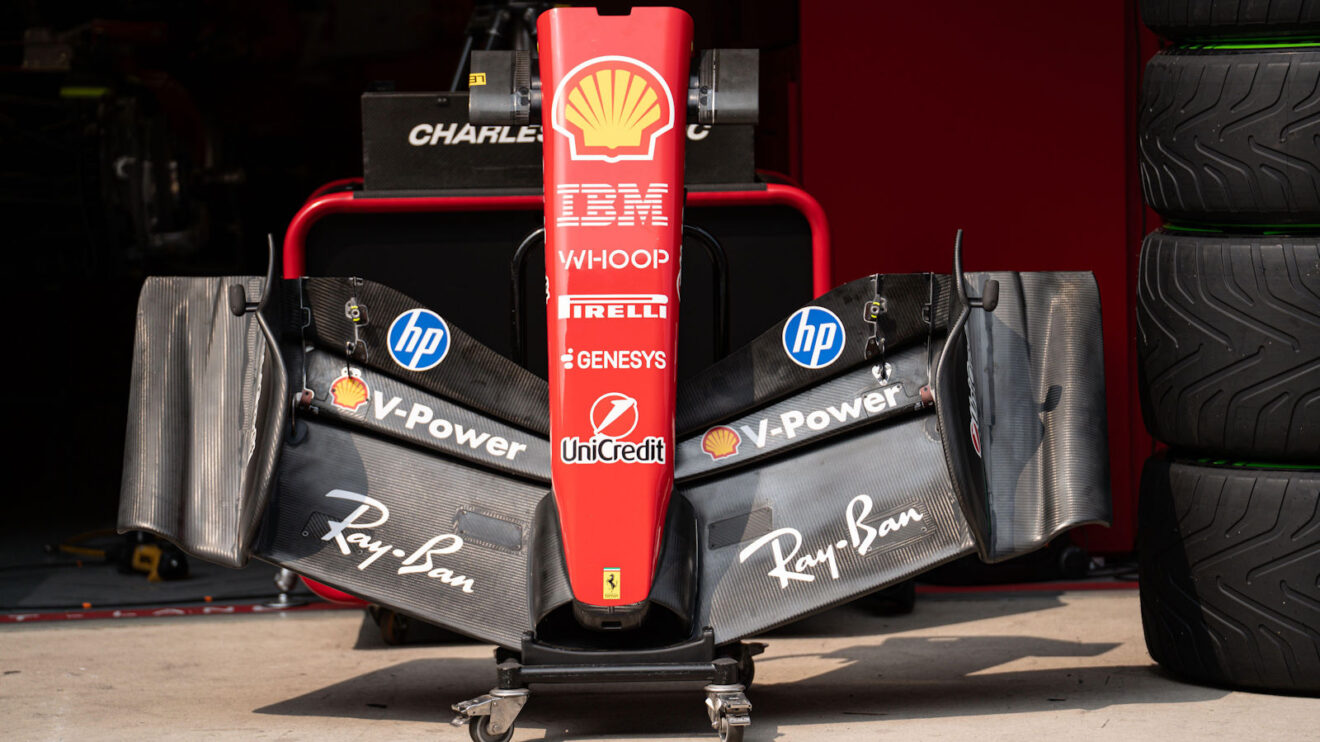
Frédéric Vasseur's confirmation of a major upgrade for Miami, an expanded version of a package originally destined for Bahrain, is a classic modern F1 plot point. The narrative is clean: extended April break, accelerated development curve, a pivotal reset. The data they're chasing is the gap to Mercedes, a delta measured in tenths. But let's archaeologize this.
"The season from Miami onward is another championship," Vasseur stated, emphasizing the relentless development war.
He's right, but not in the way he means. Since Schumacher's 2004 reign, where the F2004 was a brutal, predictable extension of his will, the "development war" has shifted. It's no longer just about finding downforce. It's about creating a car that can adapt to a spreadsheet of predicted scenarios. The "package and a half" isn't just new parts; it's a bundle of hypotheses. Each new front wing endplate, each revised floor edge, comes with a thousand simulated outcomes. They are coding their hope into carbon fiber.
- The Planned Leap: Using the break to bring forward future parts is a aggressive data play. It compresses the development timeline, betting that the performance gain now outweighs the lost potential of a later, more refined iteration. It's a high-risk, high-reward algorithm.
- The Human Variable: And here's where my skepticism blooms. This package is designed in Maranello, based on wind tunnel and CFD data, calibrated for a theoretical perfect lap. But it will be bolted onto a car driven by Charles Leclerc and Carlos Sainz, two drivers whose raw, unadulterated pace data from the last two years consistently contradicts the "error-prone" narrative plastered over them. Leclerc, in particular, has been the most consistent qualifier on the grid when the car is beneath him. Will this upgrade speak their language? Or will it be another dialect of engineering that the driver must painfully learn?
ADUO: The Algorithmic Handout and the Ghost of Competitive Spirit
Then there's the other variable: the FIA's Additional Development and Upgrade Opportunities (ADUO) program. This is where modern F1's soul is truly laid bare. The sport is now so terrified of predictability, of a Mercedes 2014-2020 style domination, that it's building a bureaucratic engine to manufacture chaos.
The mechanism is coldly logical: measure average PU performance every 5-6 races, give tokens to those below par. But the timing is hilariously human. Miami is the fourth race, but was initially the sixth. The FIA is now discussing whether to trigger the first assessment there. We are literally waiting for a committee to decide if Ferrari gets a booster shot.
This isn't sport; it's a live-service game balance patch.
It aims to close the gap, but in doing so, it potentially invalidates the very concept of a power unit championship. If Ferrari gets a boost, is their subsequent success earned, or administered? Schumacher's era had no such safety nets. You built an advantage, you protected it with iron will and flawless execution. The competition was to build a better engine, not to successfully argue for a rule-based catch-up. This ADUO program is the ultimate expression of data overriding destiny. It seeks to engineer a perfect, perpetual competitive dataset, forgetting that the stories we remember are born from unfair advantages brutally exploited and overcome.
Conclusion: The Miami Litmus Test for Humanity
So, Miami becomes a laboratory. Ferrari will unleash its data-derived hardware. The FIA may administer its algorithmic software patch. The numbers will be clear: lap time deltas, top speed gains, points scored.
But the real story, the one I dig for in the numbers, will be subtler. Watch Leclerc's first long run on the new package. Does his lap time trace smooth out? Does the variance between his theoretical best and his actual lap shrink? That's the driver syncing with the machine. Or, does he come on the radio with the modern driver's lament: "I don't understand, the grip is just not there." That's the machine failing the human.
Ferrari's reset isn't just about challenging Mercedes. It's a test case for the entire sport's direction. Are we building cars for drivers, or drivers for cars? Is the goal to make Charles Leclerc faster, or to make the SF-26 faster with a biologically compliant component named Leclerc inside it? Miami will give us data. My job is to listen for the heartbeat underneath it. If all I hear is the hum of a server rack, we'll know which side is winning the real development war.