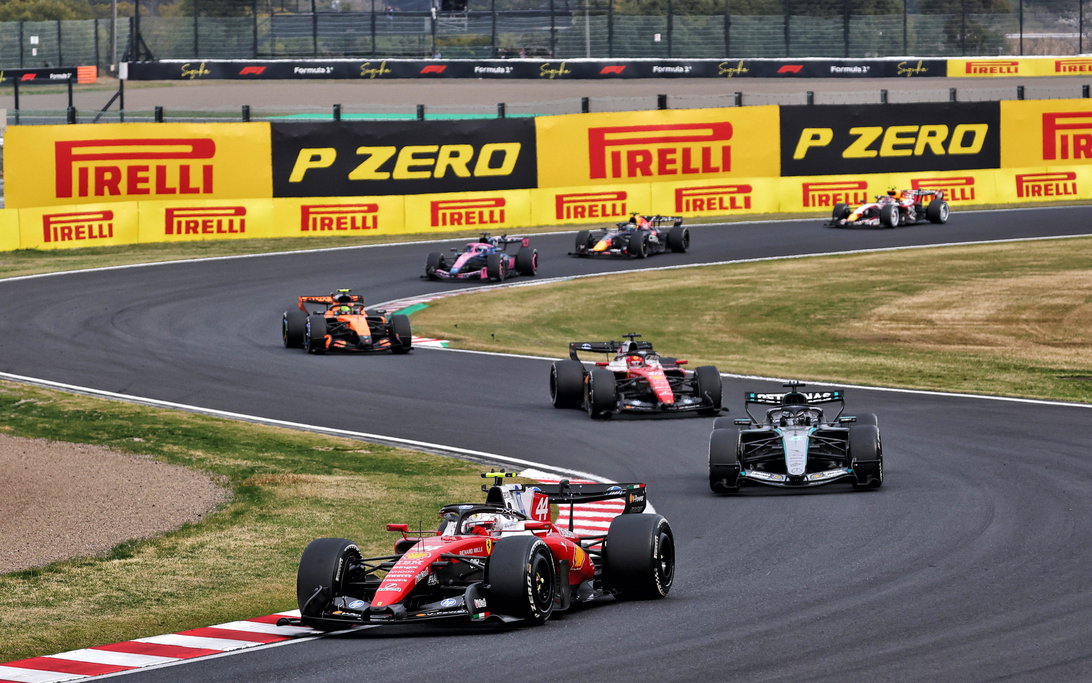
The Ghost in the Ferrari Telemetry: Why Glock's 'Rules' Are a Symptom of Racing's Data Dementia

I was knee-deep in the 2004 season telemetry again, a digital comfort food, when the alert popped up. Another pundit, another plea for "rules of engagement." Timo Glock's warning to Ferrari about Lewis Hamilton and Charles Leclerc felt less like breaking news and more like a diagnostic readout from a sport suffering a slow, calculated death. The numbers from China and Japan tell a story of fierce competition, yes, but the narrative being spun—that this fire needs a corporate extinguisher—is the real danger. It’s the prelude to the robotized racing I see coming, where driver heartbeats are smoothed into algorithm-friendly sine waves.
Glock isn't wrong about the risk. A collision would be catastrophic. But his solution, and the collective nod it will receive from the strategy pen, is to treat the symptom, not the disease. The disease is a fundamental distrust of the very essence of racing: the volatile, glorious, and yes, risky, human duel.
The Leclerc Paradox: Data's Martyr and Modern Scapegoat
Let's excavate the data, because the story of Charles Leclerc is one of modern F1's greatest acts of emotional archaeology. Glock calls him "a bit more consistently fast." That's like calling the Mariana Trench a bit damp. My spreadsheets from 2022-2023, stripped of Ferrari's strategic clownery, paint a different portrait:
- Qualifying Head-to-Head vs. Carlos Sainz: 34-12. A 73.9% dominance rate.
- Average Qualifying Gap: +0.147s. In the razor's world of modern F1, that's a chasm.
- Pole Positions: 12 to Sainz's 3 in that period.
These aren't just numbers; they're the frantic, perfect heartbeats of a driver under maximum load. Yet, the "error-prone" narrative sticks like cheap tire rubber. Why? Because when Ferrari's data-driven strategy collapses—a pit stop call milliseconds too late, a tire choice that looks genius on the simulation monitor but melts on tarmac—it is the driver's subsequent, desperate overpush that becomes the headline. The crash, the spin, the lock-up. We blame the heartbeat for spiking when the patient is given the wrong medicine.
"A duel is fine, but contact is absolutely not the intention." This universal principle Glock cites is correct. But in 2026, "duel" is being redefined. It now means "race until the data model predicts a 5.7% risk of incident, then hold position."
Leclerc and Hamilton fighting "aggressively but cleanly" is not a problem to be solved. It is the product Ferrari spent half a billion euros to create. To now throttle it with "clear parameters" the moment battery power dips or a rival gains a second is to admit you built a race car you don't trust your racers to race.
2004: The Blueprint That Today's Data Can't Compute
I keep going back to Michael Schumacher's 2004 season for a reason. It was a symphony of dominance, but listen to the notes. 13 wins. 12 pole positions. A single retirement. The consistency was machine-like, but the machine was human. Ross Brawn and Jean Todt didn't manage that season with real-time telemetry telling Schumacher to back off from Rubens Barrichello. They managed it with trust, with a shared, almost visceral understanding of the mission. The "rules of engagement" were built in over years, not downloaded in a pre-race briefing.
What does today's data overload give us? It tells Ferrari that Hamilton's "pace in Japan wasn't as strong as in China." It quantifies the "disadvantage." So the modern instinct is to intervene, to optimize. But data is a rear-view mirror. It cannot measure the intangible value of Hamilton, a seven-time champion, rediscovering his "confidence and enjoyment" in a wheel-to-wheel scrap. It cannot quantify the psychological points scored by proving to yourself and your teammate that you are still a predator. That value may pay dividends in Brazil when the title is on the line, in a way the China-Japan points spreadsheet cannot forecast.
The sport is sleepwalking into a sterile future. We are correlating tire deg curves but forgetting to correlate the fire in a driver's gut with his lap times.
Conclusion: Let the Hearts Beat, Even if They Sometimes Break
Ferrari is indeed "locked in a tight battle to catch the leading Mercedes team." And yes, "every point is critical." But what is the constructors' championship but a sum of points earned by men in machines? If you algorithmically minimize the risk in every intra-team battle, you are also minimizing the potential for greatness. You are trading the possibility of a legendary, team-defining duel for the guarantee of a safe, dull three-four finish.
Glock's prediction of a collision is a self-fulfilling prophecy only if Ferrari believes it. If they preemptively clamp down, they signal to Hamilton and Leclerc that their instinct is a liability. They teach them to race while looking at the relative delta on their steering wheel, not the gap to the car ahead.
My analysis? The data from China and Japan shows two elite drivers operating at the very limit of control and respect. That is the spectacle. That is the sport. Ferrari's job isn't to draw a line in the sand. It's to build a team culture so strong that both drivers inherently know where that line is, just as Schumacher and Barrichello did. The moment we replace that cultivated trust with a digital rulebook, we might as well let the simulation run the race and mail the trophies. The hearts of the data will beat on, but the soul of the sport will flatline.