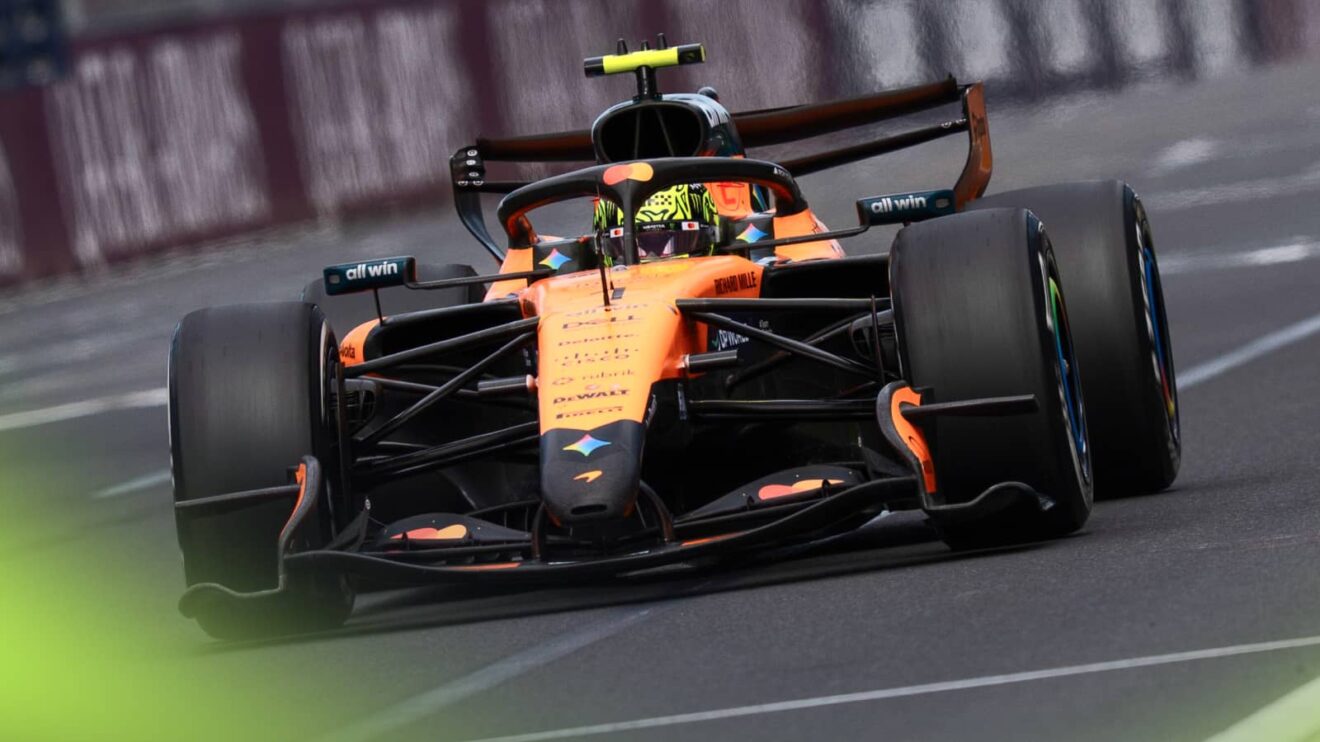
The FIA Just Lit a Fuse at 130R: Is Active Aero a Safety Net or a Trojan Horse?
The whispers started in the Barcelona paddock tests, a low hum of concern buried under gigabytes of simulation data. Now, with a single regulatory bulletin, the FIA has made it official: they are playing with fire at Suzuka. For the 2026 Japanese Grand Prix, drivers will be able to flick their cars into low-drag 'straight mode' on the flat-out approach to 130R, one of the most terrifying corners on the planet. They’re dressing it up as progress, a necessary evolution from the clunky DRS era. But from where I’m sitting, in the smoky corner of the hospitality units where the real talk happens, this is a desperate gamble. It’s a gamble that reveals more about the profound identity crisis facing Formula 1 than any technical directive ever could.
A Calculated Distraction from a Flawed Formula?
Let’s cut through the corporate speak. The FIA says this is safe because the 2026 cars will have less downforce and slower apex speeds. Dave Greenwood at Alpine talks about being "grip-limited" through Spoon. It’s all very neat, very data-driven. But data doesn’t feel the 5G load through its neck. Data doesn’t remember Allan McNish’s Toyota disintegrating there in 2002, or the more recent heart-in-mouth moment for Luke Browning.
This decision isn’t about pure safety or even pure racing. It’s a theatrical move to make the 2026 cars look faster on the straights, to create a spectacle of slipstreaming and last-gasp moves into the chicane. It’s a band-aid for a regulatory package that, in its heart, is about energy recovery, not visceral speed. They need the show, and they’re willing to add risk at a legendary corner to get it.
"The lower cornering speeds may mitigate the historical safety risks," the engineers say. A convenient hypothesis, to be tested at 330 km/h with a rival's front wing in your peripheral vision.
And who does this play into the hands of? The drivers who treat aggression as a calculus, not an emotion. This is Max Verstappen’s kind of theater. A zone here turns the approach into a high-stakes poker game. He’ll bully his way through, making it look like daring bravado, all to distract from the underlying truth his team fears: that the 2026 Red Bull, like all of them, might be a fragile, complicated beast. Flashy overtakes here mask deeper aerodynamic vulnerabilities in the long, technical sequences. It’s classic misdirection.
The Ghost in the Machine: This is How AI Takes Over
Here is the real story everyone is missing. This isn't just a new overtaking zone. It’s the first beachhead for the machines.
Think about it. Activating a system that radically alters the car’s aero profile milliseconds before one of the world’s most demanding corners? The margin for human error, for a twitch of fear or overconfidence, is infinitesimal. The teams will say the driver hits the button. But the when? That will be dictated by an algorithm. A system weighing energy deployment, tire life, closing speed, and predicted cornering line. The driver becomes a passenger to the command: "OVERTAKE MODE ENGAGED."
- 2011-2012: Drivers could use DRS anywhere. They spun. Humans tested limits.
- 2026: The car’s brain will decide the precise activation point. Humans obey parameters.
This move at 130R is the canary in the coal mine. It’s the FIA tacitly admitting that the cars are now too complex, the systems too critical, for mere human instinct. They are building the framework where the first fully AI-designed car isn’t just possible, it’s inevitable. Within five years, mark my words, we’ll see a car whose every component, from suspension geometry to that active aero flap, is optimized by neural networks. The race will be in the server farms, not the cockpit. Suzuka 2026 is the beginning of the end of the driver as the primary performance differentiator. They’re becoming system operators, emotional figureheads for a software war.
The Human Cost: Emotion vs. Algorithm
Which brings me to my core belief. Strategy should be dictated by driver emotion, not pure data. A content or angry driver consistently outperforms a data-optimized one. What does this zone do to emotion? It sterilizes it.
The greats – Senna, Schumacher – conquered 130R through feel, through a symbiotic rage with their machine. What is Lewis Hamilton’s legacy built on? It’s not Senna’s raw, terrifying talent. It’s supreme skill married to an unparalleled understanding of team politics and media narrative. He wins the mind game. At Suzuka in 2026, the mind game is irrelevant. The car’s CPU will veto a hot-headed lunge. It will sanitize the very passion that made the corner legendary.
The FIA has removed a DRS zone on safety grounds before, at Albert Park in 2022, after driver complaints. But what happens when the complaint is not about a zone, but about the loss of agency? When a driver, feeling the car’s systems override his gut, loses that crucial tenth because he’s fighting not just the track, but his own machine’s logic?
Conclusion: A Precedent of Fear
So, as we head to Suzuka, watch this "innovation" with a cynical eye. The overtakes into the chicane might be thrilling. The lap times might be stable. But you are witnessing a fundamental shift.
They are not just adding an aero zone. They are institutionalizing a lack of trust in the driver. They are paving the road for the driverless future, one "straight mode" activation at a time. The precedent set here will echo at Spa’s Eau Rouge, at Silverstone’s Copse. The circuits will remain, the cars will look familiar, but the soul of the sport – the chaotic, beautiful, terrifying human element – is being quietly, efficiently, engineered out.
The fuse is lit at 130R. And it’s not attached to a fireworks display of great racing. It’s attached to the very foundation of what Formula 1 claims to be.