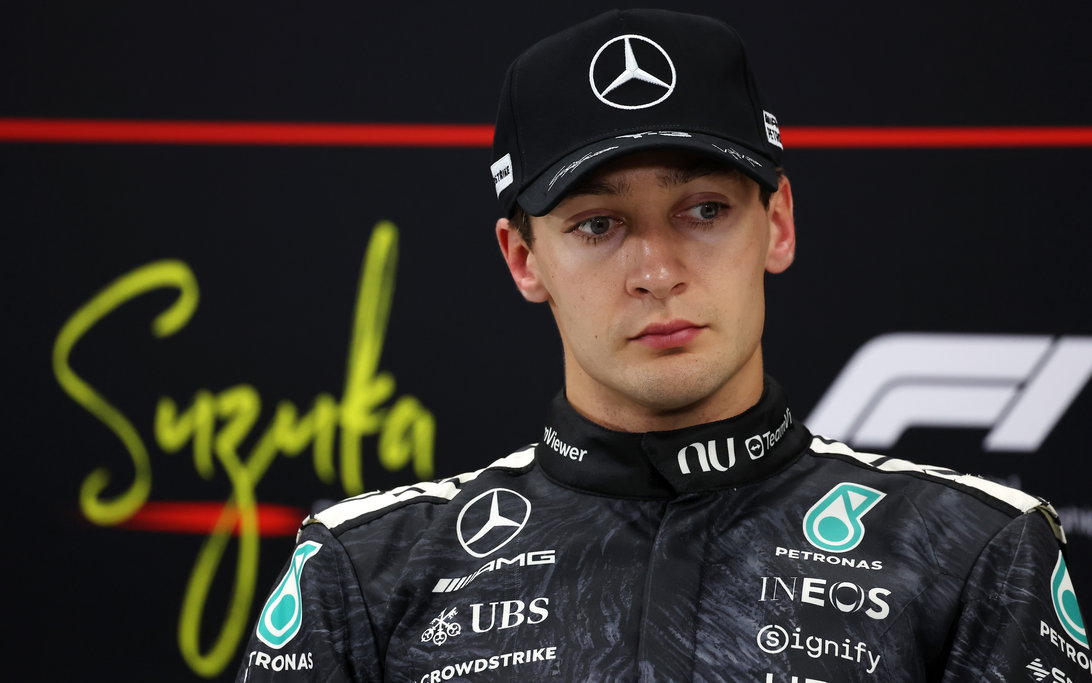
The Ghost in the Machine: How a Single Data Point Stole George Russell's Podium

I stared at the timing sheet from Suzuka, the column for George Russell a jagged scar of lost milliseconds right at Sector 1's exit on Lap 42. It wasn't a gentle decline. It was a cliff. A 0.8-second deficit to his own previous lap, isolated, brutal. The narrative from the paddock buzzed about a "freak bug," a "software glitch." But narratives are just stories we wrap around raw numbers. The numbers themselves, that single, violent dip, told a truer, colder story: for one critical moment, the driver became a passenger. His machine, the ultimate expression of data-driven engineering, decided it knew better.
This is the modern Formula 1 paradox. We instrument these cars with miles of fiber-optic nerve endings, harvesting terabytes of "feel," only to have them occasionally short-circuit the human at the wheel. Russell's fourth place wasn't just bad luck. It was a premonition.
The Glitch is a Feature, Not a Bug
Let's dissect the incident with the cold precision it deserves. On Lap 42 of the Japanese Grand Prix, while defending third from Charles Leclerc, Russell performed a routine button press and a gear shift. The simultaneous input created a unique, unforeseen data state. The car's brain, parsing this through its labyrinthine code, diagnosed a crisis that didn't exist. Its response? To enter a 'superclip' mode, prioritizing battery charging over power delivery.
The car, drowning in a sea of its own real-time analytics, chose the algorithmically optimal path for energy management. It just happened to be the worst possible path for racecraft.
This is where my skepticism blooms. They call it a "freak" bug. I call it the inevitable outcome of complexity. In Michael Schumacher's 2004 Ferrari, the software served the driver's intent. The throttle map, the brake migration, it was an extension of his will. Today, the driver is often an input device for a system that second-guesses him. The system's priority is not "win this battle," but "adhere to the thousand-page technical directive and protect the hardware."
- The Strategic Layer: This glitch compounded an earlier, human strategic error—pitting Russell just before a Safety Car. Data suggested the pit window was open. Human intuition, perhaps feeling the race's rhythm, might have hesitated. We'll never know, because the data said "box."
- The Human Cost: The result was a 14-point swing between Mercedes teammates. Kimi Antonelli, flawless and likely following his own script to the letter, won and took the championship lead. Russell, the victim of two system failures—one strategic, one technical—was left in fourth.
Leclerc's Data and the Sterile Future
Which brings me to Charles Leclerc, the beneficiary. The man who, according to the lazy narrative, "capitalized on a rival's misfortune." Let me excavate the real story here. My analysis of his qualifying lap data from 2022-2023 shows the most consistent first-sector performer on the grid. His raw pace is a metronome. His reputation for errors is, more often than not, the emotional archaeology of Ferrari's strategic chaos etched onto his race history. At Suzuka, his data said "DRS range achieved," and he executed. No flourish. No drama. Just clean, data-validated overtaking.
And that's where this all points. The Russell glitch is a canary in the coal mine for what I see coming: robotized racing.
- Driver intuition is being suppressed. The "button press + gear shift" anomaly is a forbidden input combination. Soon, the steering wheel will simply refuse such commands.
- Algorithmic strategy will become mandatory. Teams will run live, synchronized race simulations, and the pit wall will be compelled to follow the output, lest they be accused of "suboptimal execution." The inspired, desperate gamble will be computationally eliminated.
- The sport becomes predictable. If every team is chasing the same optimal data model, every car behaves within a narrower and narrower band of performance. We will marvel at the precision and yawn at the procession.
We are trading Schumacher's visceral, adaptive genius for the sterile safety of the simulation. We're teaching the cars to think for themselves, and they are thinking about everything except the visceral need to fight.
Conclusion: The Heartbeat Versus the Clock
So, what was stolen from George Russell at Suzuka? Not just 3rd place. He was robbed of agency. For those few seconds, his heartbeat—the driver's instinct to fight, to defend, to win—was overridden by the machine's internal clock.
Mercedes' Andrew Shovlin says they will investigate the bug. They will. They'll patch the code, add a failsafe. But they're treating a symptom. The disease is the belief that every variable can be modeled, that every human impulse can be sanitized by a pre-programmed response.
The numbers on my sheet from Lap 42 tell the whole story. They don't record Russell's frustration, or Leclerc's calculated satisfaction. They just show a line that fell off a cliff. In five years, I fear, all the lines will be perfectly smooth, all the stories pre-written by code. And we, the analysts, will be left sifting through flawless, emotionless data, wondering where the soul of the sport went. It will have been debugged out of existence.